Department of Molecular Biosciences, University of Oslo, Oslo, Norway.
PLoS One. 2009 Nov 12;4(11):e7817. doi: 10.1371/journal.pone.0007817.
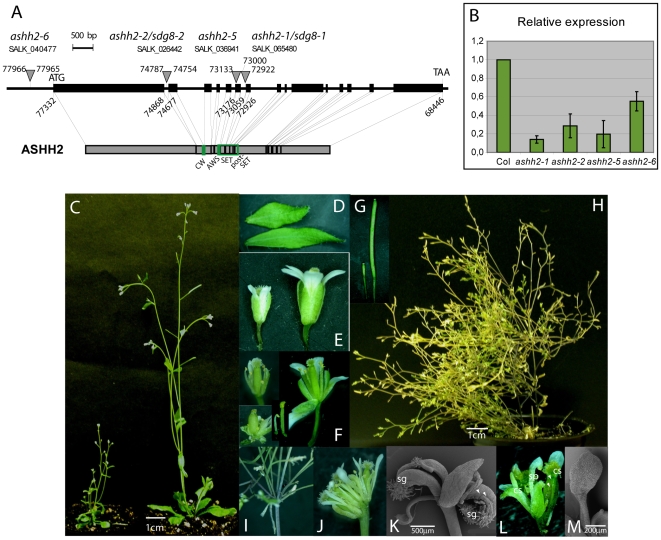
SET-domain proteins are histone lysine (K) methyltransferases (HMTase) implicated in defining transcriptionally permissive or repressive chromatin. The Arabidopsis ASH1 HOMOLOG 2 (ASHH2) protein (also called SDG8, EFS and CCR1) has been suggested to methylate H3K4 and/or H3K36 and is similar to Drosophila ASH1, a positive maintainer of gene expression, and yeast Set2, a H3K36 HMTase. Mutation of the ASHH2 gene has pleiotropic developmental effects. Here we focus on the role of ASHH2 in plant reproduction.
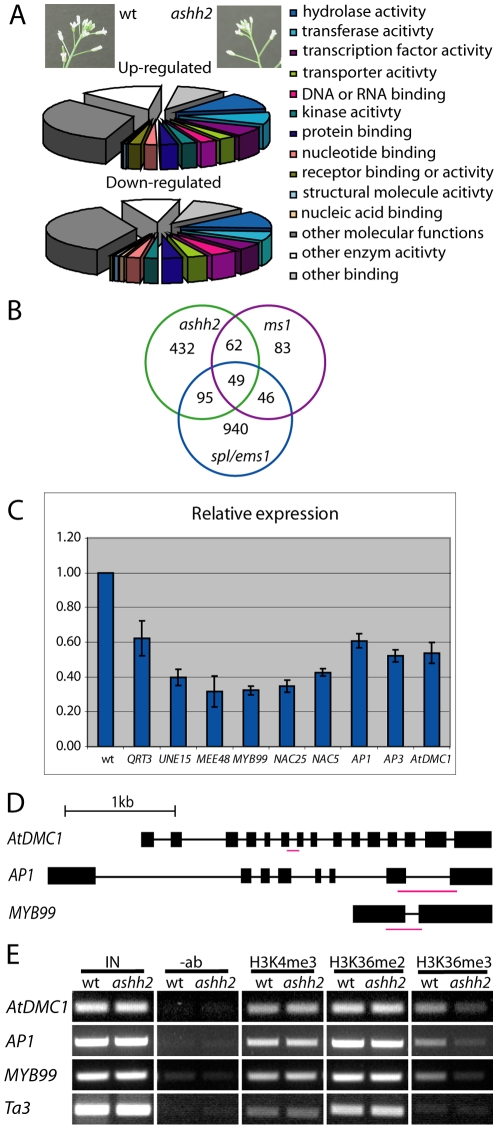
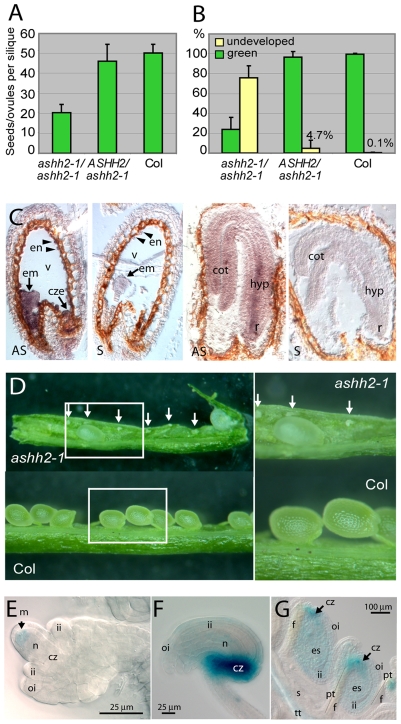
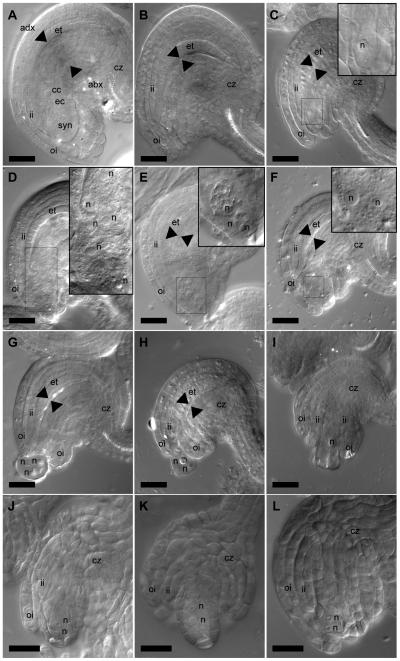
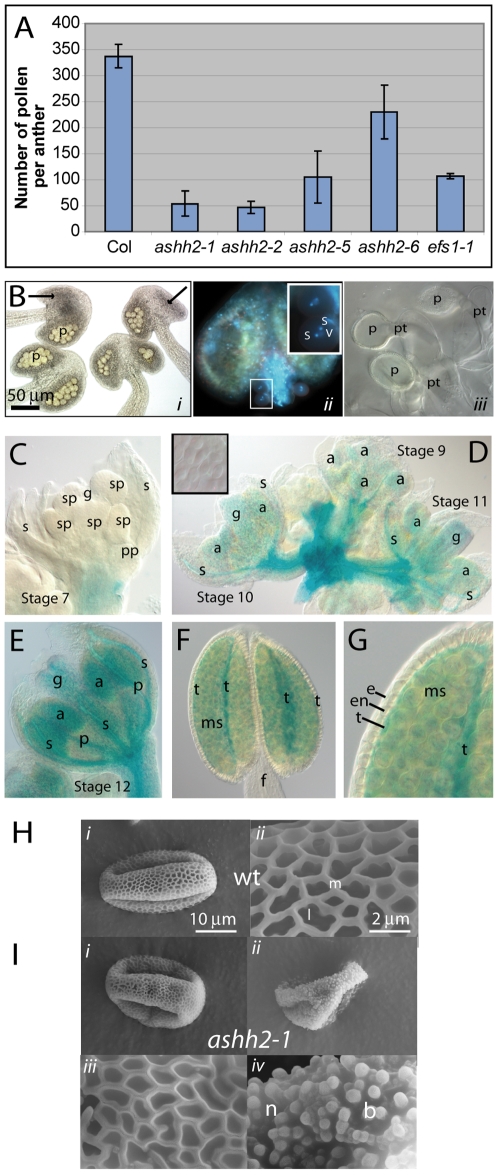
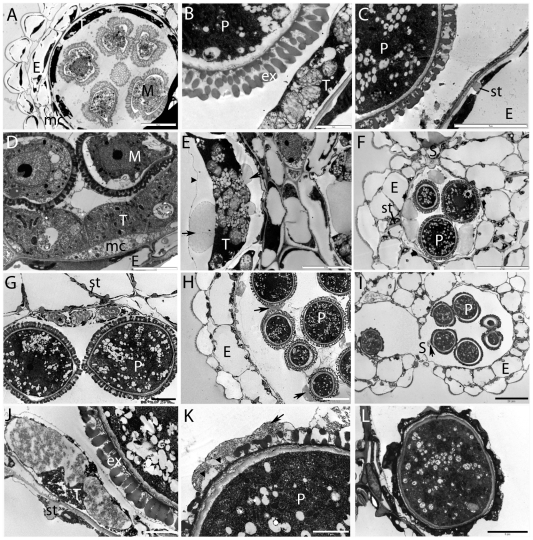
METHODOLOGY/PRINCIPAL FINDINGS: A slightly reduced transmission of the ashh2 allele in reciprocal crosses implied involvement in gametogenesis or gamete function. However, the main requirement of ASHH2 is sporophytic. On the female side, close to 80% of mature ovules lack embryo sac. On the male side, anthers frequently develop without pollen sacs or with specific defects in the tapetum layer, resulting in reduction in the number of functional pollen per anther by up to approximately 90%. In consistence with the phenotypic findings, an ASHH2 promoter-reporter gene was expressed at the site of megaspore mother cell formation as well as tapetum layers and pollen. ashh2 mutations also result in homeotic changes in floral organ identity. Transcriptional profiling identified more than 300 up-regulated and 600 down-regulated genes in ashh2 mutant inflorescences, whereof the latter included genes involved in determination of floral organ identity, embryo sac and anther/pollen development. This was confirmed by real-time PCR. In the chromatin of such genes (AP1, AtDMC1 and MYB99) we observed a reduction of H3K36 trimethylation (me3), but not H3K4me3 or H3K36me2.
CONCLUSIONS/SIGNIFICANCE: The severe distortion of reproductive organ development in ashh2 mutants, argues that ASHH2 is required for the correct expression of genes essential to reproductive development. The reduction in the ashh2 mutant of H3K36me3 on down-regulated genes relevant to the observed defects, implicates ASHH2 in regulation of gene expression via H3K36 trimethylation in chromatin of Arabidopsis inflorescences.
SET 结构域蛋白是组蛋白赖氨酸(K)甲基转移酶(HMTase),参与定义转录允许或抑制的染色质。拟南芥 ASH1 同源物 2(ASHH2)蛋白(也称为 SDG8、EFS 和 CCR1)被认为可以甲基化 H3K4 和/或 H3K36,与果蝇 ASH1 相似,后者是基因表达的正维持者,与酵母 Set2 相似,后者是 H3K36 HMTase。ASHH2 基因突变具有多种发育效应。本文主要关注 ASHH2 在植物生殖中的作用。
方法/主要发现:在相互杂交中,ashh2 等位基因的传递略有减少,这暗示了其在配子发生或配子功能中的作用。然而,ASHH2 的主要需求是孢子体。在雌性方面,近 80%的成熟胚珠缺乏胚囊。在雄性方面,花药经常发育成没有花粉囊或绒毡层有特定缺陷,导致每个花药的功能性花粉数量减少约 90%。与表型发现一致,ASHH2 启动子-报告基因在大孢子母细胞形成以及绒毡层和花粉处表达。ashh2 突变还导致花器官身份的同异位变化。转录谱分析确定了 ashh2 突变体花序中超过 300 个上调和 600 个下调基因,其中包括参与花器官身份、胚囊和花药/花粉发育决定的基因。这通过实时 PCR 得到了证实。在这些基因(AP1、AtDMC1 和 MYB99)的染色质中,我们观察到 H3K36 三甲基化(me3)减少,但 H3K4me3 或 H3K36me2 没有减少。
ashh2 突变体生殖器官发育严重扭曲,这表明 ASHH2 是生殖发育所必需的基因正确表达所必需的。在 ashh2 突变体中,与观察到的缺陷相关的下调基因的 H3K36me3 减少,表明 ASHH2 通过 Arabidopsis 花序中染色质的 H3K36 三甲基化参与基因表达的调节。