Cold Spring Harbor Laboratory, Cold Spring Harbor NY, USA.
Front Neural Circuits. 2009 Nov 3;3:18. doi: 10.3389/neuro.04.018.2009. eCollection 2009.
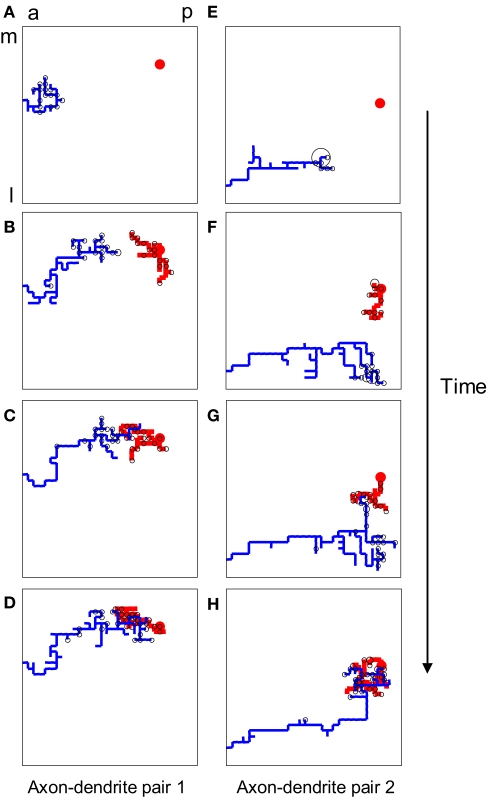
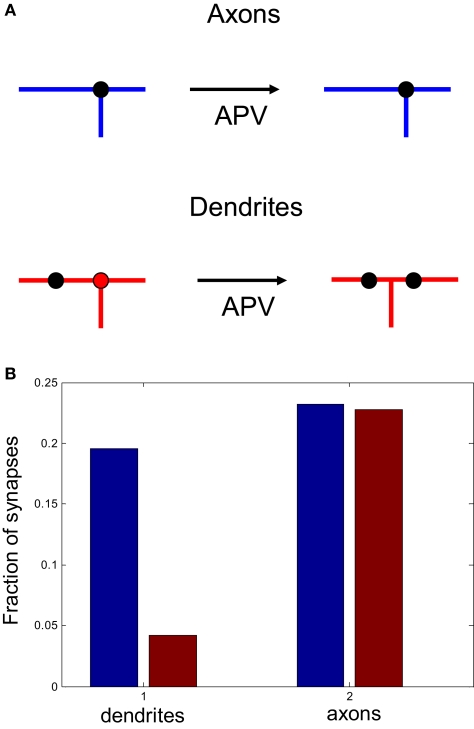
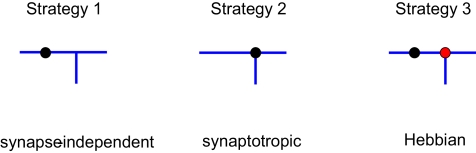
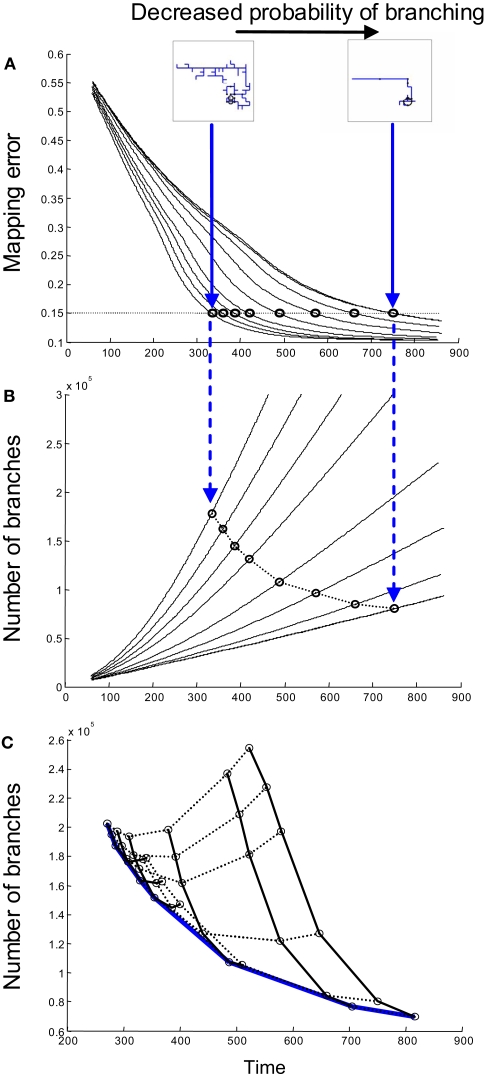
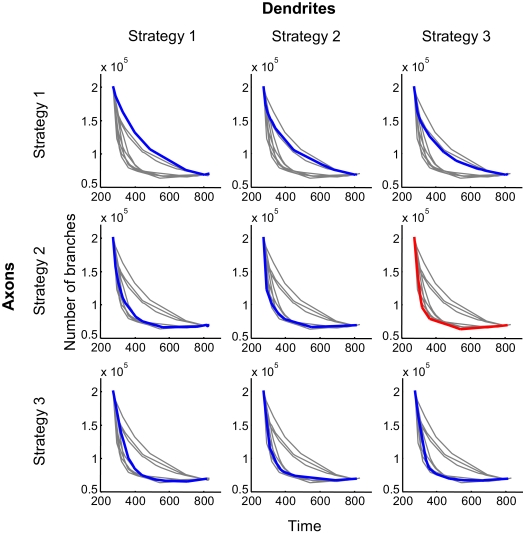
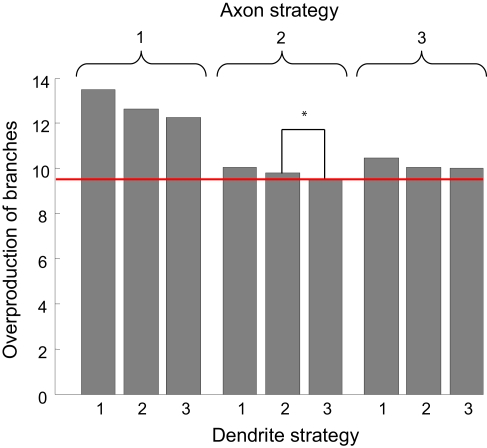
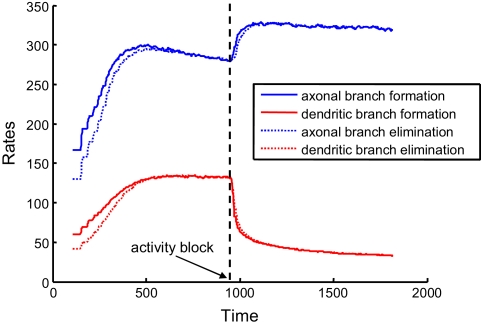
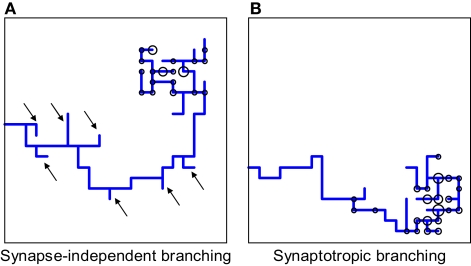
In developing brain, axons and dendrites are capable of connecting to each other with high precision. Imaging of axonal and dendritic dynamics in vivo shows that the majority of axonal and dendritic branches are formed 'in error', only to be retracted later. The functional significance of the overproduction of branches is not clear. Here we show that branching of both axons and dendrites can accelerate finding appropriate synaptic targets during the development of neuronal circuitry. We suggest that branching rules implemented by axons and dendrites minimize the number of erroneous branches. We find that optimal branching rules are different for axons and dendrites in agreement with experimentally observed branch dynamics. Thus, our studies suggest that the developing neural system employs a set of sophisticated computational strategies that facilitate the formation of required circuitry in the fastest and most frugal way.
在发育中的大脑中,轴突和树突能够高精度地相互连接。对轴突和树突动态的活体成像表明,大多数轴突和树突分支是“错误形成”的,后来会被缩回。分支过度产生的功能意义尚不清楚。在这里,我们表明,在神经元回路的发育过程中,轴突和树突的分支都可以加速找到合适的突触靶标。我们认为,轴突和树突执行的分支规则可以最大限度地减少错误分支的数量。我们发现,与实验观察到的分支动力学一致,轴突和树突的最优分支规则是不同的。因此,我们的研究表明,发育中的神经系统采用了一系列复杂的计算策略,以最快和最节俭的方式促进所需电路的形成。