Berta Laura, Fazzari Annamaria, Ficco Anna Maria, Enrica Patrizia Maurici, Catalano Maria Graziella, Frairia Roberto
Department of Clinical Pathophysiology, University of Turin, Turin, Italy.
Acta Orthop. 2009 Oct;80(5):612-7. doi: 10.3109/17453670903316793.
Extracorporeal shock waves (ESWs) are used to good effect in the treatment of soft tissue injuries, but the underlying mechanisms are still unknown. We therefore determined the effects of ESWs on normal fibroblasts in vitro, in order to assess treatment-induced cell response.
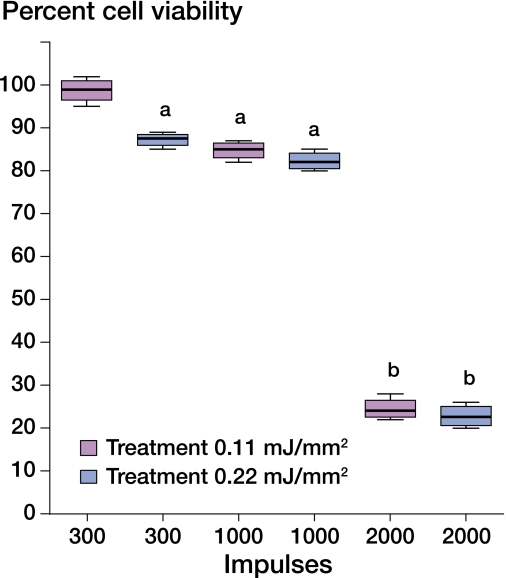
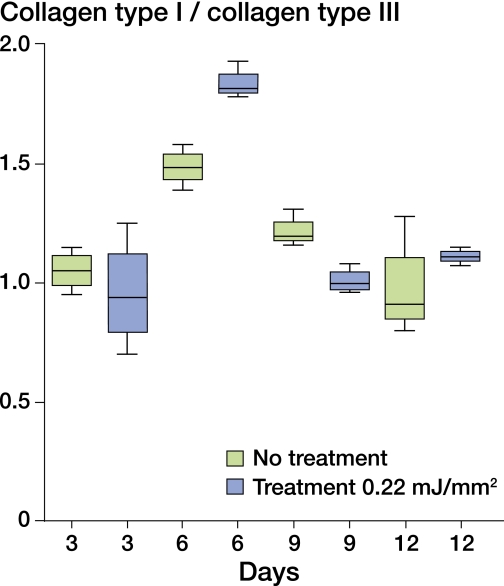
A normal human fibroblast cell line (NHDF-12519) was treated with ESWs generated by a piezoelectric device (Piezoson 100; Richard Wolfe) using different protocols of impulses (300, 1,000, or 2,000 shots) and energy (0.11 or 0.22 mJ/mm(2)). Untreated controls and treated cells were cultivated for 12 days following a single shock-wave treatment. Viability, growth rate, and expression of mRNA for TGFbeta-1 and collagen types I and III were evaluated at days 3, 6, 9, and 12.
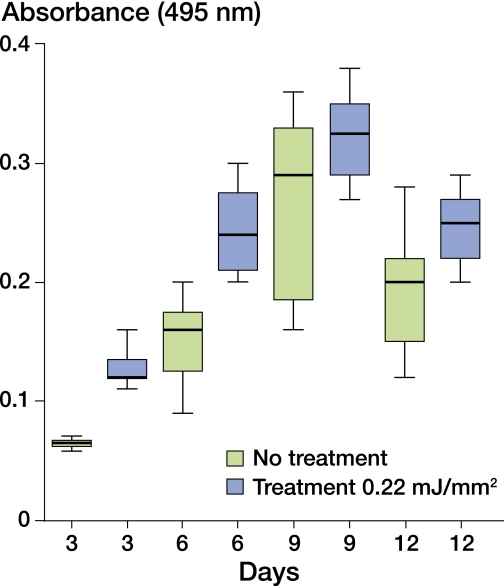
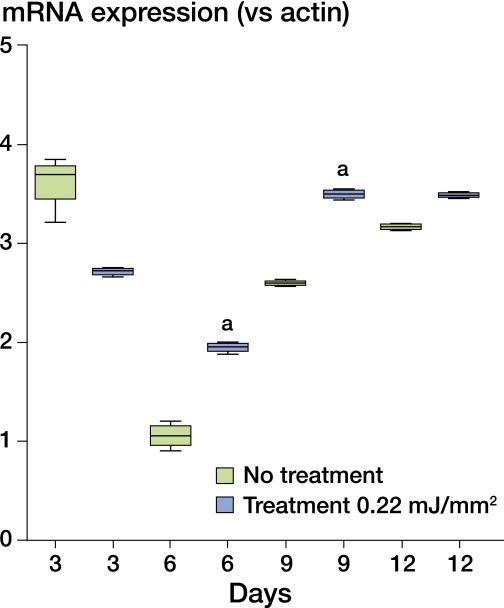
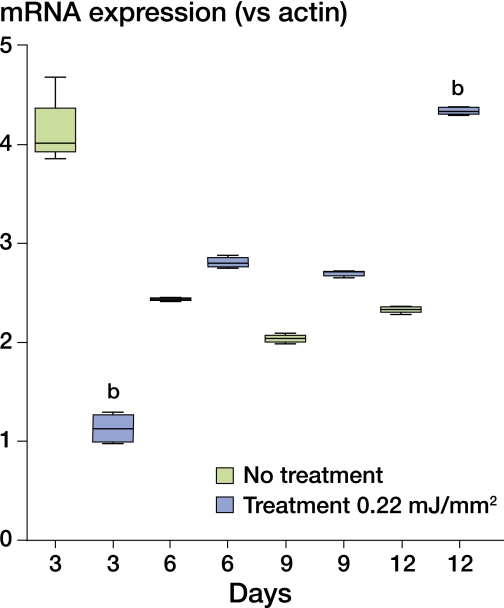
1 hour after shock-wave treatment, cell viability showed a decrease related mainly to impulse numbers applied. Fibroblasts treated with energy of 0.22 mJ/mm(2) subsequently showed an increase in proliferation from day 6 to day 9 that was higher than in untreated controls, without interference with the normal cell kinetic profile. mRNA expression was also higher in treated fibroblasts than in untreated controls for TGFbeta-1 on day 6 and day 9, for collagen type I on day 6, and for collagen type III on day 9.
These in vitro data confirm that the main factors involved in the repair process of connective tissues are activated by ESWs. The study gives the rationale for, and may provide schedules for, ESW treatment of tendonopathies.
体外冲击波(ESW)在软组织损伤治疗中效果良好,但其潜在机制仍不清楚。因此,我们测定了ESW对体外正常成纤维细胞的影响,以评估治疗引起的细胞反应。
使用压电装置(Piezoson 100;Richard Wolfe)产生的ESW,采用不同的脉冲方案(300、1000或2000次冲击)和能量(0.11或0.22 mJ/mm²)处理正常人成纤维细胞系(NHDF - 12519)。单次冲击波治疗后,未处理的对照细胞和处理后的细胞培养12天。在第3、6、9和12天评估细胞活力、生长速率以及TGFβ - 1和I型及III型胶原蛋白的mRNA表达。
冲击波治疗后1小时,细胞活力下降,主要与施加的脉冲次数有关。随后,用0.22 mJ/mm²能量处理的成纤维细胞从第6天到第9天增殖增加,高于未处理的对照细胞,且不干扰正常细胞动力学特征。在第6天和第9天,处理后的成纤维细胞中TGFβ -