Crop Improvement and Utilization Research Unit, Western Regional Research Center, ARS, USDA, Albany, CA 94710, USA.
BMC Plant Biol. 2009 Nov 17;9:131. doi: 10.1186/1471-2229-9-131.
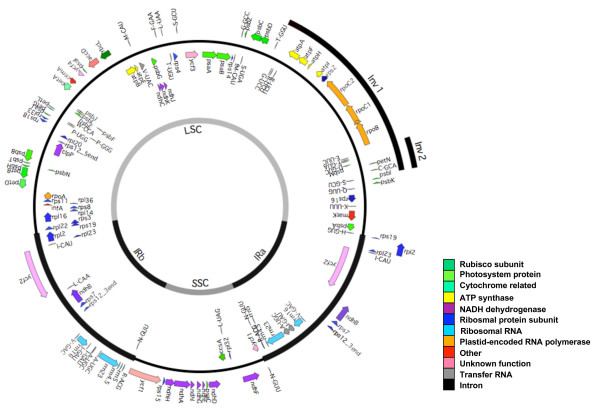
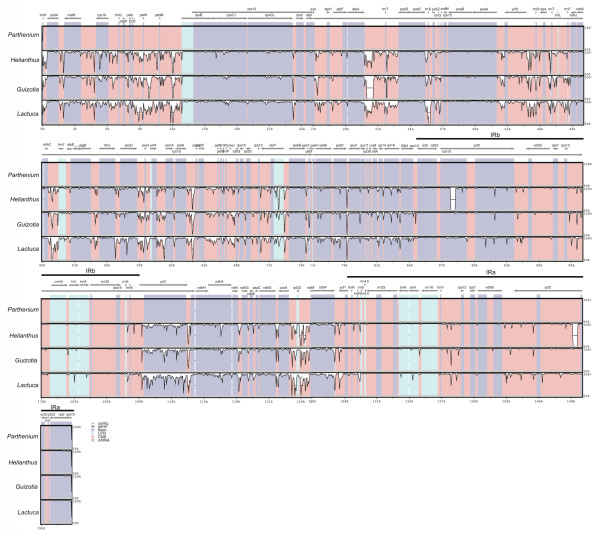
Parthenium argentatum (guayule) is an industrial crop that produces latex, which was recently commercialized as a source of latex rubber safe for people with Type I latex allergy. The complete plastid genome of P. argentatum was sequenced. The sequence provides important information useful for genetic engineering strategies. Comparison to the sequences of plastid genomes from three other members of the Asteraceae, Lactuca sativa, Guitozia abyssinica and Helianthus annuus revealed details of the evolution of the four genomes. Chloroplast-specific DNA barcodes were developed for identification of Parthenium species and lines.
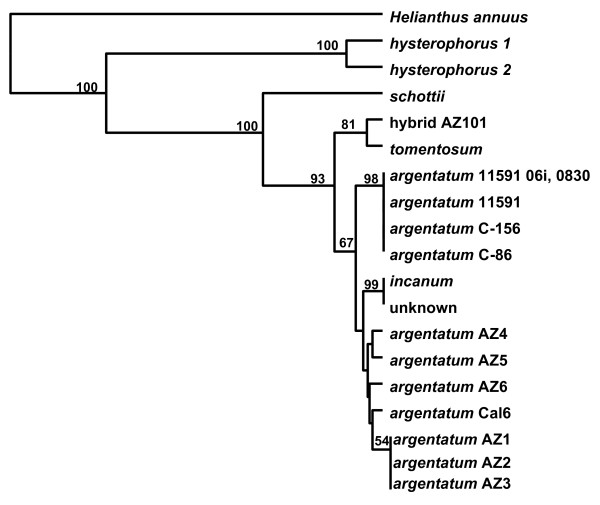
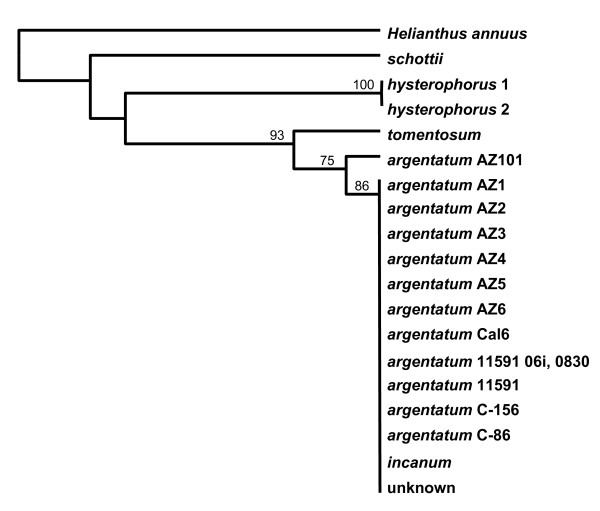
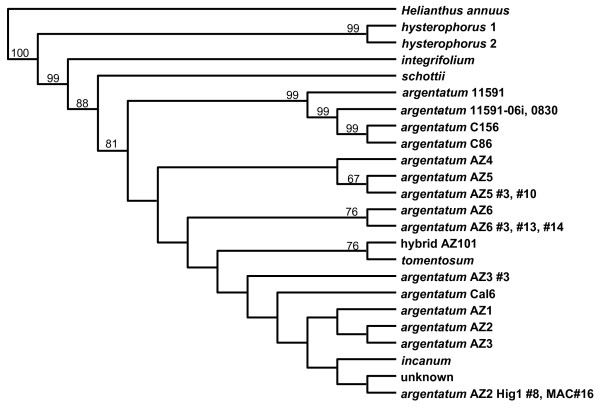
The complete plastid genome of P. argentatum is 152,803 bp. Based on the overall comparison of individual protein coding genes with those in L. sativa, G. abyssinica and H. annuus, we demonstrate that the P. argentatum chloroplast genome sequence is most closely related to that of H. annuus. Similar to chloroplast genomes in G. abyssinica, L. sativa and H. annuus, the plastid genome of P. argentatum has a large 23 kb inversion with a smaller 3.4 kb inversion, within the large inversion. Using the matK and psbA-trnH spacer chloroplast DNA barcodes, three of the four Parthenium species tested, P. tomentosum, P. hysterophorus and P. schottii, can be differentiated from P. argentatum. In addition, we identified lines within P. argentatum.
The genome sequence of the P. argentatum chloroplast will enrich the sequence resources of plastid genomes in commercial crops. The availability of the complete plastid genome sequence may facilitate transformation efficiency by using the precise sequence of endogenous flanking sequences and regulatory elements in chloroplast transformation vectors. The DNA barcoding study forms the foundation for genetic identification of commercially significant lines of P. argentatum that are important for producing latex.
银胶菊(guayule)是一种工业作物,可产乳胶,最近已商业化,作为一类对 I 型乳胶过敏人群安全的乳胶橡胶来源。已对银胶菊的完整质体基因组进行了测序。该序列提供了用于遗传工程策略的有用信息。与来自菊科的另外三个成员,即莴苣(Lactuca sativa)、吉妥兹亚(Guitozia abyssinica)和向日葵(Helianthus annuus)的质体基因组序列的比较,揭示了这四个基因组的进化细节。为鉴定银胶菊物种和品系,开发了叶绿体特异性 DNA 条形码。
银胶菊的完整质体基因组为 152803bp。基于与莴苣、吉妥兹亚和向日葵的个体蛋白编码基因的整体比较,我们证明银胶菊质体基因组序列与向日葵的最为接近。与吉妥兹亚、莴苣和向日葵的质体基因组相似,银胶菊的质体基因组具有一个较大的 23kb 倒位,其中还包含一个较小的 3.4kb 倒位。使用 matK 和 psbA-trnH 间隔区叶绿体 DNA 条形码,在所测试的四个银胶菊物种中的三个,即银胶菊、多裂银胶菊和银胶菊,可与银胶菊相区分。此外,我们还鉴定了银胶菊的品系。
银胶菊质体基因组序列将丰富商业作物质体基因组的序列资源。完整质体基因组序列的可用性可能通过利用叶绿体转化载体中内源性侧翼序列和调控元件的精确序列,促进转化效率。DNA 条形码研究为乳胶生产中具有重要商业意义的银胶菊重要品系的遗传鉴定奠定了基础。