Molecular and Population Genetics, Nuffield Department of Medicine, University of Oxford, Wellcome Trust Centre for Human Genetics, Roosevelt Drive, Oxford OX3 7BN, UK.
Br J Cancer. 2010 Jan 19;102(2):447-54. doi: 10.1038/sj.bjc.6605338. Epub 2009 Nov 17.
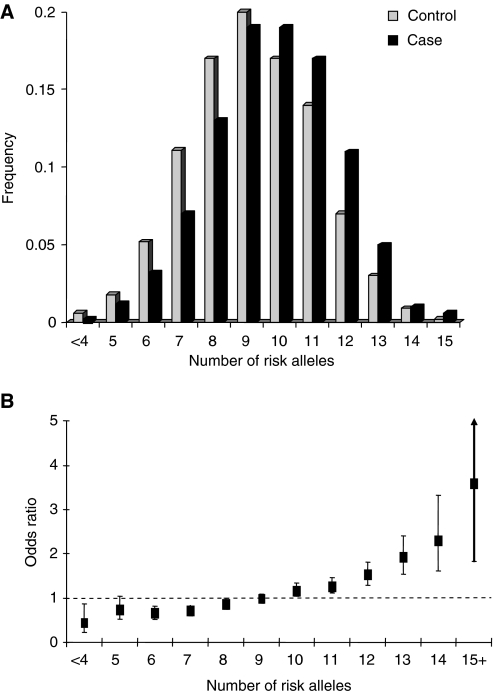
It is now recognised that a part of the inherited risk of colorectal cancer (CRC) can be explained by the co-inheritance of low-penetrance genetic variants. The accumulated experience to date in identifying these variants has served to highlight difficulties in conducting statistically and methodologically rigorous studies and follow-up analyses. The COGENT (COlorectal cancer GENeTics) consortium includes 20 research groups in Europe, Australia, the Americas, China and Japan. The overarching goal of COGENT is to identify and characterise low-penetrance susceptibility variants for CRC through association-based analyses. In this study, we review the rationale for identifying low-penetrance variants for CRC and our proposed strategy for establishing COGENT.
现在已经认识到,结直肠癌(CRC)的部分遗传风险可以通过低外显率遗传变异的共同遗传来解释。迄今为止,在识别这些变异体方面积累的经验突显了在进行统计学和方法学上严格的研究和后续分析方面的困难。COGENT(结直肠癌遗传学)联盟包括欧洲、澳大利亚、美洲、中国和日本的 20 个研究小组。COGENT 的总体目标是通过基于关联的分析来确定和描述 CRC 的低外显率易感性变异体。在这项研究中,我们回顾了确定 CRC 低外显率变异体的基本原理以及我们为建立 COGENT 而提出的策略。