Russo Giancarlo, Patrignani Andrea, Poveda Lucy, Hoehn Frederic, Scholtka Bettina, Schlapbach Ralph, Garvin Alex M
Functional Genomics Center Zurich, ETH/University of Zurich, Zurich, Switzerland.
Droplet Diagnostics SAS, Mulhouse, France.
Appl Transl Genom. 2015 Oct 16;7:32-9. doi: 10.1016/j.atg.2015.08.006. eCollection 2015 Dec.
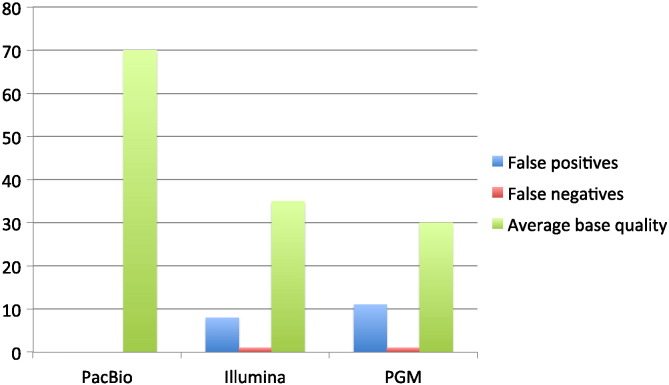
Colorectal cancer (CRC) represents one of the most prevalent and lethal malignant neoplasms and every individual of age 50 and above should undergo regular CRC screening. Currently, the most effective preventive screening procedure to detect adenomatous polyps, the precursors to CRC, is colonoscopy. Since every colorectal cancer starts as a polyp, detecting all polyps and removing them is crucial. By exactly doing that, colonoscopy reduces CRC incidence by 80%, however it is an invasive procedure that might have unpleasant and, in rare occasions, dangerous side effects. Despite numerous efforts over the past two decades, a non-invasive screening method for the general population with detection rates for adenomas and CRC similar to that of colonoscopy has not yet been established. Recent advances in next generation sequencing technologies have yet to be successfully applied to this problem, because the detection of rare mutations has been hindered by the systematic biases due to sequencing context and the base calling quality of NGS. We present the first study that applies the high read accuracy and depth of single molecule, real time, circular consensus sequencing (SMRT-CCS) to the detection of mutations in stool DNA in order to provide a non-invasive, sensitive and accurate test for CRC. In stool DNA isolated from patients diagnosed with adenocarcinoma, we are able to detect mutations at frequencies below 0.5% with no false positives. This approach establishes a foundation for a non-invasive, highly sensitive assay to screen the population for CRC and the early stage adenomas that lead to CRC.
结直肠癌(CRC)是最常见且致命的恶性肿瘤之一,50岁及以上的每个人都应定期进行CRC筛查。目前,检测腺瘤(CRC的癌前病变)最有效的预防性筛查方法是结肠镜检查。由于每例结直肠癌都始于息肉,因此检测并切除所有息肉至关重要。通过准确做到这一点,结肠镜检查可将CRC发病率降低80%,然而它是一种侵入性检查,可能会带来不适,且在极少数情况下会产生危险的副作用。尽管在过去二十年中付出了诸多努力,但尚未建立一种针对普通人群的非侵入性筛查方法,其腺瘤和CRC的检测率与结肠镜检查相当。下一代测序技术的最新进展尚未成功应用于这一问题,因为由于测序背景和NGS碱基识别质量导致的系统偏差阻碍了罕见突变的检测。我们开展了第一项研究,将单分子实时环形一致测序(SMRT-CCS)的高读取准确性和深度应用于粪便DNA中的突变检测,以便为CRC提供一种非侵入性、灵敏且准确的检测方法。在从诊断为腺癌的患者中分离出的粪便DNA中,我们能够检测到频率低于0.5%的突变,且无假阳性。这种方法为一种非侵入性、高灵敏度的检测方法奠定了基础,用于对人群进行CRC以及导致CRC的早期腺瘤筛查。