Sevick Mary Ann, Stone Roslyn A, Novak Matthew, Piraino Beth, Snetselaar Linda, Marsh Rita M, Hall Beth, Lash Heather, Bernardini Judith, Burke Lora E
Center for Health Equity Research and Promotion.
Patient Prefer Adherence. 2008 Feb 2;2:177-84.
The purpose of the BalanceWise-hemodialysis study is to determine the efficacy of a dietary intervention to reduce dietary sodium intake in patients receiving maintenance, in-center hemodialysis (HD). Personal digital assistant (PDA)-based dietary self-monitoring is paired with behavioral counseling. The purpose of this report is to present a case study of one participant's progression through the intervention.
The PDA was individually programmed with the nutritional requirements of the participant. With 25 minutes of personalized instruction, the participant was able to enter his meals into the PDA using BalanceLog((R)) software. Nutritional counseling was provided based on dietary sodium intake reports generated by BalanceLog((R)).
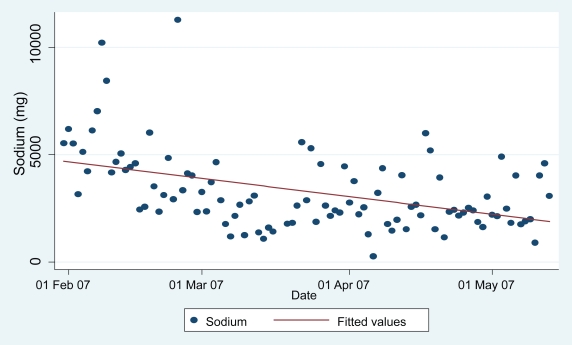
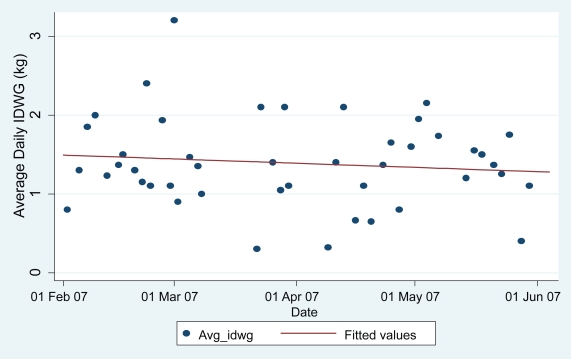
: At initiation of the study the participant required 4 HD treatments per week. The participant entered 342 meals over 16 weeks (>/=3 meals per day). BalanceLog((R)) revealed that the participant consumed restaurant/fast food on a regular basis, and consumed significant amounts of corned beef as well as canned foods high in sodium. The study dietitian worked with the participant and his wife to identify food alternatives lower in sodium. Baseline sodium consumption was 4,692 mg, and decreased at a rate of 192 mg/week on average. After 11 weeks of intervention, interdialytic weight gains were reduced sufficiently to permit the participant to reduce HD treatments from 4 to 3 per week. Because of a low serum albumin at baseline (2.9 g/dL) the study dietitian encouraged the participant to increase his intake of high quality protein. Serum albumin level at 16 weeks was unchanged (2.9 g/dL). Because of intense pruritis and a high baseline serum phosphorus (6.5 mg/dL) BalanceLog((R)) electronic logs were reviewed to identify sources of dietary phosphorus and counsel the participant regarding food alternatives. At 16 weeks the participant's serum phosphorus fell to 5.5 mg/dL.
Self-monitoring rates were excellent. In a HD patient who was willing to self-monitor his dietary intake, BalanceLog((R)) allowed the dietitian to target problematic foods and provide counseling that appeared to be effective in reducing sodium intake, reducing interdialytic weight gain, and alleviating hyperphosphatemia and hyperkalemia. Additional research is needed to evaluate the efficacy of the intervention.
“明智平衡 - 血液透析”研究的目的是确定一种饮食干预措施对降低接受维持性中心血液透析(HD)患者饮食中钠摄入量的效果。基于个人数字助理(PDA)的饮食自我监测与行为咨询相结合。本报告的目的是呈现一名参与者在干预过程中的案例研究。
根据参与者的营养需求对PDA进行个性化编程。经过25分钟的个性化指导,参与者能够使用BalanceLog®软件将其饮食录入PDA。根据BalanceLog®生成的饮食钠摄入量报告提供营养咨询。
在研究开始时,该参与者每周需要进行4次血液透析治疗。参与者在16周内录入了342餐(每天≥3餐)。BalanceLog®显示该参与者经常食用餐厅/快餐食品,并且食用了大量咸牛肉以及高钠罐头食品。研究营养师与参与者及其妻子合作,确定钠含量较低的替代食品。基线钠摄入量为4692毫克,平均每周下降192毫克。经过11周的干预,透析间期体重增加充分减少,使参与者能够将血液透析治疗次数从每周4次减少到3次。由于基线血清白蛋白水平较低(2.9克/分升),研究营养师鼓励参与者增加优质蛋白质的摄入量。16周时血清白蛋白水平未变(2.9克/分升)。由于严重瘙痒和基线血清磷水平较高(6.5毫克/分升),对BalanceLog®电子记录进行了审查,以确定饮食中磷的来源,并就替代食品向参与者提供咨询。16周时参与者的血清磷降至5.5毫克/分升。
自我监测率很高。对于一名愿意自我监测饮食摄入的血液透析患者,BalanceLog®使营养师能够针对有问题的食物并提供咨询,这似乎有效地减少了钠摄入量、减少了透析间期体重增加,并缓解了高磷血症和高钾血症。需要进一步研究以评估该干预措施的效果。