Biological Imaging Center, Beckman Institute, California Institute of Technology, Pasadena, California, United States of America.
PLoS Biol. 2009 Nov;7(11):e1000246. doi: 10.1371/journal.pbio.1000246. Epub 2009 Nov 17.
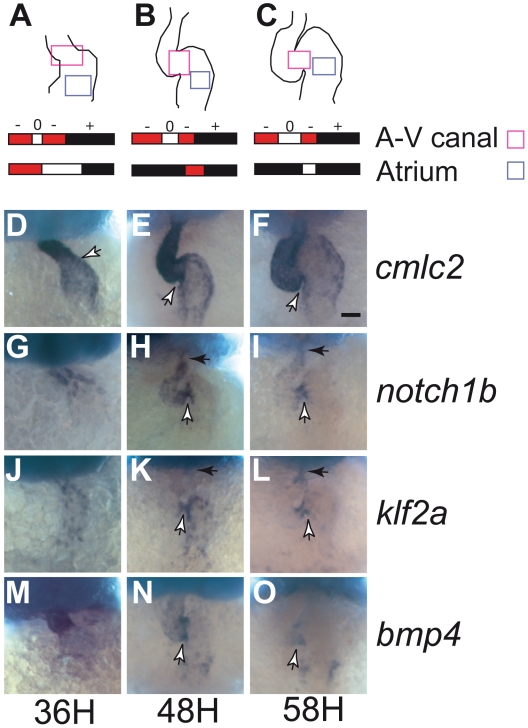
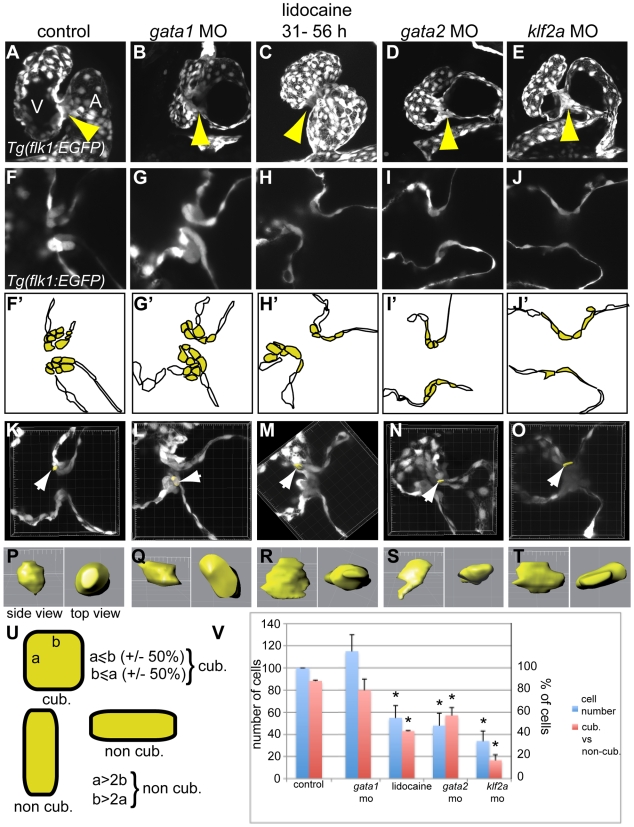
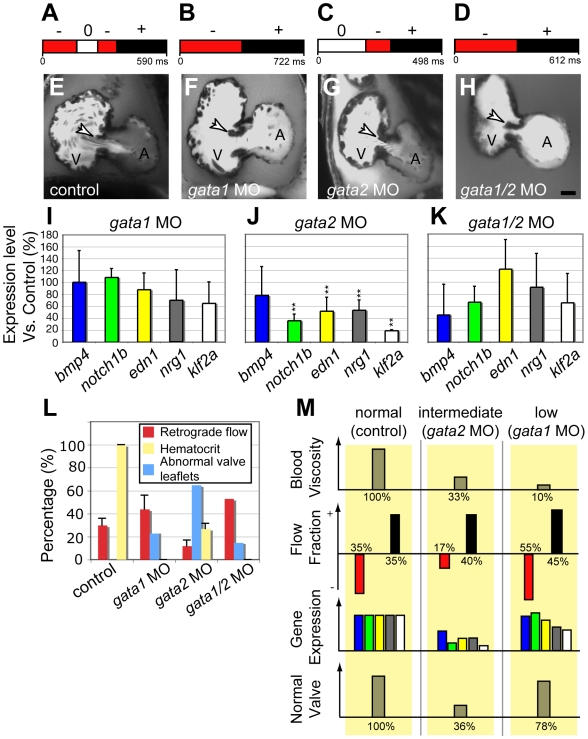
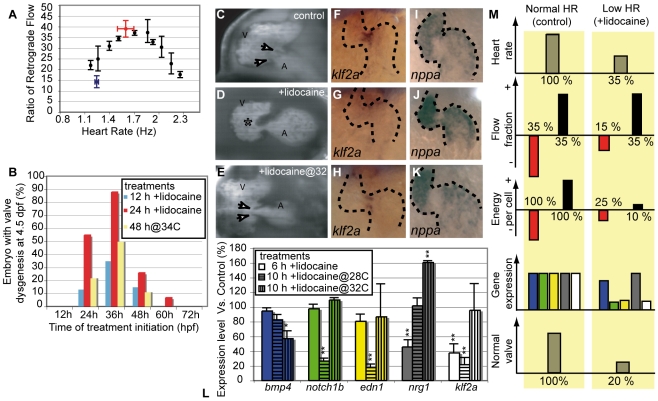
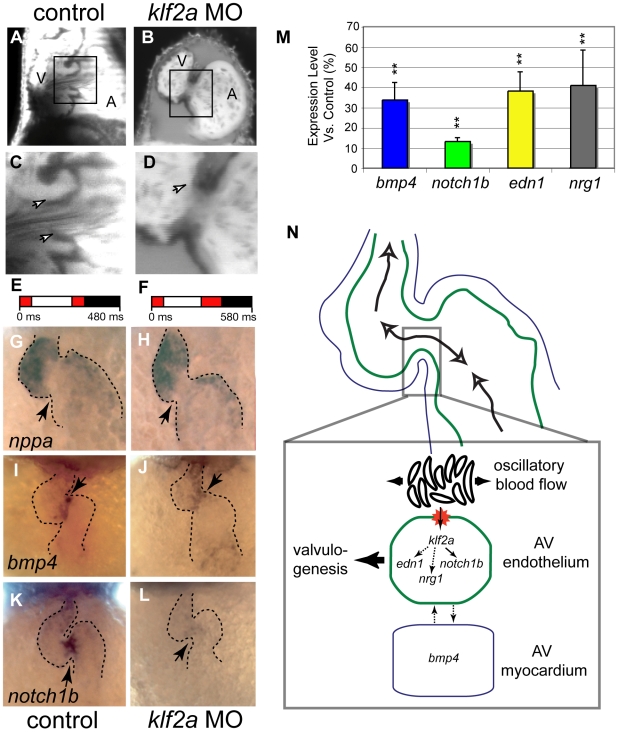
Heart valve anomalies are some of the most common congenital heart defects, yet neither the genetic nor the epigenetic forces guiding heart valve development are well understood. When functioning normally, mature heart valves prevent intracardiac retrograde blood flow; before valves develop, there is considerable regurgitation, resulting in reversing (or oscillatory) flows between the atrium and ventricle. As reversing flows are particularly strong stimuli to endothelial cells in culture, an attractive hypothesis is that heart valves form as a developmental response to retrograde blood flows through the maturing heart. Here, we exploit the relationship between oscillatory flow and heart rate to manipulate the amount of retrograde flow in the atrioventricular (AV) canal before and during valvulogenesis, and find that this leads to arrested valve growth. Using this manipulation, we determined that klf2a is normally expressed in the valve precursors in response to reversing flows, and is dramatically reduced by treatments that decrease such flows. Experimentally knocking down the expression of this shear-responsive gene with morpholine antisense oligonucleotides (MOs) results in dysfunctional valves. Thus, klf2a expression appears to be necessary for normal valve formation. This, together with its dependence on intracardiac hemodynamic forces, makes klf2a expression an early and reliable indicator of proper valve development. Together, these results demonstrate a critical role for reversing flows during valvulogenesis and show how relatively subtle perturbations of normal hemodynamic patterns can lead to both major alterations in gene expression and severe valve dysgenesis.
心脏瓣膜异常是最常见的先天性心脏缺陷之一,但指导心脏瓣膜发育的遗传和表观遗传力量仍未得到很好的理解。当心脏瓣膜正常运作时,可以防止心脏内的血液逆流;在瓣膜发育之前,会有相当大的回流,导致心房和心室之间出现反向(或振荡)血流。由于反向流动对培养中的内皮细胞是特别强烈的刺激,因此一个有吸引力的假设是,心脏瓣膜的形成是对成熟心脏中逆行血流的发育反应。在这里,我们利用振荡流和心率之间的关系,在房室(AV)管瓣发生之前和期间操纵逆行血流的量,发现这会导致瓣膜生长停止。通过这种操作,我们确定 klf2a 在瓣膜前体中正常表达,以响应反向流动,并且通过减少这种流动的处理而大大减少。用吗啉代反义寡核苷酸(MOs)实验性敲低该剪切反应基因的表达会导致瓣膜功能障碍。因此,klf2a 的表达似乎是正常瓣膜形成所必需的。这与其对心脏内血液动力学力的依赖性一起,使得 klf2a 的表达成为正常瓣膜发育的早期和可靠指标。总之,这些结果表明,在瓣膜发生期间,反向流动起着关键作用,并展示了正常血流模式的相对细微干扰如何导致基因表达的重大改变和严重的瓣膜发育不良。