Department of Pathology, The Johns Hopkins School of Medicine, Baltimore, Maryland, USA.
PLoS One. 2009 Nov 17;4(11):e7857. doi: 10.1371/journal.pone.0007857.
Oncocytes of the thyroid gland (Hürthle cells) are found in tumors and autoimmune diseases. They have a unique appearance characterized by abundant granular eosinophilic cytoplasm and hyperchromatic nucleus. Their pathogenesis has remained, thus far, unknown.
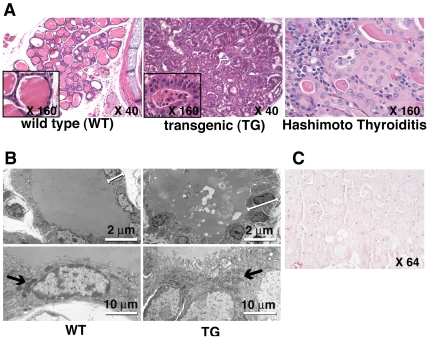
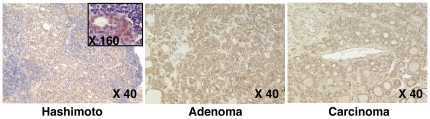
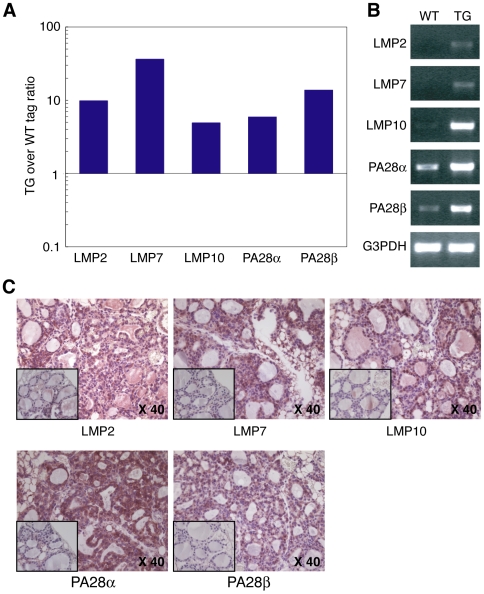
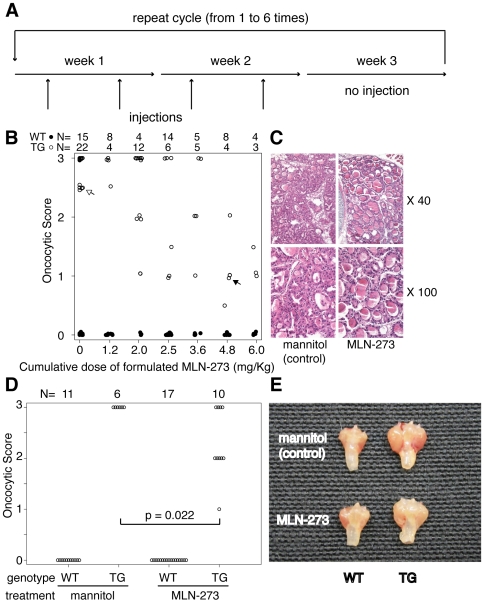
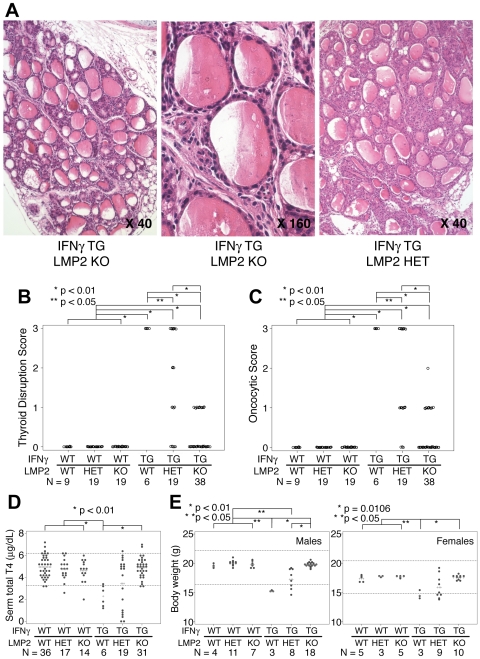
METHODOLOGY/PRINCIPAL FINDINGS: Using transgenic mice chronically expressing IFNgamma in thyroid gland, we showed changes in the thyroid follicular epithelium reminiscent of the human oncocyte. Transcriptome analysis comparing transgenic to wild type thyrocytes revealed increased levels of immunoproteasome subunits like LMP2 in transgenics, suggesting an important role of the immunoproteasome in oncocyte pathogenesis. Pharmacologic blockade of the proteasome, in fact, ameliorated the oncocytic phenotype. Genetic deletion of LMP2 subunit prevented the development of the oncocytic phenotype and primary hypothyroidism. LMP2 was also found expressed in oncocytes from patients with Hashimoto thyroiditis and Hürthle cell tumors.
CONCLUSIONS/SIGNIFICANCE: In summary, we report that oncocytes are the result of an increased immunoproteasome expression secondary to a chronic inflammatory milieu, and suggest LMP2 as a novel therapeutic target for the treatment of oncocytic lesions and autoimmune hypothyroidism.
甲状腺中的嗜酸细胞(Hurthle 细胞)可见于肿瘤和自身免疫性疾病中。它们具有独特的外观,表现为丰富的颗粒状嗜酸性细胞质和深染的核。其发病机制至今尚未明确。
方法/主要发现:我们使用慢性在甲状腺中表达 IFNγ的转基因小鼠,展示了类似于人类嗜酸细胞瘤的甲状腺滤泡上皮的变化。将转基因与野生型甲状腺细胞进行转录组分析比较,发现转基因中免疫蛋白酶体亚基如 LMP2 的水平增加,提示免疫蛋白酶体在嗜酸细胞瘤发病机制中具有重要作用。事实上,蛋白酶体的药理学阻断改善了嗜酸细胞表型。LMP2 亚基的基因缺失可防止嗜酸细胞表型和原发性甲状腺功能减退的发生。在桥本甲状腺炎和 Hurthle 细胞瘤患者的嗜酸细胞瘤中也发现表达了 LMP2。
结论/意义:总之,我们报告称,嗜酸细胞瘤是慢性炎症环境继发的免疫蛋白酶体表达增加的结果,并提出 LMP2 是治疗嗜酸细胞瘤和自身免疫性甲状腺功能减退症的新的治疗靶点。