Kimura Hiroaki, Usui Fumitake, Karasawa Tadayoshi, Kawashima Akira, Shirasuna Koumei, Inoue Yoshiyuki, Komada Takanori, Kobayashi Motoi, Mizushina Yoshiko, Kasahara Tadashi, Suzuki Koichi, Iwasaki Yusaku, Yada Toshihiko, Caturegli Patrizio, Takahashi Masafumi
Division of Inflammation Research, Center for Molecular Medicine, Jichi Medical University, Tochigi, Japan.
Department of Mycobacteriology, Leprosy Research Center, National Institute of Infectious Diseases, Tokyo, Japan.
Sci Rep. 2015 Oct 30;5:15883. doi: 10.1038/srep15883.
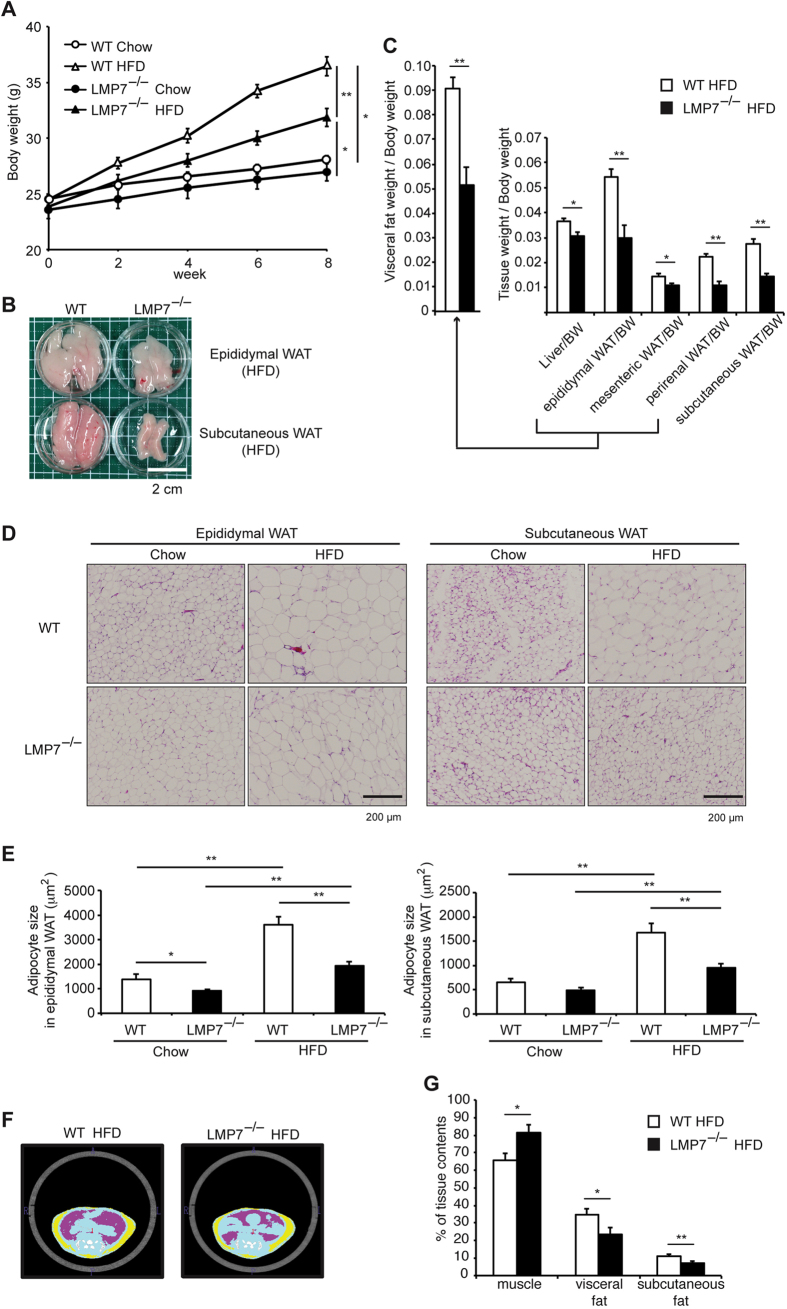
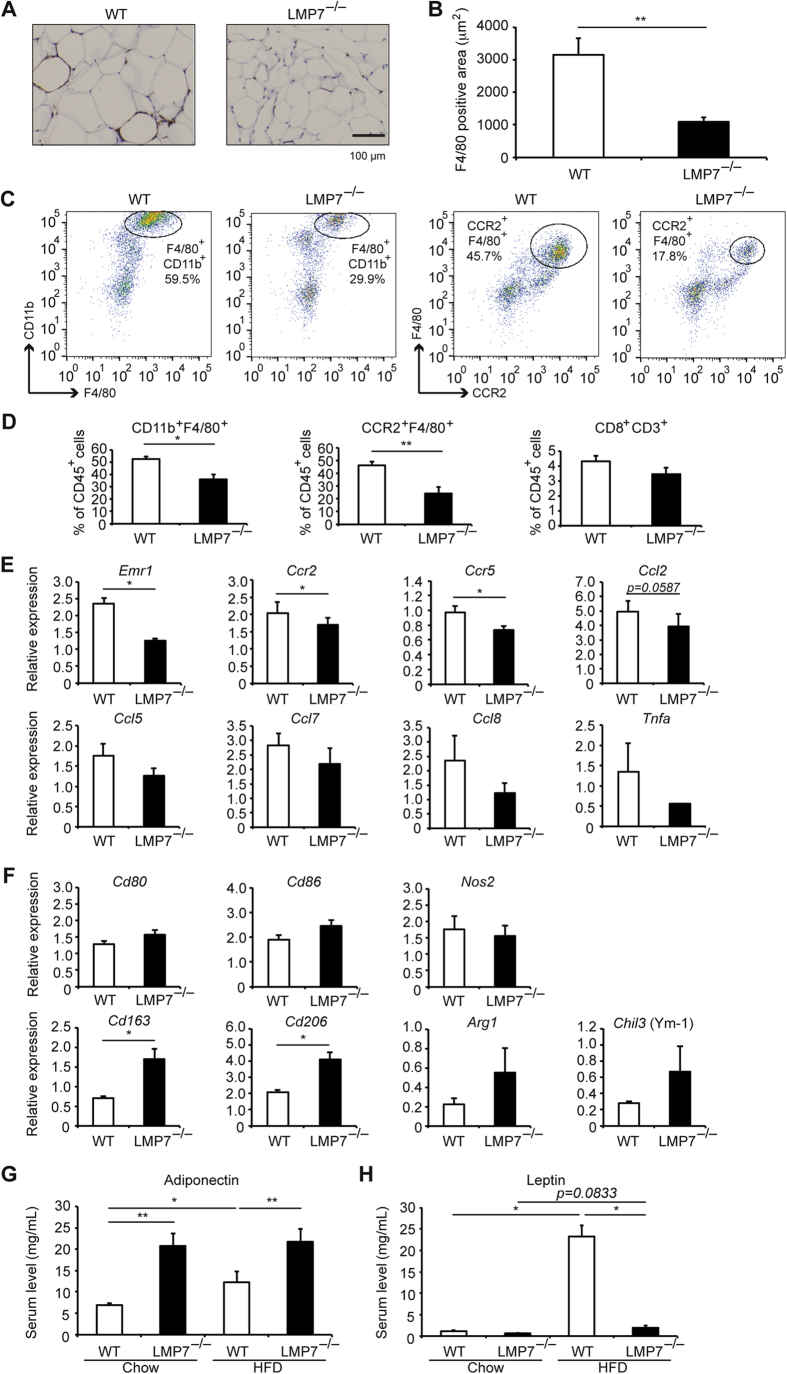
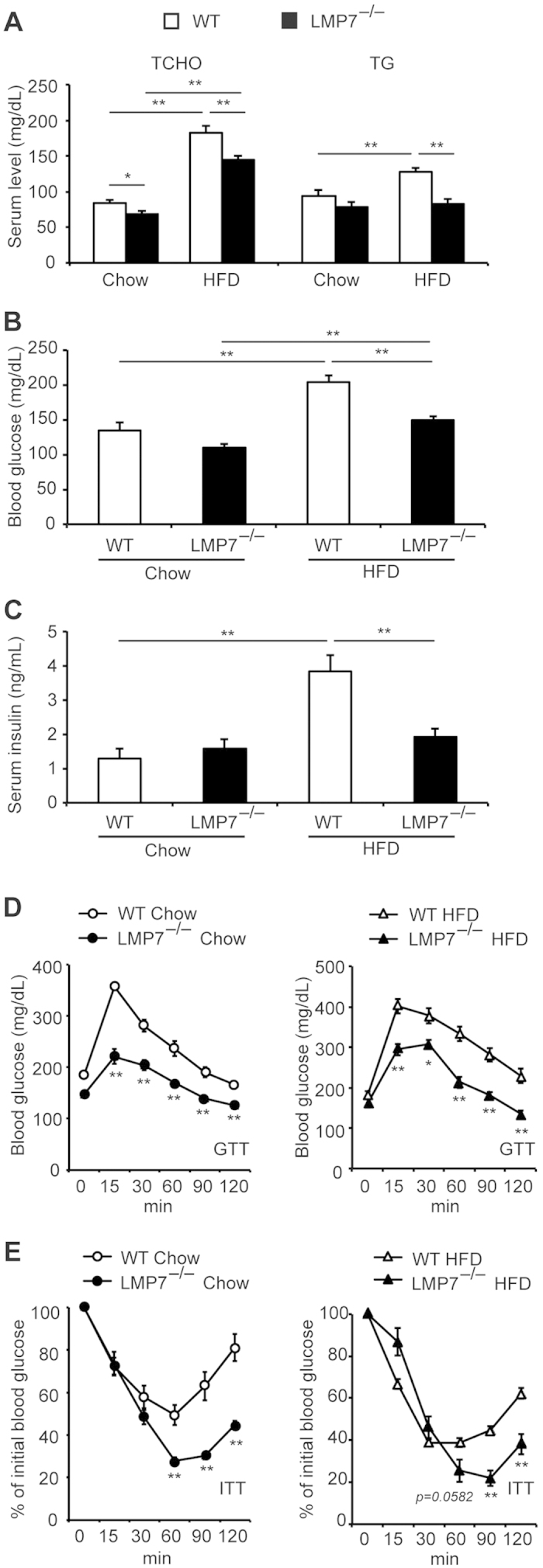
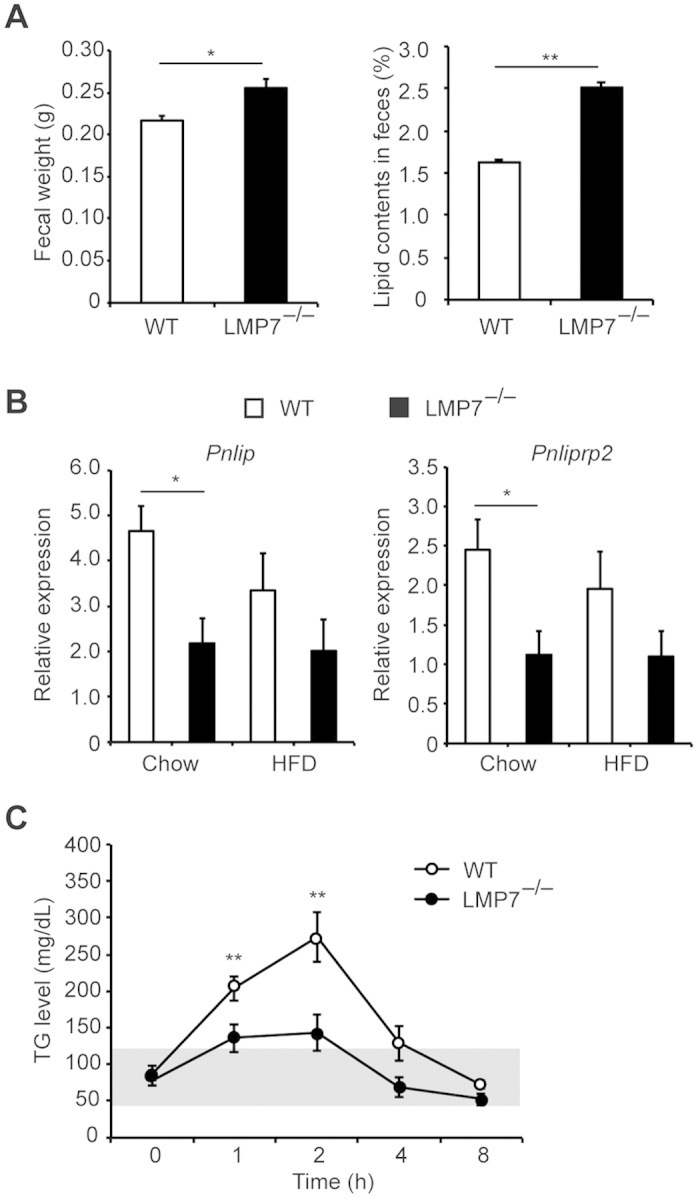
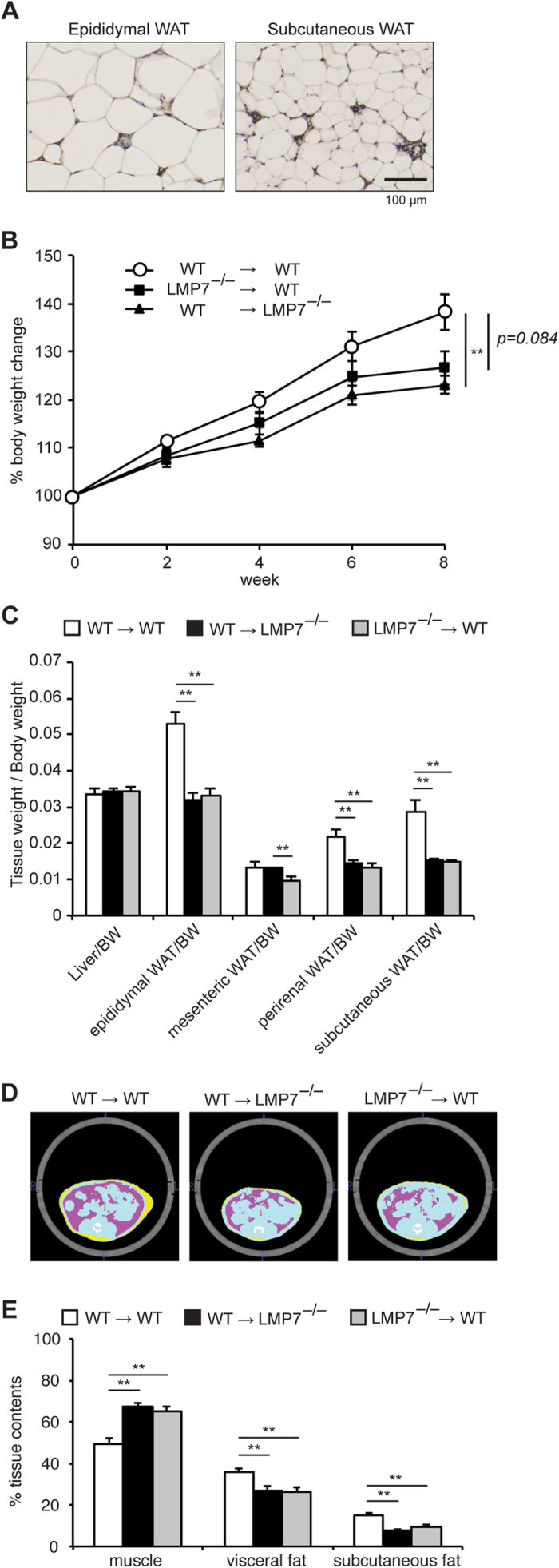
Inflammation plays an important role in the development of obesity and metabolic disorders; however, it has not been fully understood how inflammation occurs and is regulated in their pathogenesis. Low-molecular mass protein-7 (LMP7) is a proteolytic subunit of the immunoproteasome that shapes the repertoire of antigenic peptides on major histocompatibility complex class I molecule. In this study, we investigated the role of LMP7 in the development of obesity and metabolic disorders using LMP7-deficient mice. LMP7 deficiency conveyed resistant to obesity, and improved glucose intolerance and insulin sensitivity in mice fed with high-fat diet (HFD). LMP7 deficiency decreased pancreatic lipase expression, increased fecal lipid contents, and inhibited the increase of plasma triglyceride levels upon oral oil administration or HFD feeding. Using bone marrow-transferred chimeric mice, we found that LMP7 in both bone marrow- and non-bone marrow-derived cells contributes to the development of HFD-induced obesity. LMP7 deficiency decreased inflammatory responses such as macrophage infiltration and chemokine expression while it increased serum adiponection levels. These findings demonstrate a novel role for LMP7 and provide new insights into the mechanisms underlying inflammation in the pathophysiology of obesity and metabolic disorders.
炎症在肥胖和代谢紊乱的发展过程中起着重要作用;然而,炎症在其发病机制中是如何发生及受到调控的,目前尚未完全明确。低分子量蛋白-7(LMP7)是免疫蛋白酶体的一个蛋白水解亚基,它决定了主要组织相容性复合体I类分子上抗原肽的种类。在本研究中,我们利用LMP7基因缺陷小鼠,研究了LMP7在肥胖和代谢紊乱发展过程中的作用。LMP7基因缺陷使小鼠对肥胖具有抵抗力,并改善了高脂饮食(HFD)喂养小鼠的葡萄糖不耐受和胰岛素敏感性。LMP7基因缺陷降低了胰腺脂肪酶的表达,增加了粪便脂质含量,并抑制了口服油脂或给予HFD后血浆甘油三酯水平的升高。利用骨髓移植嵌合小鼠,我们发现骨髓来源和非骨髓来源细胞中的LMP7均有助于HFD诱导的肥胖的发展。LMP7基因缺陷降低了诸如巨噬细胞浸润和趋化因子表达等炎症反应,同时提高了血清脂联素水平。这些发现揭示了LMP7的新作用,并为肥胖和代谢紊乱病理生理学中炎症的潜在机制提供了新的见解。