Department of Nephrology and Hypertension, University Hospital Erlangen, University of Erlangen-Nuremberg, Erlangen, Germany.
PLoS One. 2009 Nov 18;4(11):e7875. doi: 10.1371/journal.pone.0007875.
Hepcidin is a major regulator of iron metabolism and plays a key role in anemia of chronic disease, reducing intestinal iron uptake and release from body iron stores. Hypoxia and chemical stabilizers of the hypoxia-inducible transcription factor (HIF) have been shown to suppress hepcidin expression. We therefore investigated the role of HIF in hepcidin regulation.
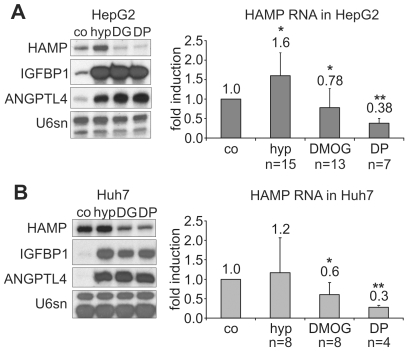
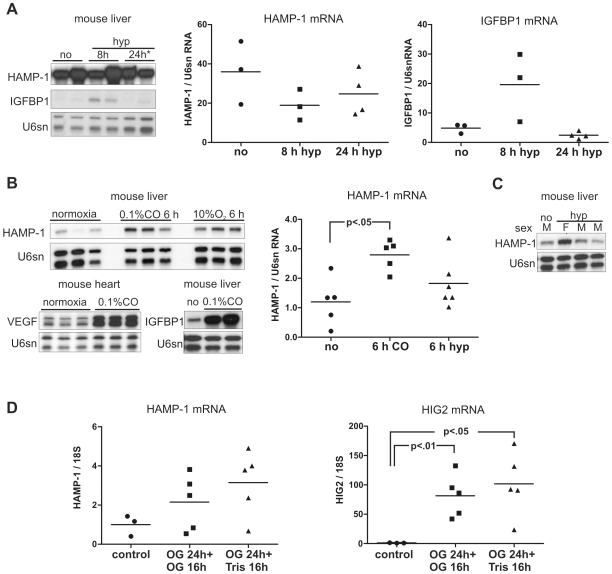
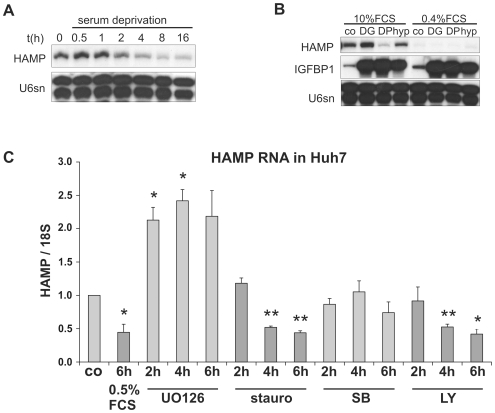
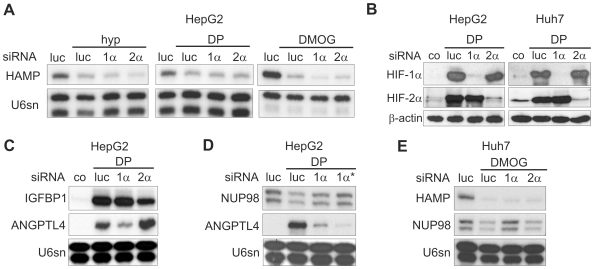
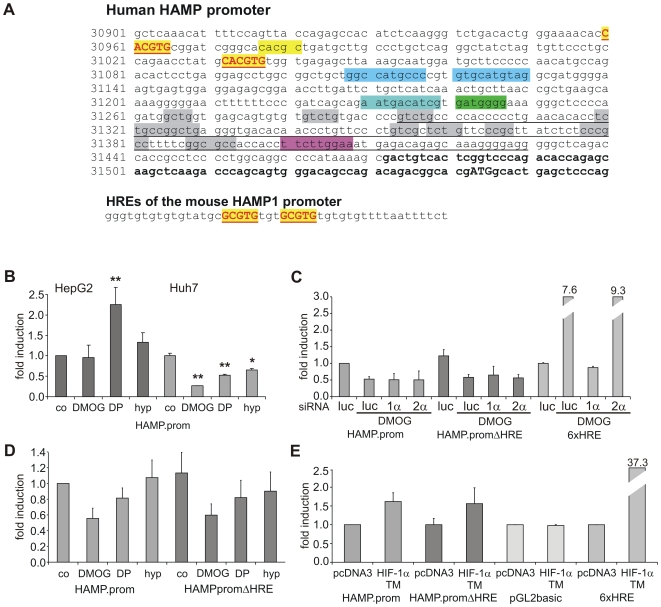
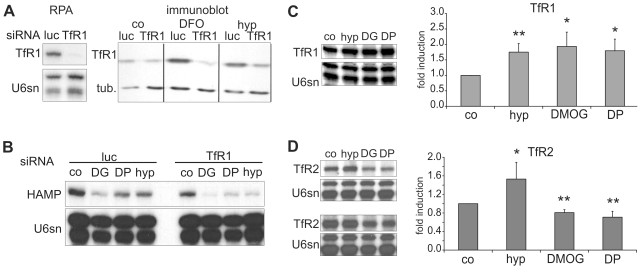
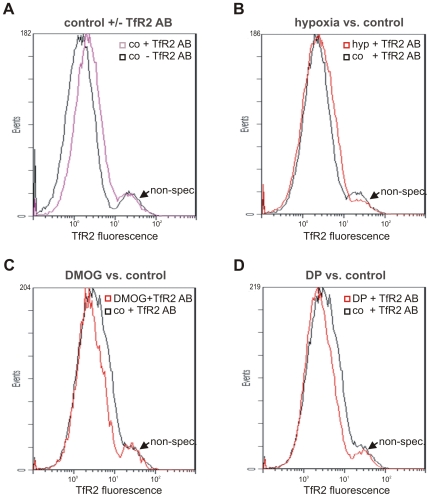
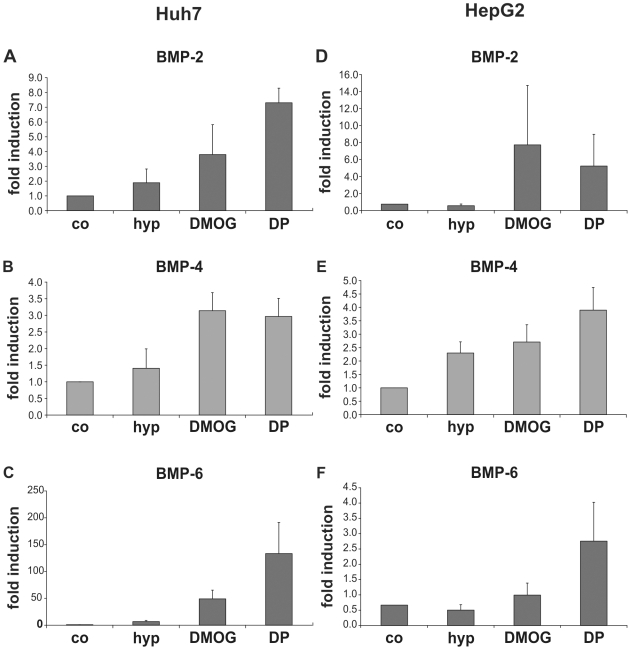
METHODOLOGY/PRINCIPAL FINDINGS: Hepcidin mRNA was down-regulated in hepatoma cells by chemical HIF stabilizers and iron chelators, respectively. In contrast, the response to hypoxia was variable. The decrease in hepcidin mRNA was not reversed by HIF-1alpha or HIF-2alpha knock-down or by depletion of the HIF and iron regulatory protein (IRP) target transferrin receptor 1 (TfR1). However, the response of hepcidin to hypoxia and chemical HIF inducers paralleled the regulation of transferrin receptor 2 (TfR2), one of the genes critical to hepcidin expression. Hepcidin expression was also markedly and rapidly decreased by serum deprivation, independent of transferrin-bound iron, and by the phosphatidylinositol 3 (PI3) kinase inhibitor LY294002, indicating that growth factors are required for hepcidin expression in vitro. Hepcidin promoter constructs mirrored the response of mRNA levels to interleukin-6 and bone morphogenetic proteins, but not consistently to hypoxia or HIF stabilizers, and deletion of the putative HIF binding motifs did not alter the response to different hypoxic stimuli. In mice exposed to carbon monoxide, hypoxia or the chemical HIF inducer N-oxalylglycine, liver hepcidin 1 mRNA was elevated rather than decreased.
CONCLUSIONS/SIGNIFICANCE: Taken together, these data indicate that hepcidin is neither a direct target of HIF, nor indirectly regulated by HIF through induction of TfR1 expression. Hepcidin mRNA expression in vitro is highly sensitive to the presence of serum factors and PI3 kinase inhibition and parallels TfR2 expression.
铁调素是铁代谢的主要调节剂,在慢性病性贫血中起关键作用,可减少肠道铁吸收和体内铁储存的释放。缺氧和缺氧诱导因子(HIF)的化学稳定剂已被证明可抑制铁调素的表达。因此,我们研究了 HIF 在铁调素调节中的作用。
方法/主要发现:化学 HIF 稳定剂和铁螯合剂分别下调肝癌细胞中铁调素 mRNA。相比之下,对缺氧的反应是可变的。铁调素 mRNA 的减少不能通过 HIF-1alpha 或 HIF-2alpha 敲低或耗尽 HIF 和铁调节蛋白(IRP)靶标转铁蛋白受体 1(TfR1)来逆转。然而,铁调素对缺氧和化学 HIF 诱导剂的反应与转铁蛋白受体 2(TfR2)的调节平行,TfR2 是铁调素表达的关键基因之一。铁调素表达也明显且迅速被血清剥夺、转铁蛋白结合铁以及磷脂酰肌醇 3(PI3)激酶抑制剂 LY294002 下调,表明体外生长因子是铁调素表达所必需的。铁调素启动子构建与白细胞介素-6 和骨形态发生蛋白的 mRNA 水平反应相似,但与缺氧或 HIF 稳定剂不一致,并且缺失假定的 HIF 结合基序也不会改变对不同缺氧刺激的反应。在暴露于一氧化碳、缺氧或化学 HIF 诱导剂草酰甘氨酸的小鼠中,肝铁调素 1 mRNA 升高而不是降低。
结论/意义:综上所述,这些数据表明铁调素既不是 HIF 的直接靶标,也不是通过诱导 TfR1 表达间接受 HIF 调节。体外铁调素 mRNA 表达对血清因子和 PI3 激酶抑制的存在高度敏感,与 TfR2 表达平行。