Assisted Reproduction Unit, Department of Obstetrics and Gynaecology, Institute for Maternal and Child Health IRCCS Burlo Garofolo and University of Trieste, Via dell'Istria 65/1, Trieste 34137, Italy.
Reprod Biol Endocrinol. 2009 Nov 19;7:128. doi: 10.1186/1477-7827-7-128.
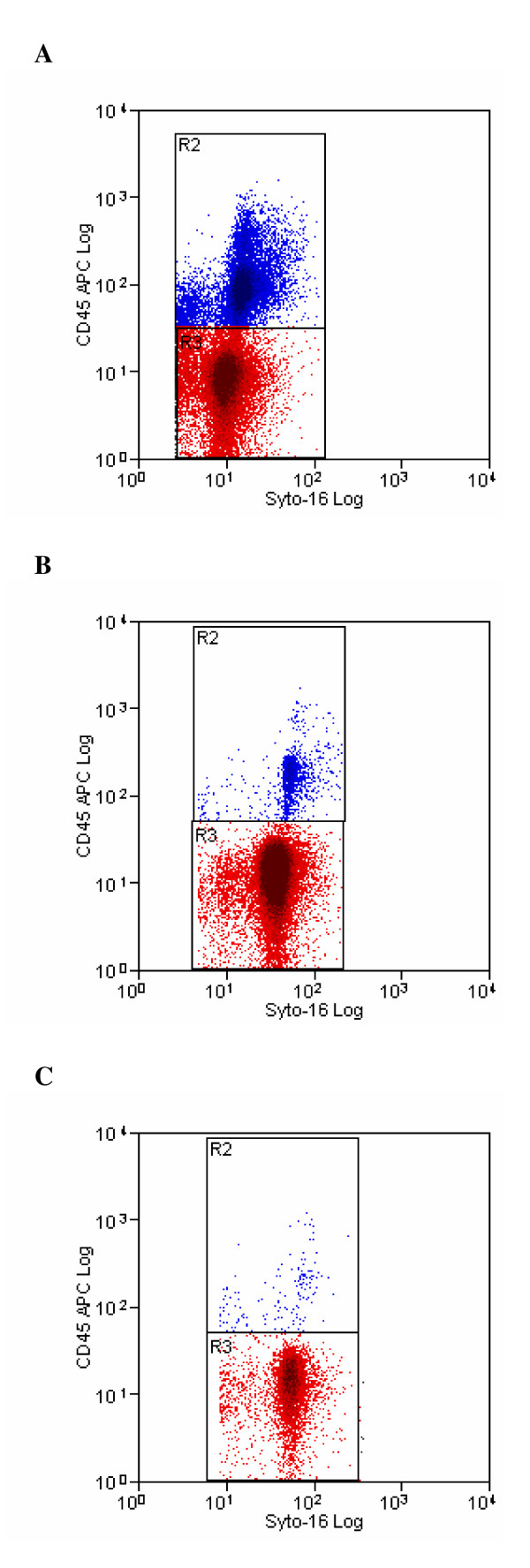
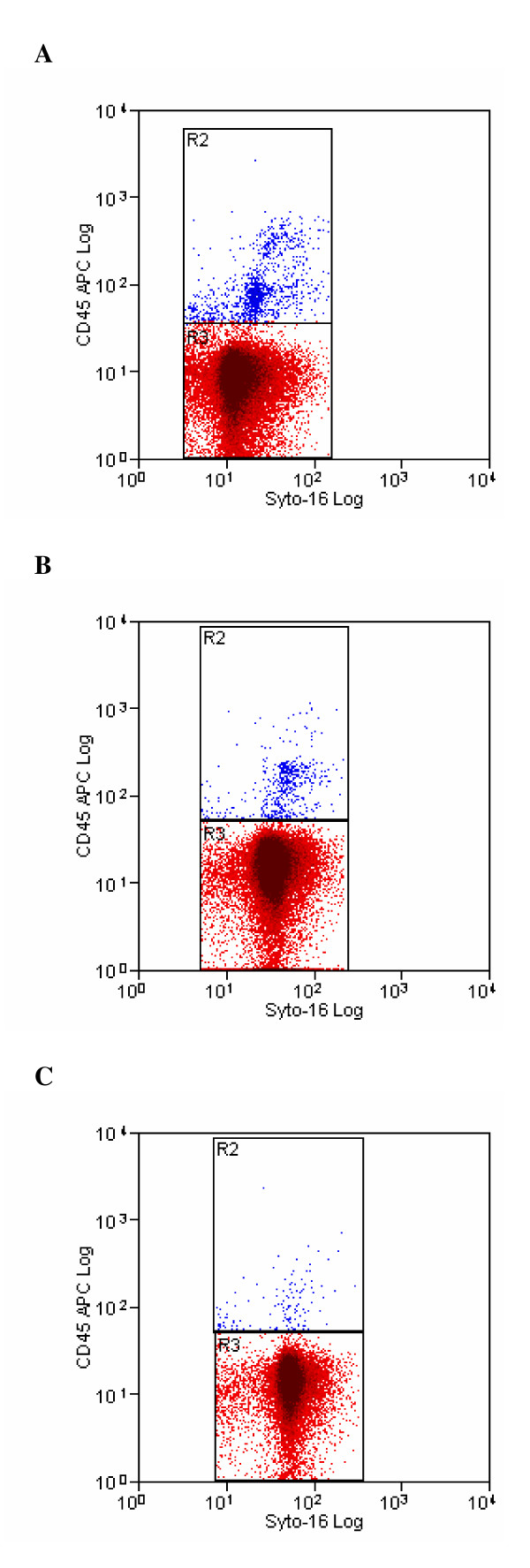
Leukocytes represent the predominant source of reactive oxygen species both in seminal plasma and in sperm suspensions and have been demonstrated to negatively influence sperm function and fertilization rate in assisted reproduction procedures. Peroxidase test is the standard method recommended by WHO to detect semen leukocytes but it may be inaccurate. The aims of this study were (i) to compare the efficiency of swim-up and density-gradient centrifugation techniques in removing seminal leukocytes, (ii) to examine the effect of leukocytes on sperm preparation, and (iii) to compare flow cytometry and peroxidase test in determining leukocyte concentration in semen using a multiparameter flow cytometric method.
Semen samples from 126 male partners of couples undergoing infertility investigations were analyzed for leukocytospermia using standard optical microscopy and flow cytometry. Sixty-nine out of 126 samples were also processed using simultaneously the swim-up and density-gradient centrifugation techniques. A multiparameter flow cytometric analysis to assess simultaneously sperm concentration, sperm viability, sperm apoptosis, and leukocyte concentration was carried out on neat and prepared sperm.
Both sperm preparation methods removed most seminal leukocytes. However, the concentration of leukocytes was significantly lower after swim-up compared to that after density-gradient centrifugation preparation. Leukocytes concentration, either initial or in prepared fractions, was not correlated with sperm parameters (optical microscopy and flow cytometry parameters) after semen processing. There was no correlation between leukocyte concentration in the ejaculate and sperm recovery rate, whereas a significant correlation was found between the concentration of the residual leukocytes in prepared fractions and viable sperm recovery rate. Although the overall concordance between the flow cytometry and the optical microscopy was satisfactory, the sensitivity of peroxidase test for the detection of leukocytospermia resulted low.
Seminal leukocytes do not seem to influence sperm preparation results. However, for assisted conception, semen samples containing leukocytes should be processed using swim-up method. Although peroxidase-test is recommended by WHO as the standard method for determining semen leukocytes, it should not be used in clinical research study.
白细胞是精液和精子悬液中活性氧的主要来源,已被证明会对辅助生殖过程中的精子功能和受精率产生负面影响。过氧化物酶试验是世界卫生组织推荐的检测精液白细胞的标准方法,但可能不够准确。本研究的目的是:(i)比较精子上游法和密度梯度离心法去除精液白细胞的效率;(ii)检查白细胞对精子处理的影响;(iii)使用多参数流式细胞术比较流式细胞术和过氧化物酶试验在确定精液白细胞浓度方面的差异。
对 126 对接受不孕检查的夫妇的精液样本进行白细胞精子症分析,使用标准光学显微镜和流式细胞术。69 例精液样本同时用精子上游法和密度梯度离心法处理。对未处理和处理后的精子进行多参数流式细胞术分析,以评估精子浓度、精子活力、精子凋亡和白细胞浓度。
两种精子处理方法均去除了大部分精液白细胞,但与密度梯度离心法相比,精子上游法处理后的白细胞浓度显著降低。白细胞浓度,无论是初始浓度还是处理后的浓度,与精液处理后的精子参数(光学显微镜和流式细胞术参数)均无相关性。精液中白细胞浓度与精子回收率之间无相关性,而处理后残留白细胞浓度与活精子回收率之间存在显著相关性。虽然流式细胞术和光学显微镜之间的总体一致性令人满意,但过氧化物酶试验检测白细胞精子症的敏感性较低。
白细胞似乎不会影响精子处理结果。然而,对于辅助受孕,含有白细胞的精液样本应使用精子上游法进行处理。尽管过氧化物酶试验被世界卫生组织推荐为检测精液白细胞的标准方法,但在临床研究中不应使用。