The University of Queensland School of Human Movement Studies, Brisbane, Australia.
BMC Public Health. 2009 Nov 23;9:427. doi: 10.1186/1471-2458-9-427.
Depression and poor social support are significant risk factors for coronary heart disease (CHD), and stress and anxiety can trigger coronary events. People experiencing such psychosocial difficulties are more likely to be physically inactive, which is also an independent risk factor for CHD. Resilience training can target these risk factors, but there is little research evaluating the effectiveness of such programs. This paper describes the design and measures of a study to evaluate a resilience training program (READY) to promote psychosocial well-being for heart health, and the added value of integrating physical activity promotion.
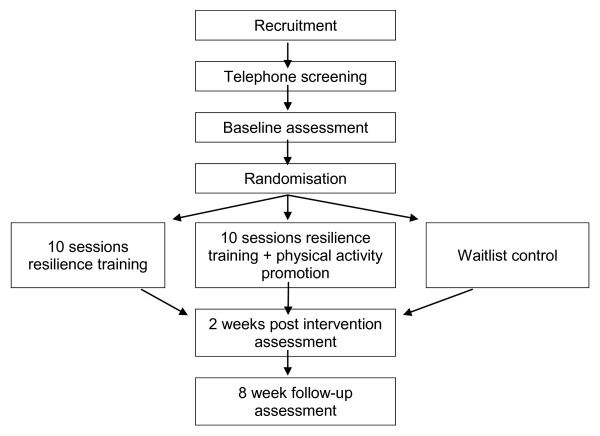
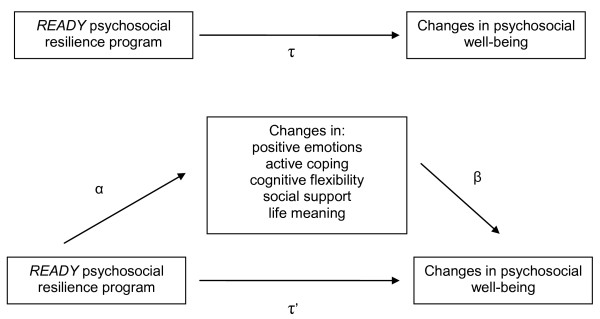
METHODS/DESIGN: In a cluster randomized trial, 95 participants will be allocated to either a waitlist or one of two intervention conditions. Both intervention conditions will receive a 10 x 2.5 hour group resilience training program (READY) over 13 weeks. The program targets five protective factors identified from empirical evidence and analyzed as mediating variables: positive emotions, cognitive flexibility, social support, life meaning, and active coping. Resilience enhancement strategies reflect the six core Acceptance and Commitment Therapy processes (values, mindfulness, defusion, acceptance, self-as-context, committed action) and Cognitive Behavior Therapy strategies such as relaxation training and social support building skills. Sessions include psychoeducation, discussions, experiential exercises, and home assignments. One intervention condition will include an additional session and ongoing content promoting physical activity. Measurement will occur at baseline, two weeks post intervention, and at eight weeks follow-up, and will include questionnaires, pedometer step logs, and physical and hematological measures. Primary outcome measures will include self-reported indicators of psychosocial well-being and depression. Secondary outcome measures will include self-reported indicators of stress, anxiety and physical activity, and objective indicators of CHD risk (blood glucose, cholesterol [mmol.L-1], triglycerides, blood pressure). Process measures of attendance, engagement and fidelity will also be conducted. Linear analyses will be used to examine group differences in the outcome measures, and the product of coefficients method will be used to examine mediated effects.
If successful, this program will provide an innovative means by which to promote psychosocial well-being for heart health in the general population. The program could also be adapted to promote well-being in other at risk population subgroups.
ACTRN12608000017325.
抑郁和较差的社会支持是冠心病(CHD)的重要危险因素,而压力和焦虑会引发冠脉事件。经历这些心理社会困难的人更可能不积极参与体育活动,这也是 CHD 的一个独立危险因素。弹性训练可以针对这些危险因素,但针对此类方案效果的研究很少。本文介绍了一项研究的设计和措施,该研究旨在评估弹性训练计划(READY),以促进心理健康的心理社会幸福感,并评估整合体育活动促进的附加价值。
方法/设计:在一项集群随机试验中,95 名参与者将被分配到候补名单或两种干预条件之一。两种干预条件都将在 13 周内接受 10 次每次 2.5 小时的小组弹性训练计划(READY)。该计划针对从实证证据中分析得出的五个保护因素进行了目标设定,这些因素被分析为中介变量:积极情绪、认知灵活性、社会支持、生活意义和积极应对。弹性增强策略反映了接受和承诺疗法(Acceptance and Commitment Therapy,ACT)的六个核心过程(价值观、正念、去融合、接纳、自我作为背景、承诺行动)和认知行为疗法策略,如放松训练和建立社会支持技能。课程包括心理教育、讨论、体验式练习和家庭作业。一种干预条件将包括额外的课程和持续的内容,以促进身体活动。测量将在基线、干预后两周和八周随访时进行,包括问卷、计步器步骤日志以及身体和血液测量。主要结果指标将包括自我报告的心理社会幸福感和抑郁指标。次要结果指标将包括自我报告的压力、焦虑和身体活动指标,以及冠心病风险的客观指标(血糖、胆固醇[mmol/L-1]、甘油三酯、血压)。还将进行出席、参与和保真度的过程测量。线性分析将用于检查组间结果测量的差异,乘积系数法将用于检查中介效应。
如果成功,该计划将为促进一般人群的心脏健康心理社会幸福感提供一种创新手段。该计划还可以适应其他高危人群亚组,以促进幸福感。
ACTRN12608000017325。