San Raffaele Diabetes Research Institute (HSR-DRI), Milan, Italy.
Diabetes. 2010 Feb;59(2):433-9. doi: 10.2337/db09-1168. Epub 2009 Nov 23.
In type 1 diabetes, allogeneic pancreatic islet transplant restores insulin production, but life-threatening immunosuppression is required to avoid graft rejection. Induction of antigen (Ag)-specific tolerance by cell therapy with regulatory T-cells (Tregs) represents an attractive alternative approach but its therapeutic efficacy in islet transplant remains to be determined. Among the different subsets of CD4(+) Tregs, the T inducible regulatory type 1 (Tr1) cells can be generated from naive T-cells in the presence of interleukin-10 (IL-10) and represent one promising therapeutic choice. This study was designed to define the efficacy of Tr1-cell therapy in preclinical models of islet transplant.
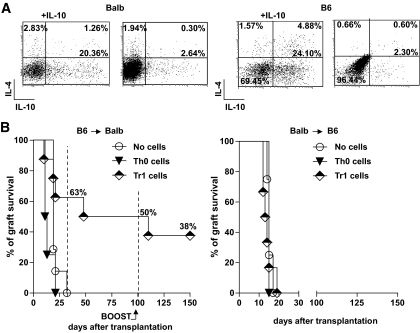
Non-Ag-specific polyclonal Tr1 cells and donor Ag-specific Tr1 cells were transferred, in the absence of any pharmacological treatment, in two distinct mouse models of islet transplant. The two models differed in their therapeutic stringency, based on the mean rejection time of untreated mice that underwent a transplant.
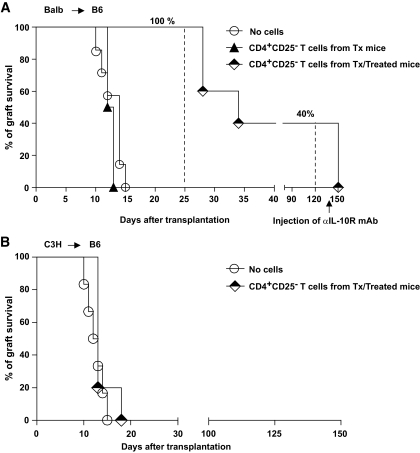
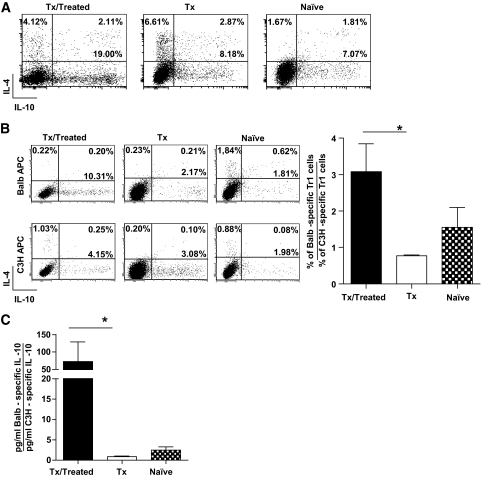
Transfer of polyclonal Tr1 cells engendered graft tolerance only in the nonstringent mouse model. Conversely, cell therapy with Ag-specific Tr1 cells induced an IL-10-dependent tolerance in the stringent mouse model of islet transplant. The therapeutic advantage of Ag-specific Tr1 cells over polyclonal Tr1 cells was due to their donor Ag specificity.
These results demonstrate that Tr1-cell therapy leads to tolerance in settings of islet transplant and that its therapeutic efficacy is highly dependent on the antigen specificity of these cells.
在 1 型糖尿病中,同种异体胰岛移植可恢复胰岛素分泌,但需要进行危及生命的免疫抑制以避免移植物排斥。用调节性 T 细胞(Tregs)进行细胞治疗诱导抗原(Ag)特异性耐受是一种有吸引力的替代方法,但它在胰岛移植中的治疗效果仍有待确定。在 CD4(+)Tregs 的不同亚群中,T 诱导的调节性 1(Tr1)细胞可以在白细胞介素-10(IL-10)存在下从幼稚 T 细胞中产生,代表一种很有前途的治疗选择。本研究旨在确定 Tr1 细胞治疗在胰岛移植的临床前模型中的疗效。
非 Ag 特异性多克隆 Tr1 细胞和供体 Ag 特异性 Tr1 细胞在没有任何药物治疗的情况下,在两种不同的胰岛移植小鼠模型中转移。这两种模型在治疗严格程度上有所不同,这取决于未经处理的接受移植的小鼠的平均排斥时间。
多克隆 Tr1 细胞的转移仅在非严格的小鼠模型中产生移植物耐受。相反,Ag 特异性 Tr1 细胞的细胞治疗在胰岛移植的严格小鼠模型中诱导了一种依赖于 IL-10 的耐受。Ag 特异性 Tr1 细胞比多克隆 Tr1 细胞具有治疗优势,这归因于它们的供体 Ag 特异性。
这些结果表明 Tr1 细胞治疗可导致胰岛移植中的耐受,并且其治疗效果高度依赖于这些细胞的抗原特异性。