Perez Marco I, Linden Wolfgang, Perry Thomas, Puil Lorri J, Wright James M
Open Med. 2009 Jun 9;3(2):e92-e100.
Previous studies have suggested that psychological interventions may be effective in reducing blood pressure. Using rigorous methodology and 24-hour monitoring of ambulatory blood pressure, we compared 2 psychological interventions with treatment using a first-line antihypertensive drug in terms of their efficacy in lowering blood pressure in patients with mild primary hypertension.
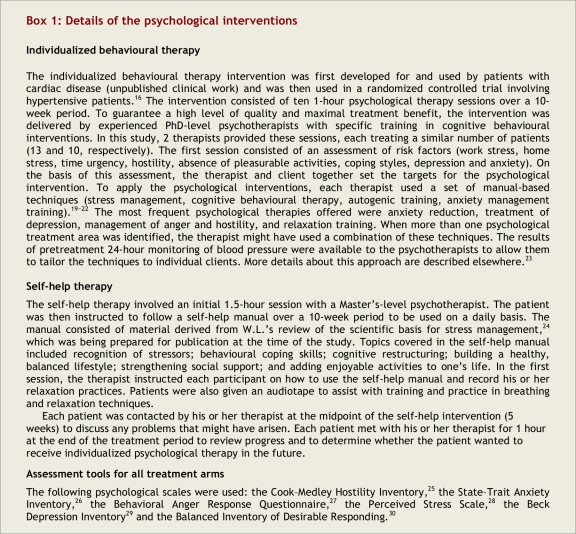
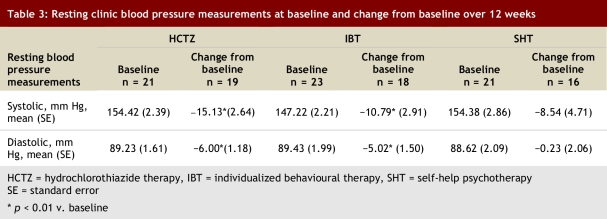
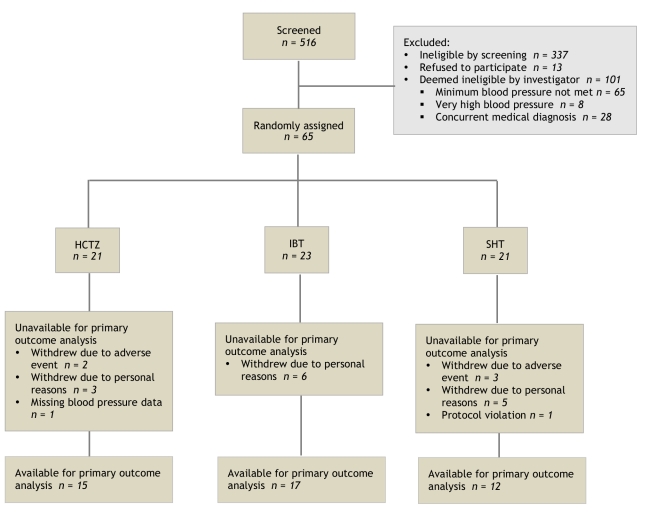
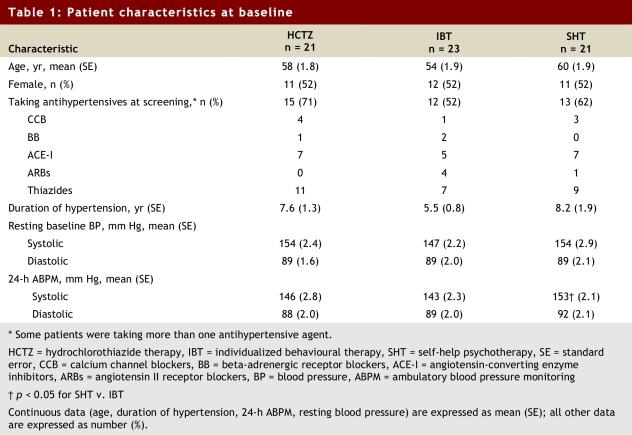
In this prospective, open-label randomized controlled trial (RCT), 65 adult patients with mild, uncomplicated hypertension were randomly assigned to receive one of the following interventions for 12 weeks: (1) pharmacotherapy with hydrochlorothiazide 12.5 titrated to 25 mg/d ; (2) individualized behavioural psychotherapy, consisting of ten 1-hour sessions of stress reduction training with a psychologist; or (3) self-help psychotherapy, consisting of a 1.5-hour session with a psychologist and then daily sessions that involved reading a self-help manual and listening to an audiotape. The primary outcome measure was mean change in ambulatory blood pressure from baseline to week 12. Resting blood pressure readings were taken in the clinic, and adverse events were recorded.
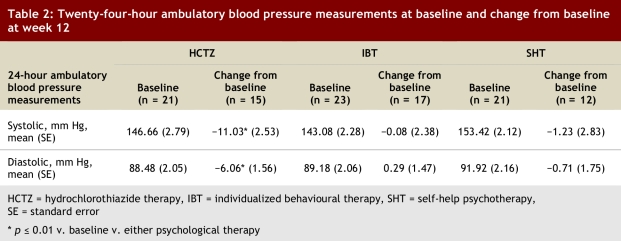
Monitoring of ambulatory blood pressure over 24 hours showed that hydrochlorothiazide therapy significantly reduced both systolic and diastolic blood pressure relative to baseline, and that this reduction was significantly greater than that achieved with either individualized behavioural psychotherapy or self-help psychotherapy (mean reduction [standard error; SE] -11.03 [2.53] / -6.06 [1.56] mm Hg v. -0.08 [2.38] / 0.29 [1.47] mm Hg v. -1.23 [2.83] / -0.71 [1.75] mm Hg, respectively; p = 0.01). Neither form of psychological therapy significantly lowered 24-hour ambulatory blood pressure relative to baseline.
For patients with primary elevated blood pressure, 2 psychological interventions did not lower 24-hour ambulatory blood pressure, whereas hydrochlorothiazide reduced blood pressure, as expected. The findings of this RCT represent an important addition to the evidence for health care practitioners and for patients seeking psychological interventions to reduce blood pressure.
先前的研究表明,心理干预可能对降低血压有效。我们采用严格的方法并对动态血压进行24小时监测,比较了两种心理干预措施与使用一线抗高血压药物治疗对轻度原发性高血压患者降低血压的疗效。
在这项前瞻性、开放标签随机对照试验(RCT)中,65例轻度、无并发症的成年高血压患者被随机分配接受以下干预措施之一,为期12周:(1)用氢氯噻嗪12.5mg滴定至25mg/d进行药物治疗;(2)个体化行为心理治疗,包括与心理学家进行十次每次1小时的减压训练;或(3)自助心理治疗,包括与心理学家进行一次1.5小时的会面,然后每天进行阅读自助手册和听录音带的活动。主要结局指标是从基线到第12周动态血压的平均变化。在诊所测量静息血压读数,并记录不良事件。
24小时动态血压监测显示,与基线相比,氢氯噻嗪治疗显著降低了收缩压和舒张压,且这种降低显著大于个体化行为心理治疗或自助心理治疗所达到的效果(平均降低[标准误差;SE]-11.03[2.53]/ -6.06[1.56]mmHg对-0.08[2.38]/ 0.29[1.47]mmHg对-1.23[2.83]/ -0.71[1.75]mmHg,分别为;p = 0.01)。相对于基线,两种心理治疗形式均未显著降低24小时动态血压。
对于原发性血压升高的患者,两种心理干预措施未降低24小时动态血压,而氢氯噻嗪如预期的那样降低了血压。这项随机对照试验的结果为医疗保健从业者和寻求心理干预以降低血压的患者提供了重要的证据补充。