Ricoy Ulises M, Martinez Joe L
Department of Biology, University of Texas at San Antonio San Antonio, TX, USA.
Front Behav Neurosci. 2009 Nov 16;3:47. doi: 10.3389/neuro.08.047.2009. eCollection 2009.
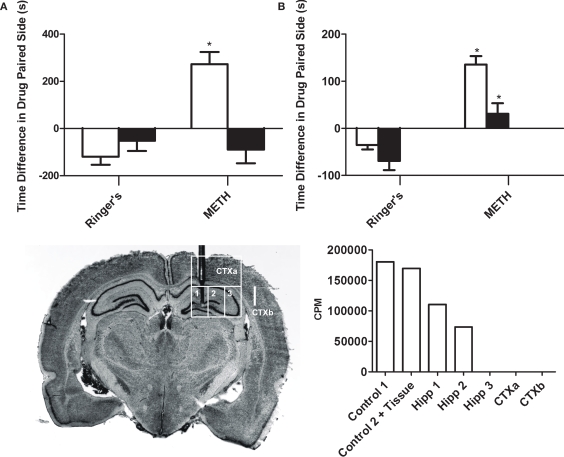
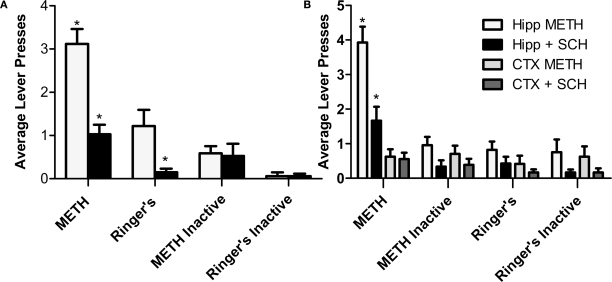
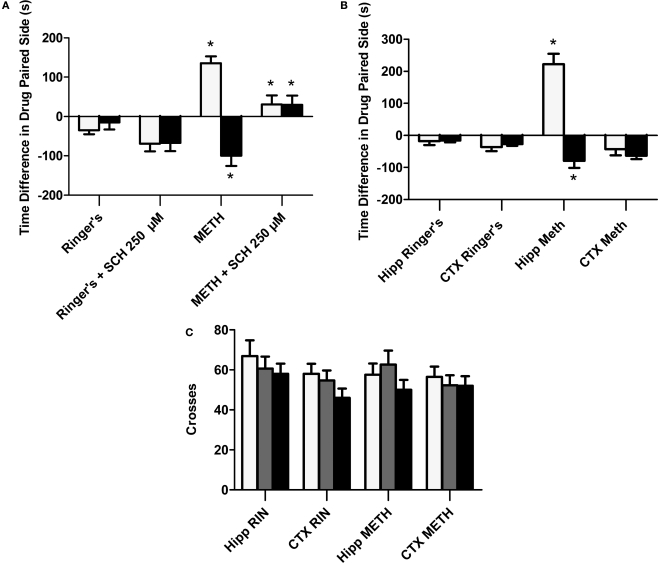
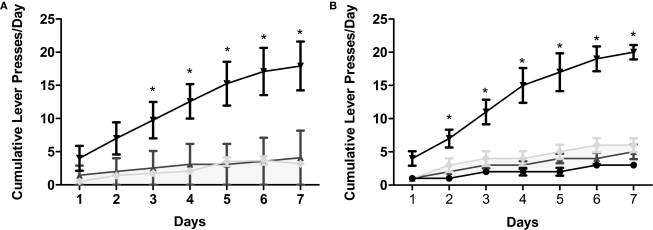
Drug abuse and addiction are major problems in the United States. In particular methamphetamine (METH) use has increased dramatically. A greater understanding of how METH acts on the brain to induce addiction may lead to better therapeutic targets for this problem. The hippocampus is recognized as an important structure in learning and memory, but is not typically associated with drug reinforcement or reward processes. Here, the focus is on the hippocampus which has been largely ignored in the addiction literature as compared to the nucleus accumbens (NAc), ventral tegmental area (VTA), and prefrontal cortex (PFC). The results show that METH administered unilaterally via a microdialysis probe to rats' right dorsal hippocampus will induce drug-seeking (place preference) and drug-taking (lever-pressing) behavior. Furthermore, both of these responses are dependent on local dopamine (DA) receptor activation, as they are impaired by a selective D(1)/D(5) receptor antagonist. The results suggest that the hippocampus is part of the brain's reward circuit that underlies addiction.
药物滥用和成瘾是美国的主要问题。特别是甲基苯丙胺(METH)的使用急剧增加。更深入地了解METH如何作用于大脑以诱发成瘾,可能会为解决这个问题带来更好的治疗靶点。海马体被认为是学习和记忆中的一个重要结构,但通常与药物强化或奖赏过程无关。在这里,重点是海马体,与伏隔核(NAc)、腹侧被盖区(VTA)和前额叶皮层(PFC)相比,它在成瘾文献中很大程度上被忽视了。结果表明,通过微透析探针单侧给大鼠右侧背侧海马体注射METH会诱发觅药(位置偏爱)和用药(杠杆按压)行为。此外,这两种反应都依赖于局部多巴胺(DA)受体激活,因为它们会被选择性D(1)/D(5)受体拮抗剂削弱。结果表明,海马体是大脑奖赏回路的一部分,而成瘾正是基于该回路。