Department of Psychiatry, Columbia University College of Physicians and Surgeons, New York, NY, USA.
Am J Psychiatry. 2010 Jan;167(1):24-39. doi: 10.1176/appi.ajp.2009.09050744. Epub 2009 Dec 1.
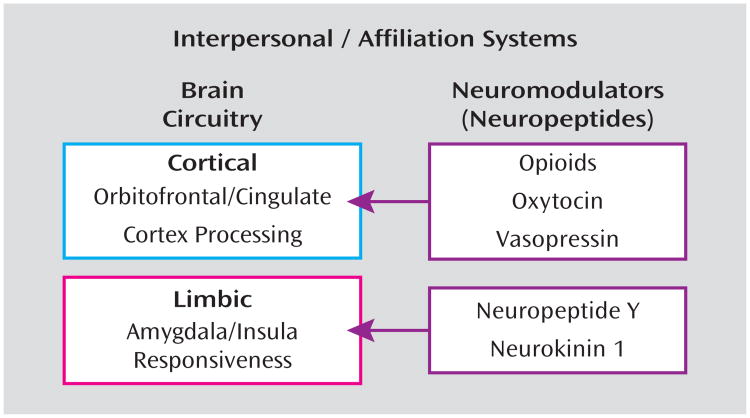
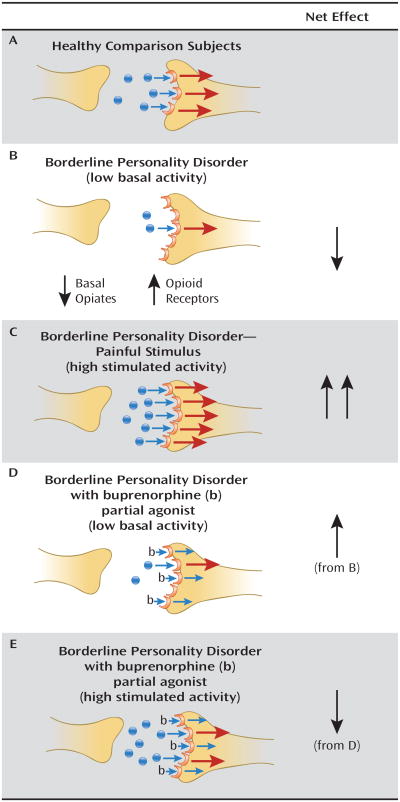
Borderline personality disorder is characterized by affective instability, impulsivity, identity diffusion, and interpersonal dysfunction. Perceived rejection and loss often serve as triggers to impulsive, suicidal, and self-injurious behavior, affective reactivity, and angry outbursts, suggesting that the attachment and affiliative system may be implicated in the disorder. Neuropeptides, including the opioids, oxytocin, and vasopressin, serve a crucial role in the regulation of affiliative behaviors and thus may be altered in borderline personality disorder. While clinical data are limited, the authors propose alternative neuropeptide models of borderline personality disorder and review relevant preclinical research supporting the role of altered neuropeptide function in this disorder in the hope of stimulating more basic research and the development of new treatment approaches.
边缘型人格障碍的特征是情感不稳定、冲动、身份认同弥散和人际功能障碍。感知到的拒绝和丧失往往会引发冲动、自杀和自残行为、情感反应和愤怒爆发,这表明依恋和亲和系统可能与该障碍有关。神经肽,包括阿片类物质、催产素和血管加压素,在调节亲和行为方面起着至关重要的作用,因此在边缘型人格障碍中可能会发生改变。虽然临床数据有限,但作者提出了边缘型人格障碍的替代神经肽模型,并回顾了相关的临床前研究,支持神经肽功能改变在该障碍中的作用,希望能激发更多的基础研究和新的治疗方法的发展。