Pierce Nathan W, Kleiger Gary, Shan Shu-ou, Deshaies Raymond J
Howard Hughes Medical Institute, Division of Biology, MC 156-29, Pasadena, California 91125, USA.
Nature. 2009 Dec 3;462(7273):615-9. doi: 10.1038/nature08595.
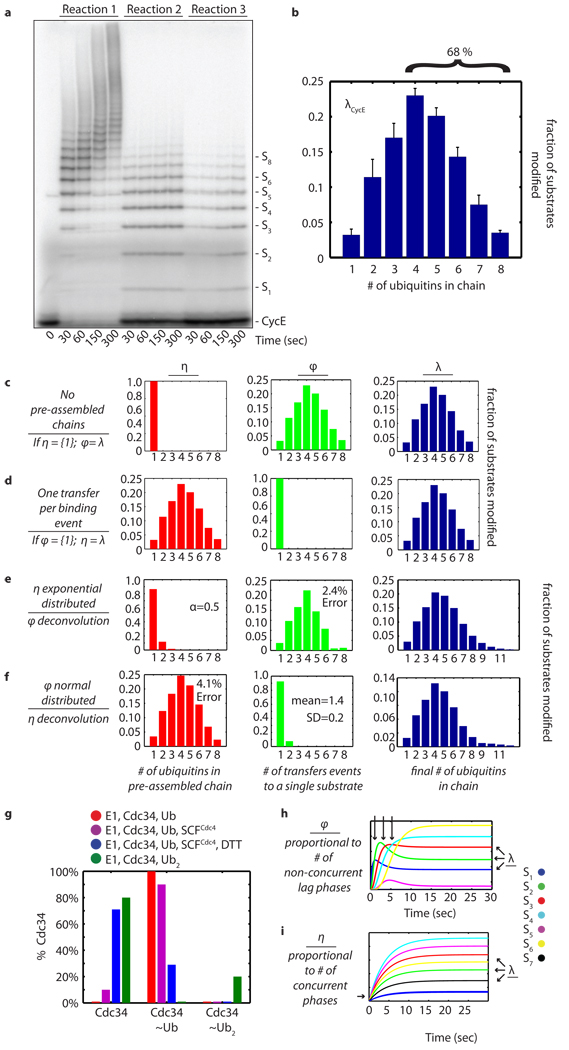
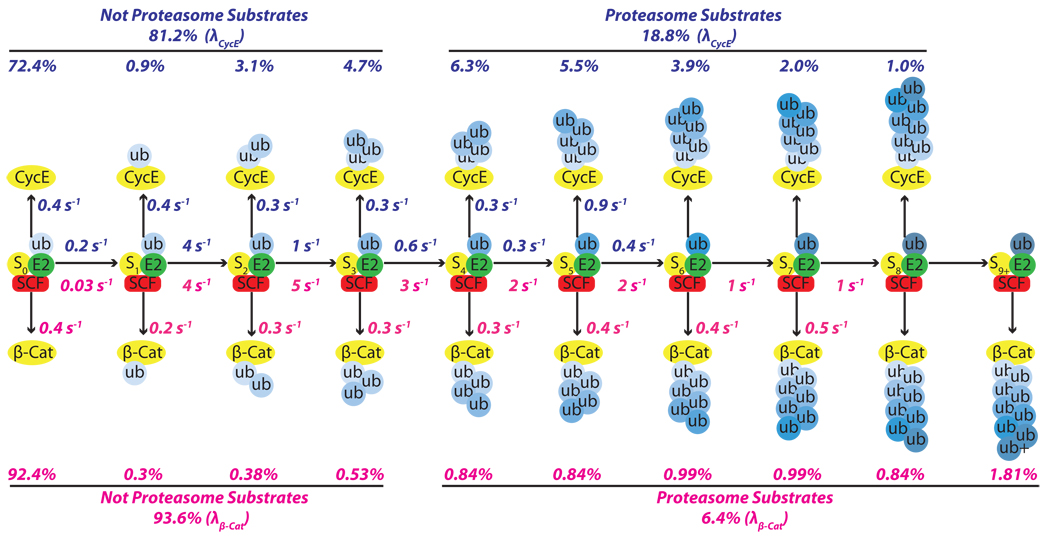
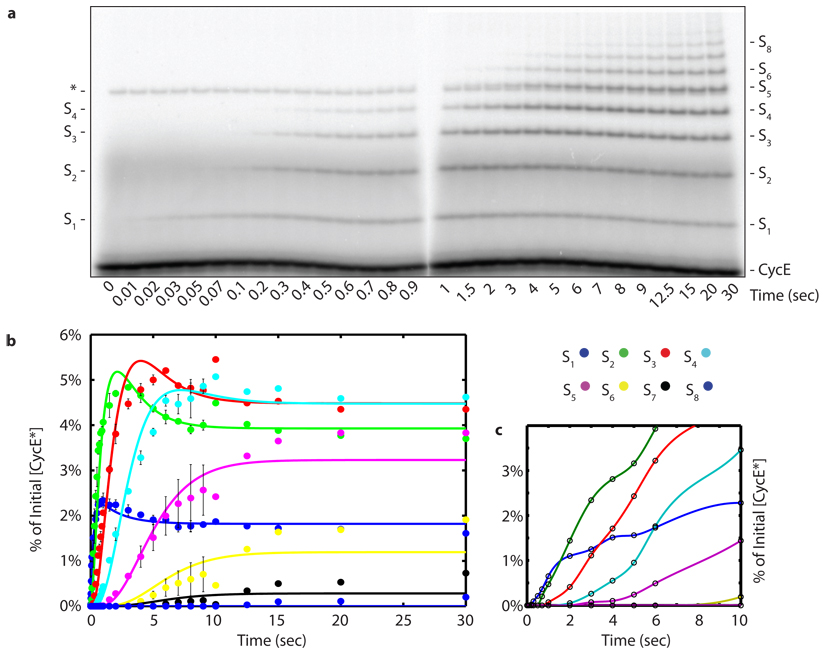
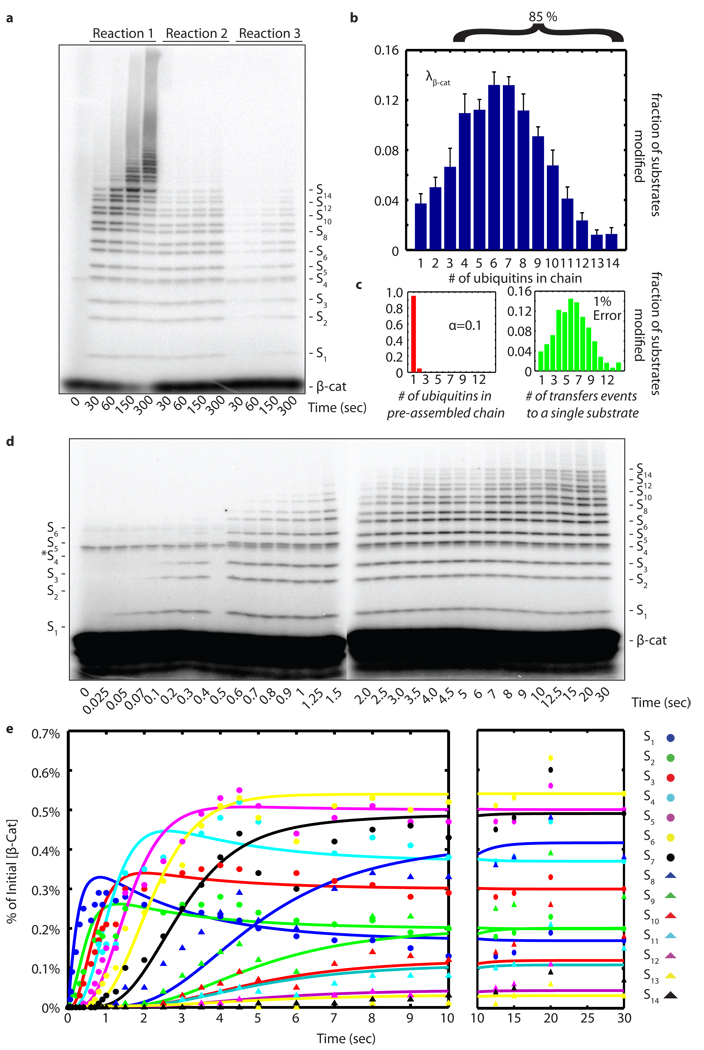
The pathway by which ubiquitin chains are generated on substrate through a cascade of enzymes consisting of an E1, E2 and E3 remains unclear. Multiple distinct models involving chain assembly on E2 or substrate have been proposed. However, the speed and complexity of the reaction have precluded direct experimental tests to distinguish between potential pathways. Here we introduce new theoretical and experimental methodologies to address both limitations. A quantitative framework based on product distribution predicts that the really interesting new gene (RING) E3 enzymes SCF(Cdc4) and SCF(beta-TrCP) work with the E2 Cdc34 to build polyubiquitin chains on substrates by sequential transfers of single ubiquitins. Measurements with millisecond time resolution directly demonstrate that substrate polyubiquitylation proceeds sequentially. Our results present an unprecedented glimpse into the mechanism of RING ubiquitin ligases and illuminate the quantitative parameters that underlie the rate and pattern of ubiquitin chain assembly.
泛素链通过由E1、E2和E3组成的一系列酶在底物上生成的途径仍不清楚。已经提出了多种涉及在E2或底物上进行链组装的不同模型。然而,反应的速度和复杂性使得无法进行直接的实验测试来区分潜在途径。在这里,我们引入了新的理论和实验方法来解决这两个限制。基于产物分布的定量框架预测,真正有趣的新基因(RING)E3酶SCF(Cdc4)和SCF(β-TrCP)与E2 Cdc34协同作用,通过单个泛素的顺序转移在底物上构建多聚泛素链。以毫秒级时间分辨率进行的测量直接证明底物多聚泛素化是按顺序进行的。我们的结果前所未有地揭示了RING泛素连接酶的机制,并阐明了泛素链组装速率和模式背后的定量参数。