Aldahmesh Mohammed A, Safieh Leen Abu, Alkuraya Hisham, Al-Rajhi Ali, Shamseldin Hanan, Hashem Mais, Alzahrani Fatemah, Khan Arif O, Alqahtani Faisal, Rahbeeni Zuhair, Alowain Mohammed, Khalak Hanif, Al-Hazzaa Salwa, Meyer Brian F, Alkuraya Fowzan S
Department of Genetics, King Faisal Specialist Hospital and Research Center, Riyadh, Saudi Arabia.
Mol Vis. 2009 Nov 24;15:2464-9.
To catalog mutations that underlie retinitis pigmentosa (RP) in Saudi Arabia using a representative sample.
Fifty-two patients with RP were recruited and their homozygosity mapping, with or without linkage analysis, was used to suggest the causative genes followed by bidirectional sequencing.
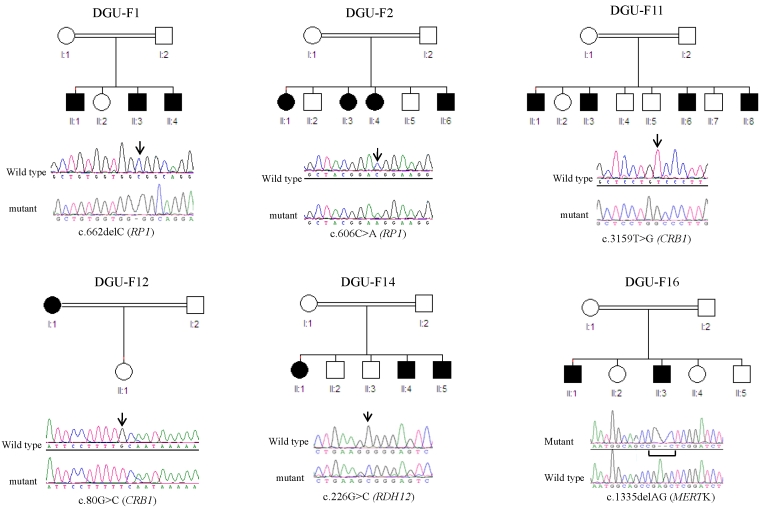
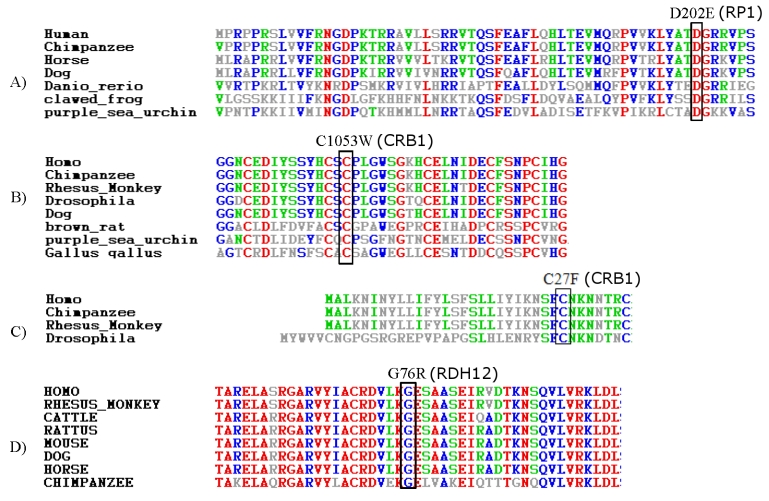
Mutations were identified in 94% of our study cohort, including seven that were novel.
Homozygosity mapping is an extremely robust approach in the study of retinitis pigmentosa in the setting of high rates of consanguinity. BBS3 mutations can rarely present as nonsyndromic RP.
使用代表性样本对沙特阿拉伯视网膜色素变性(RP)的潜在突变进行编目。
招募了52例RP患者,通过纯合性定位(有或无连锁分析)来推测致病基因,随后进行双向测序。
在我们94%的研究队列中鉴定出了突变,其中包括7种新突变。
在近亲结婚率高的情况下,纯合性定位是研究视网膜色素变性的一种极其有效的方法。BBS3突变很少表现为非综合征性RP。