INSERM, U773, Centre de Recherche Biomédicale Bichat Beaujon, UFR de Médecine Paris 7 - Denis Diderot, IFR02 Claude Bernard, Paris, France.
PLoS One. 2009 Nov 30;4(11):e7935. doi: 10.1371/journal.pone.0007935.
The small intestine is the major site of absorption of dietary sugars. The rate at which they enter and exit the intestine has a major effect on blood glucose homeostasis. In this study, we determine the effects of luminal leptin on activity/expression of GLUT2 and GLUT5 transporters in response to sugars intake and analyse their physiological consequences.
Wistar rats, wild type and AMPKalpha(2) (-/-) mice were used. In vitro and in vivo isolated jejunal loops were used to quantify transport of fructose and galactose in the absence and the presence of leptin. The effects of fructose and galactose on gastric leptin release were determined. The effects of leptin given orally without or with fructose were determined on the expression of GLUT2/5, on some gluconeogenesis and lipogenic enzymes in the intestine and the liver.
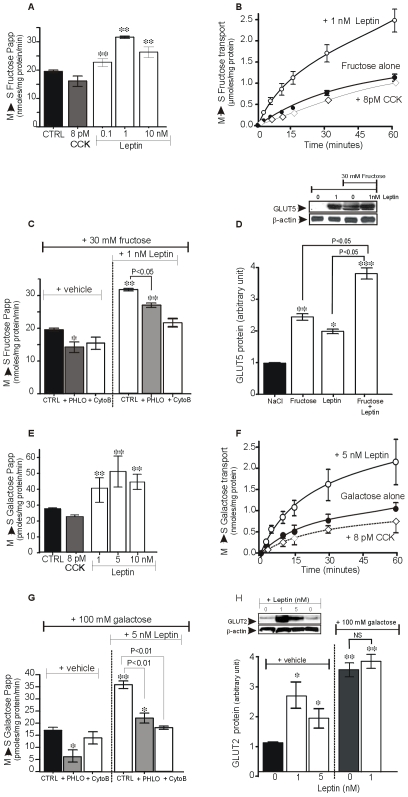
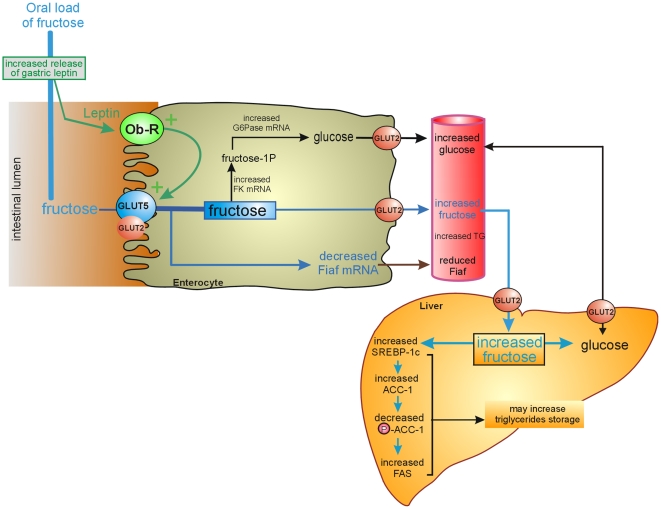
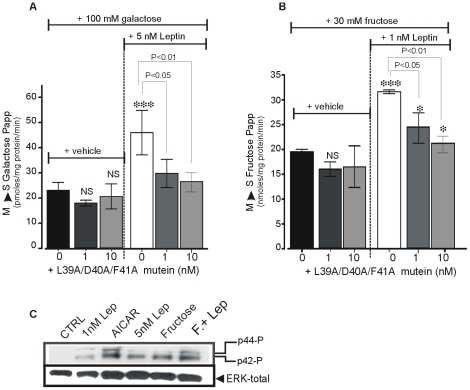
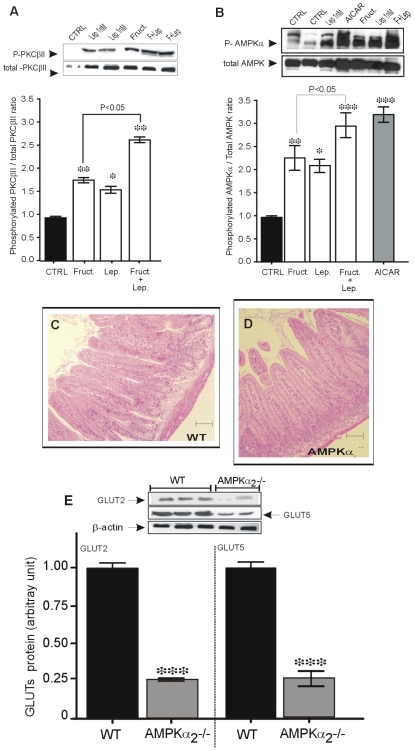
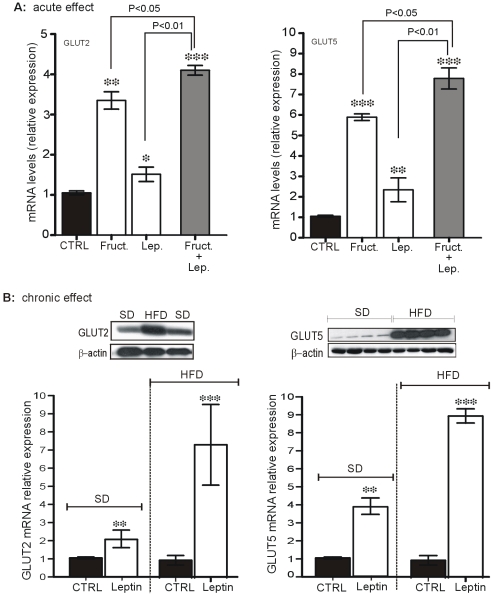
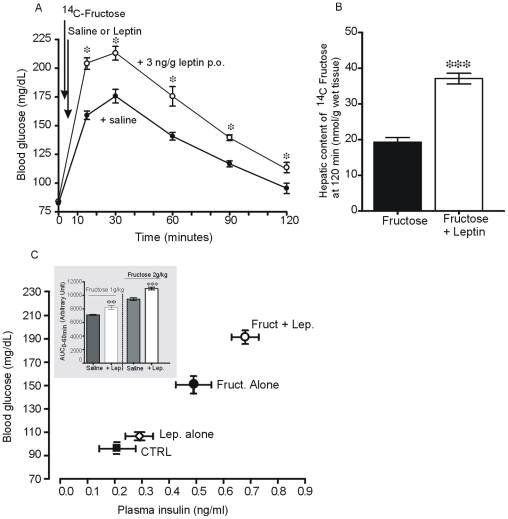
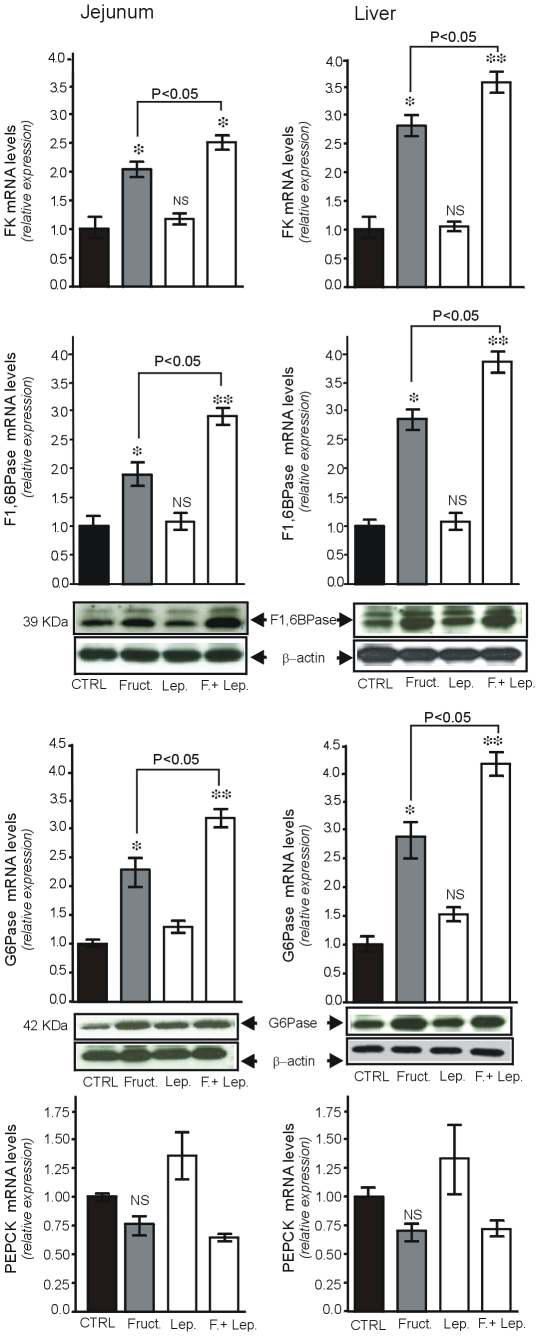
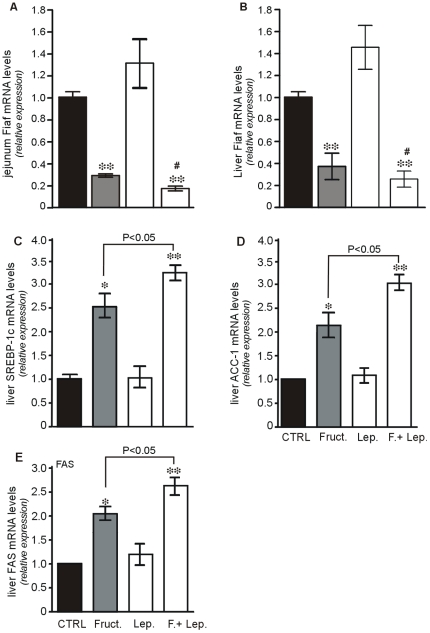
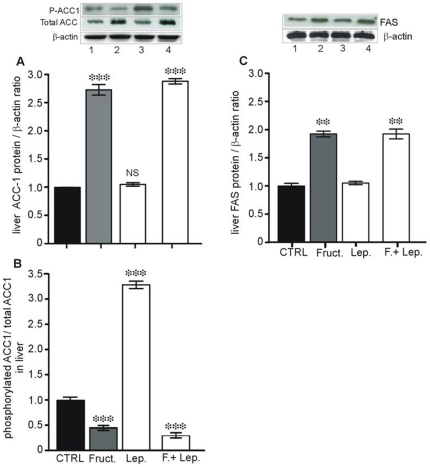
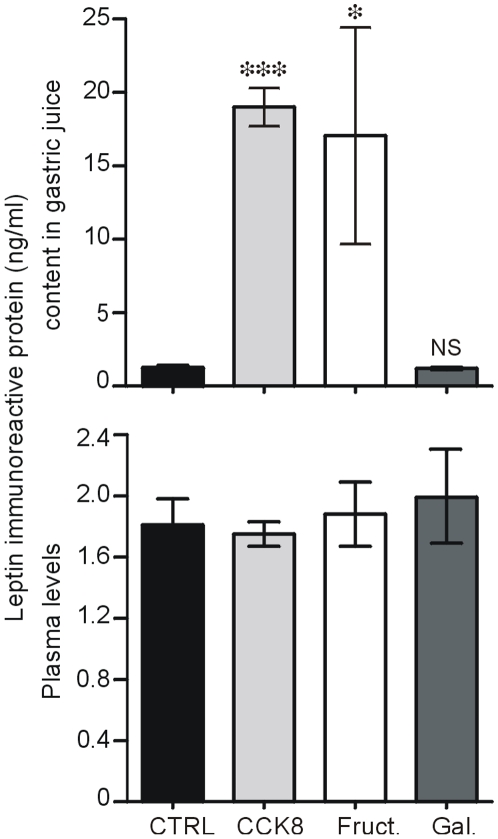
First, in vitro luminal leptin activating its receptors coupled to PKCbetaII and AMPKalpha, increased insertion of GLUT2/5 into the brush-border membrane leading to enhanced galactose and fructose transport. Second in vivo, oral fructose but not galactose induced in mice a rapid and potent release of gastric leptin in gastric juice without significant changes in plasma leptin levels. Moreover, leptin given orally at a dose reproducing comparable levels to those induced by fructose, stimulated GLUT5-fructose transport, and potentiated fructose-induced: i) increase in blood glucose and mRNA levels of key gluconeogenesis enzymes; ii) increase in blood triglycerides and reduction of mRNA levels of intestinal and hepatic Fasting-induced adipocyte factor (Fiaf) and iii) increase in SREBP-1c, ACC-1, FAS mRNA levels and dephosphorylation/activation of ACC-1 in liver.
CONCLUSION/SIGNIFICANCE: These data identify for the first time a positive regulatory control loop between gut leptin and fructose in which fructose triggers release of gastric leptin which, in turn, up-regulates GLUT5 and concurrently modulates metabolic functions in the liver. This loop appears to be a new mechanism (possibly pathogenic) by which fructose consumption rapidly becomes highly lipogenic and deleterious.
小肠是吸收膳食糖的主要部位。糖进入和离开肠道的速度对血糖稳态有很大影响。在这项研究中,我们确定了腔内瘦素对糖摄入时 GLUT2 和 GLUT5 转运体活性/表达的影响,并分析了它们的生理后果。
使用 Wistar 大鼠和 AMPKalpha(2) (-/-) 小鼠。使用体外和体内分离的空肠袢来量化果糖和半乳糖在没有和存在瘦素的情况下的转运。确定果糖和半乳糖对胃瘦素释放的影响。确定口服给予瘦素而不给予或给予果糖对 GLUT2/5 的表达、肠和肝中某些糖异生和脂肪生成酶的影响。
首先,腔内瘦素激活其与 PKCbetaII 和 AMPKalpha 偶联的受体,增加 GLUT2/5 插入刷状缘膜,导致半乳糖和果糖转运增强。其次,在体内,口服果糖但不是半乳糖会迅速而强烈地诱导小鼠胃泌素中胃瘦素的释放,而血浆瘦素水平没有显著变化。此外,给予口服剂量的瘦素,使其复制与果糖诱导相当的水平,可刺激 GLUT5-果糖转运,并增强果糖诱导的:i)血糖升高和关键糖异生酶的 mRNA 水平增加;ii)血液甘油三酯增加和肠和肝 Fasting-induced adipocyte factor (Fiaf) 的 mRNA 水平降低;iii)肝 SREBP-1c、ACC-1、FAS mRNA 水平增加和 ACC-1 去磷酸化/激活。
结论/意义:这些数据首次确定了肠道瘦素和果糖之间的正调节控制环,其中果糖触发胃瘦素的释放,反过来又上调 GLUT5,并同时调节肝脏的代谢功能。这个环似乎是果糖消耗迅速变得高度致脂和有害的新机制(可能是致病的)。