Molecular Immunogenetics Group, National Institute of Immunology, New Delhi, India.
PLoS One. 2009 Dec 2;4(12):e8023. doi: 10.1371/journal.pone.0008023.
Type 1 diabetes (T1D) is a multifactorial autoimmune disorder where interaction and integration of immune response genes along with environmental factors play a role in autoimmune destruction of the insulin producing Pancreatic Beta cells.
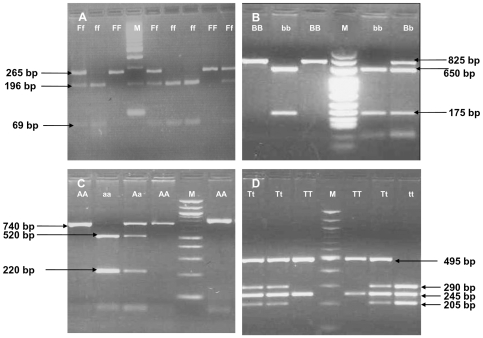
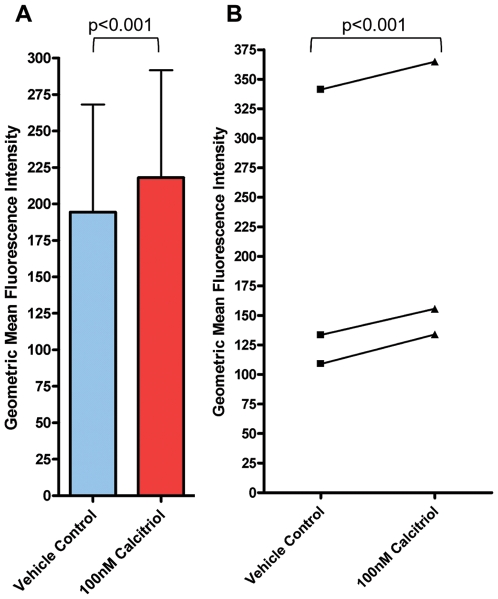
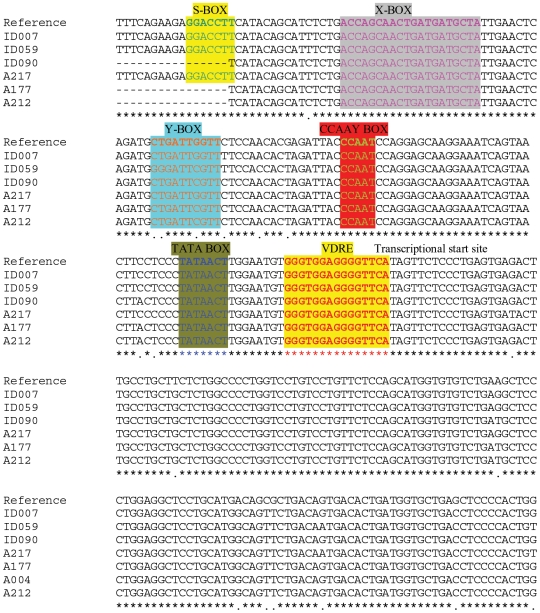
METHODOLOGY/PRINCIPAL FINDINGS: We have studied four single nucleotide polymorphisms (FokI site in Exon 2, BsmI and ApaI sites in Intron 8 and TaqI site in exon 9) in the vitamin D receptor (VDR) gene using PCR-RFLP and HLA-DRB1 alleles using PCR and hybridization with sequence specific oligonucleotide probes and studied their interaction using LD based statistics for non-linked loci followed by sequence analysis of the vitamin D response element (VDRE) present in the promoter region of HLA-DRB1 0301. Haplotypes, constructed using SHEsis program for four single nucleotide polymorphisms in the VDR gene, were studied for their interaction with HLA-DRB1 alleles in 233 T1D patients and 191 healthy controls from North India. A significant increase of haplotypes FBAt and fBAT (p<0.02, OR = 1.44 and p<0.002, OR = 3.23 respectively) was observed in the patients. Both the haplotypes FBAt and fBAT were significantly increased in male patients with age at onset less than 18 years; however, fBAT was significantly increased in female patients irrespective of their age at onset. LD based statistics showed significant interaction between the high producer F and T alleles with HLA-DRB1 0301. F and T alleles of VDR have been shown to contribute to VDR mRNA independently. The promoter sequence analysis of HLA-DRB1 0301 showed presence of VDRE involved in higher expression of HLA-DRB1 030, which was confirmed by flow cytometry and real time PCR analysis.
CONCLUSIONS/SIGNIFICANCE: These data suggest that the interaction between VDR and HLA alleles is mediated by VDRE present in the promoter region of HLA-DRB1 0301 allele, which may be detrimental for the manifestation of T1D in the absence of 1,25-(OH)(2)D(3) in early childhood due to poor expression of DRB1 0301 in the thymus resulting in autoimmunity.
1 型糖尿病(T1D)是一种多因素自身免疫性疾病,免疫反应基因的相互作用和整合以及环境因素在胰岛β细胞的自身免疫破坏中起作用。
方法/主要发现:我们使用 PCR-RFLP 研究了维生素 D 受体(VDR)基因中的四个单核苷酸多态性(外显子 2 中的 FokI 位点、内含子 8 中的 BsmI 和 ApaI 位点以及外显子 9 中的 TaqI 位点),并使用 PCR 和杂交与序列特异性寡核苷酸探针研究了它们与 HLA-DRB10301 启动子区域中存在的维生素 D 反应元件(VDRE)的相互作用使用非连锁基因座的基于 LD 的统计数据,并随后对维生素 D 反应元件(VDRE)进行序列分析。使用 SHEsis 程序构建的 VDR 基因中的四个单核苷酸多态性的单体型,用于研究它们与来自印度北部的 233 名 T1D 患者和 191 名健康对照者的 HLA-DRB1 等位基因的相互作用。在患者中观察到单体型 FBAt 和 fBAT 的显著增加(p<0.02,OR = 1.44 和 p<0.002,OR = 3.23)。在年龄小于 18 岁的发病男性患者中,单体型 FBAt 和 fBAT 均显著增加;然而,无论发病年龄如何,女性患者的 fBAT 均显著增加。基于 LD 的统计数据显示,高产生者 F 和 T 等位基因与 HLA-DRB10301 之间存在显著相互作用。VDR 的 F 和 T 等位基因已被证明可独立促进 VDRmRNA 的产生。HLA-DRB10301 的启动子序列分析显示存在 VDRE,这与 HLA-DRB1030 的高表达有关,这通过流式细胞术和实时 PCR 分析得到了证实。
结论/意义:这些数据表明,VDR 与 HLA 等位基因的相互作用是由 HLA-DRB10301 等位基因启动子区域中的 VDRE 介导的,由于 1,25-(OH)(2)D(3)在儿童早期表达不佳,导致胸腺中 DRB10301 表达减少,从而导致自身免疫,这可能不利于 T1D 的表现。