Department of Pharmacology, Ernst Moritz Arndt University of Greifswald, Greifswald, Germany.
PLoS One. 2009 Nov 24;4(11):e7986. doi: 10.1371/journal.pone.0007986.
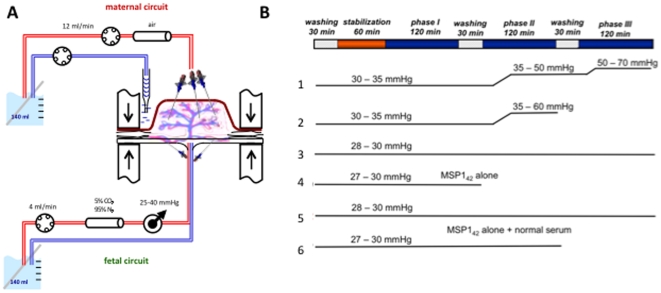
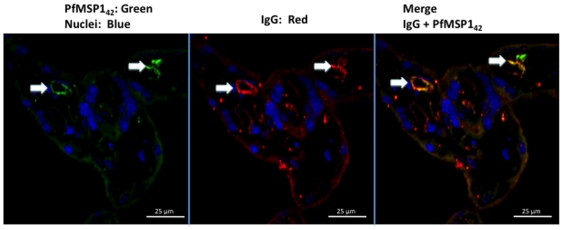
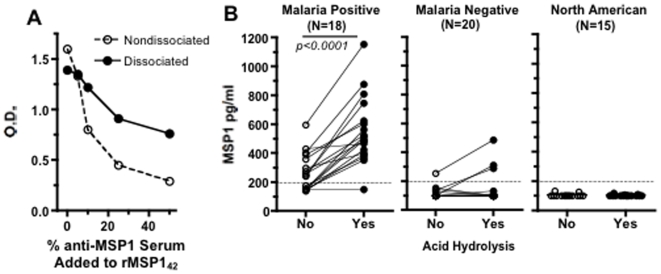
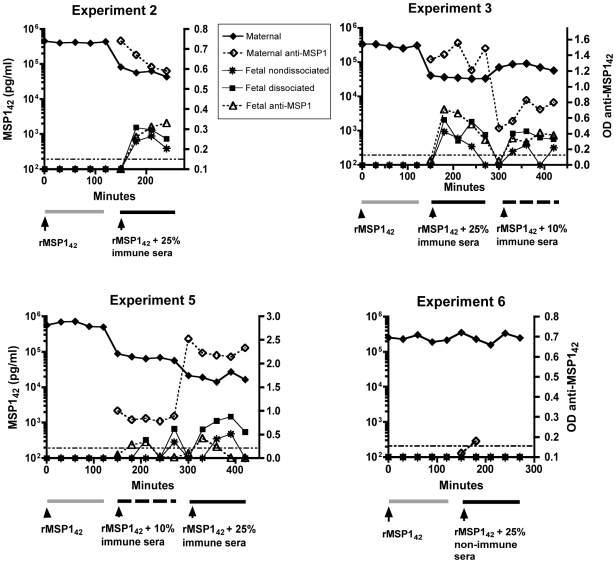
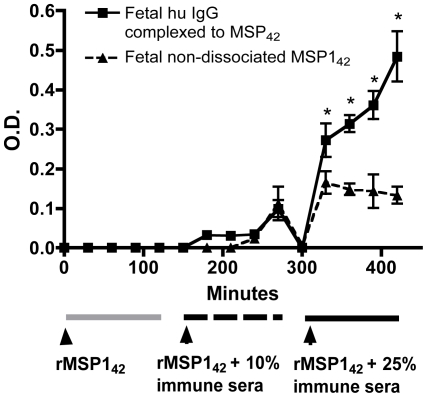
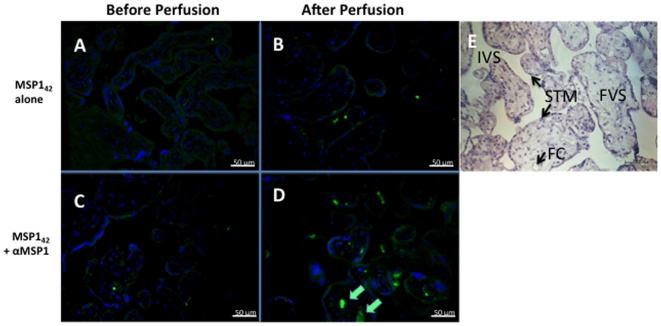
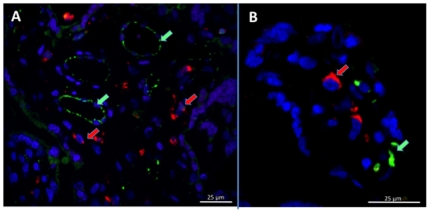
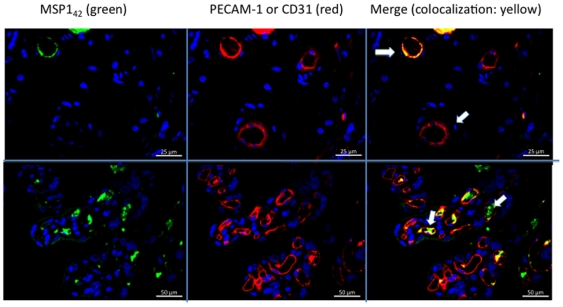
Prenatal exposure to allergens or antigens released by infections during pregnancy can stimulate an immune response or induce immunoregulatory networks in the fetus affecting susceptibility to infection and disease later in life. How antigen crosses from the maternal to fetal environment is poorly understood. One hypothesis is that transplacental antigen transfer occurs as immune complexes, via receptor-mediated transport across the syncytiotrophoblastic membrane and endothelium of vessels in fetal villi. This hypothesis has never been directly tested. Here we studied Plasmodium falciparum merozoite surface protein 1 (MSP1) that is released upon erythrocyte invasion. We found MSP1 in cord blood from a third of newborns of malaria-infected women and in >90% following treatment with acid dissociation demonstrating MSP1 immune complexes. Using an ex vivo human placental model that dually perfuses a placental cotyledon with independent maternal and fetal circuits, immune-complexed MSP1 transferred from maternal to fetal circulation. MSP1 alone or with non-immune plasma did not transfer; pre-incubation with human plasma containing anti-MSP1 was required. MSP1 bound to IgG was detected in the fetal perfusate. Laser scanning confocal microscopy demonstrated MSP1 in the fetal villous stroma, predominantly in fetal endothelial cells. MSP1 co-localized with IgG in endothelial cells, but not with placental macrophages. Thus we show, for the first time, antibody-dependent transplacental transfer of an antigen in the form of immune complexes. These studies imply frequent exposure of the fetus to certain antigens with implications for management of maternal infections during pregnancy and novel approaches to deliver vaccines or drugs to the fetus.
孕期暴露于过敏原或感染时释放的抗原可刺激胎儿的免疫应答或诱导免疫调节网络,从而影响其日后对感染和疾病的易感性。抗原如何从母体转移到胎儿环境尚不清楚。一种假设是,免疫复合物通过胎盘抗原转移,通过受体介导穿过合胞滋养层膜和胎儿绒毛血管内皮转运。这一假设从未被直接验证过。在这里,我们研究了疟原虫裂殖子表面蛋白 1(MSP1),它在红细胞入侵时释放。我们在疟疾感染孕妇的三分之一新生儿脐带血中发现了 MSP1,在接受酸解离治疗的新生儿中发现了>90%的 MSP1 免疫复合物。使用体外人胎盘模型,用独立的母体和胎儿回路双重灌注胎盘小叶,我们发现免疫复合物化的 MSP1 从母体循环转移到胎儿循环。单独的 MSP1 或无免疫血浆都没有转移;需要用含有抗 MSP1 的人血浆进行预孵育。在胎儿灌流液中检测到与 IgG 结合的 MSP1。激光扫描共聚焦显微镜显示 MSP1 存在于胎儿绒毛间质中,主要存在于胎儿血管内皮细胞中。MSP1 在血管内皮细胞中与 IgG 共定位,但不在胎盘巨噬细胞中。因此,我们首次证明了抗原以免疫复合物的形式依赖抗体进行胎盘转移。这些研究表明,胎儿经常暴露于某些抗原,这对妊娠期间母体感染的管理和向胎儿递送疫苗或药物的新方法具有重要意义。