INSERM U839, Paris, France.
PLoS One. 2009 Nov 23;4(11):e7952. doi: 10.1371/journal.pone.0007952.
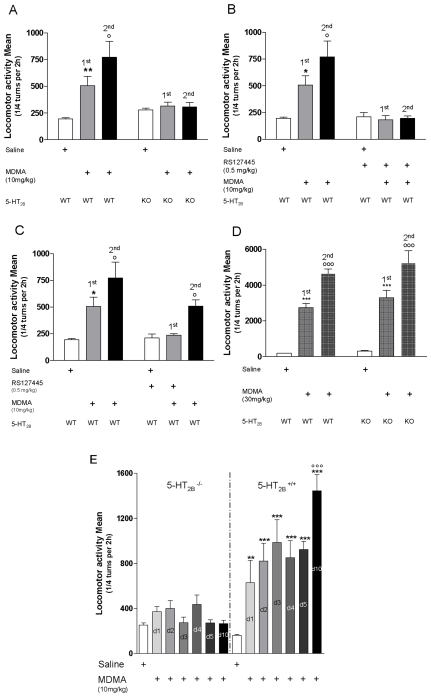
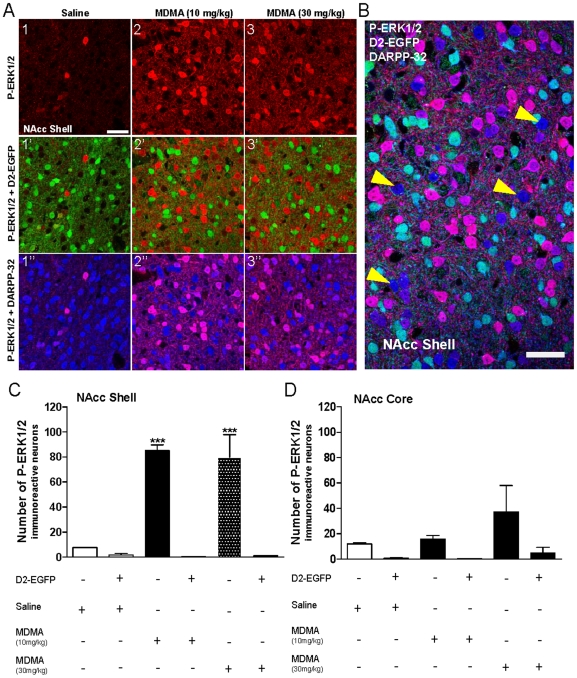
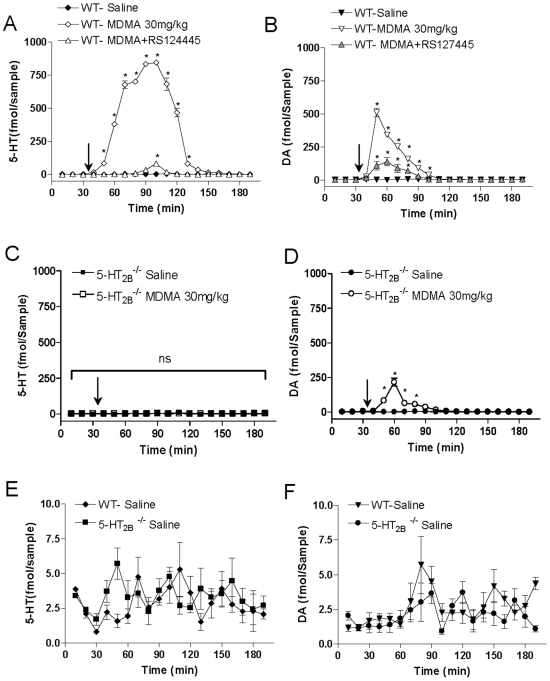
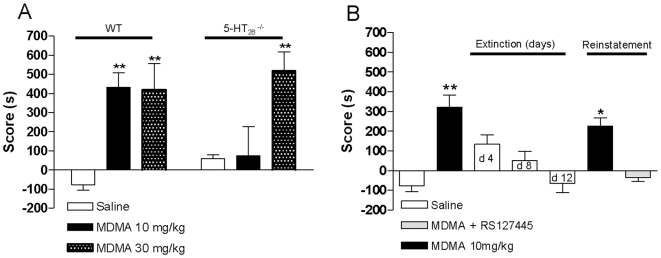
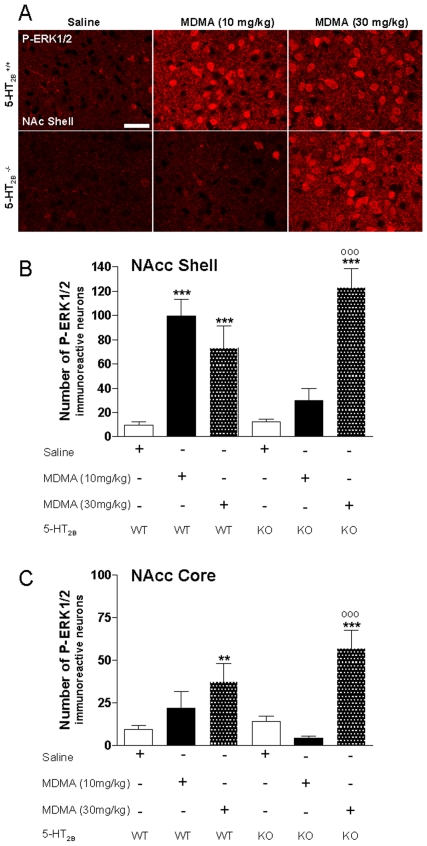
The amphetamine derivative 3,4-methylenedioxymethamphetamine (MDMA, ecstasy) reverses dopamine and serotonin transporters to produce efflux of dopamine and serotonin, respectively, in regions of the brain that have been implicated in reward. However, the role of serotonin/dopamine interactions in the behavioral effects of MDMA remains unclear. We previously showed that MDMA-induced locomotion, serotonin and dopamine release are 5-HT(2B) receptor-dependent. The aim of the present study was to determine the contribution of serotonin and 5-HT(2B) receptors to the reinforcing properties of MDMA.We show here that 5-HT(2B) (-/-) mice do not exhibit behavioral sensitization or conditioned place preference following MDMA (10 mg/kg) injections. In addition, MDMA-induced reinstatement of conditioned place preference after extinction and locomotor sensitization development are each abolished by a 5-HT(2B) receptor antagonist (RS127445) in wild type mice. Accordingly, MDMA-induced dopamine D1 receptor-dependent phosphorylation of extracellular regulated kinase in nucleus accumbens is abolished in mice lacking functional 5-HT(2B) receptors. Nevertheless, high doses (30 mg/kg) of MDMA induce dopamine-dependent but serotonin and 5-HT(2B) receptor-independent behavioral effects.These results underpin the importance of 5-HT(2B) receptors in the reinforcing properties of MDMA and illustrate the importance of dose-dependent effects of MDMA on serotonin/dopamine interactions.
安非他命衍生物 3,4-亚甲二氧基甲基苯丙胺(MDMA,摇头丸)逆转多巴胺和血清素转运体,分别导致大脑中与奖励相关区域的多巴胺和血清素外流。然而,血清素/多巴胺相互作用在 MDMA 的行为效应中的作用仍不清楚。我们之前表明,MDMA 诱导的运动、血清素和多巴胺释放依赖于 5-HT(2B)受体。本研究的目的是确定 5-HT(2B)受体在 MDMA 的强化特性中的作用。我们在这里表明,5-HT(2B)(-/-)小鼠在接受 MDMA(10mg/kg)注射后不会表现出运动敏化或条件性位置偏好。此外,5-HT(2B)受体拮抗剂(RS127445)在野生型小鼠中消除了 MDMA 诱导的条件性位置偏好的复燃和运动敏化的发展。因此,在缺乏功能性 5-HT(2B)受体的小鼠中,MDMA 诱导的伏隔核细胞外调节激酶的多巴胺 D1 受体依赖性磷酸化被消除。然而,高剂量(30mg/kg)的 MDMA 诱导多巴胺依赖性但与血清素和 5-HT(2B)受体无关的行为效应。这些结果支持 5-HT(2B)受体在 MDMA 的强化特性中的重要性,并说明了 MDMA 对血清素/多巴胺相互作用的剂量依赖性效应的重要性。