Department of Genetics, University Erlangen, Erlangen, Germany.
PLoS Biol. 2009 Nov;7(11):e1000249. doi: 10.1371/journal.pbio.1000249. Epub 2009 Nov 24.
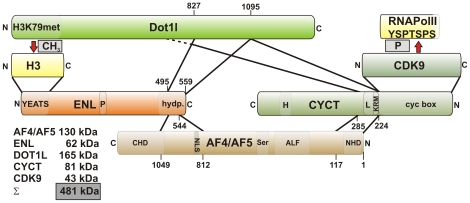
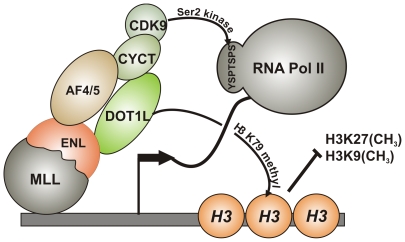
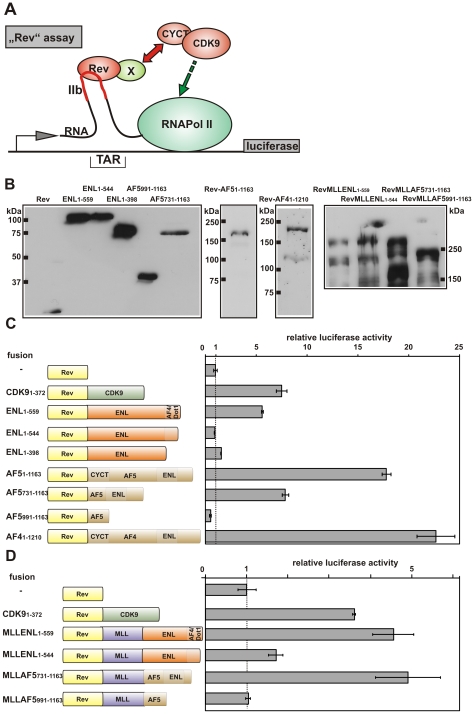
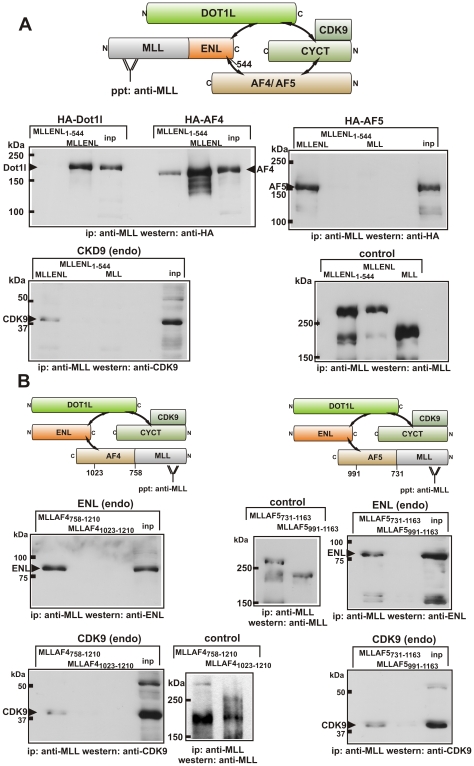
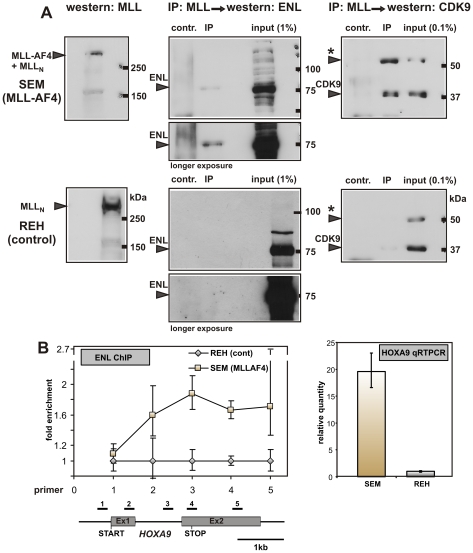
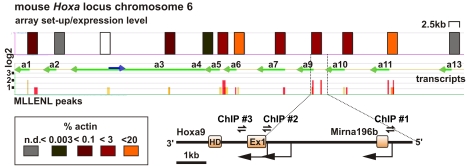
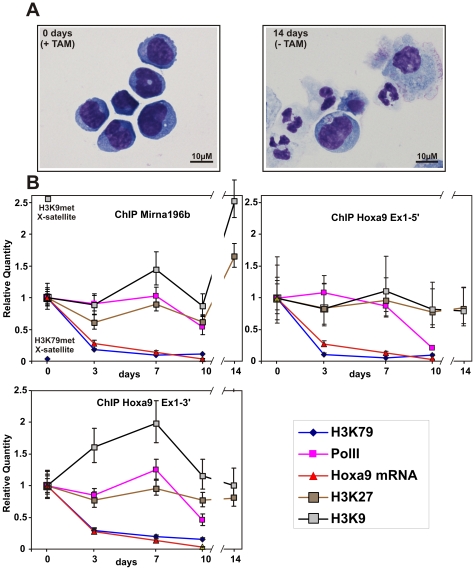
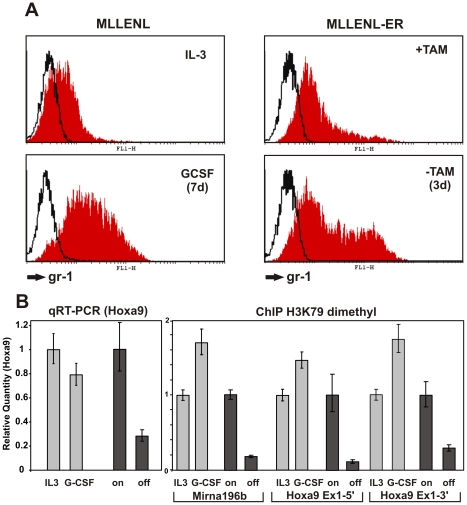
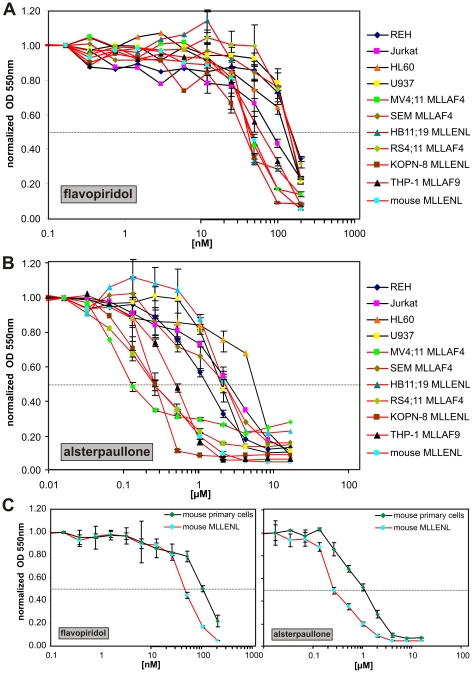
Fusion proteins composed of the histone methyltransferase mixed-lineage leukemia (MLL) and a variety of unrelated fusion partners are highly leukemogenic. Despite their prevalence, particularly in pediatric acute leukemia, many molecular details of their transforming mechanism are unknown. Here, we provide mechanistic insight into the function of MLL fusions, demonstrating that they capture a transcriptional elongation complex that has been previously found associated with the eleven-nineteen leukemia protein (ENL). We show that this complex consists of a tight core stabilized by recursive protein-protein interactions. This central part integrates histone H3 lysine 79 methylation, RNA Polymerase II (RNA Pol II) phosphorylation, and MLL fusion partners to stimulate transcriptional elongation as evidenced by RNA tethering assays. Coimmunoprecipitations indicated that MLL fusions are incorporated into this complex, causing a constitutive recruitment of elongation activity to MLL target loci. Chromatin immunoprecipitations (ChIP) of the homeobox gene A cluster confirmed a close relationship between binding of MLL fusions and transcript levels. A time-resolved ChIP utilizing a conditional MLL fusion singled out H3K79 methylation as the primary parameter correlated with target expression. The presence of MLL fusion proteins also kept RNA Pol II in an actively elongating state and prevented accumulation of inhibitory histone methylation on target chromatin. Hox loci remained open and productive in the presence of MLL fusion activity even under conditions of forced differentiation. Finally, MLL-transformed cells were particularly sensitive to pharmacological inhibition of RNA Pol II phosphorylation, pointing to a potential treatment for MLL. In summary, we show aberrant transcriptional elongation as a novel mechanism for oncogenic transformation.
由组蛋白甲基转移酶混合谱系白血病(MLL)和多种不相关融合伴侣组成的融合蛋白具有高度致白血病性。尽管它们很常见,特别是在儿科急性白血病中,但它们转化机制的许多分子细节尚不清楚。在这里,我们提供了对 MLL 融合功能的机制见解,证明它们捕获了先前与十一号十九号白血病蛋白(ENL)相关的转录延伸复合物。我们表明,该复合物由通过递归蛋白-蛋白相互作用稳定的紧密核心组成。这个核心部分整合了组蛋白 H3 赖氨酸 79 甲基化、RNA 聚合酶 II(RNA Pol II)磷酸化和 MLL 融合伙伴,以刺激转录延伸,这可以通过 RNA 连接测定来证明。共免疫沉淀表明 MLL 融合被整合到这个复合物中,导致延伸活性持续招募到 MLL 靶标。同源盒基因 A 簇的染色质免疫沉淀(ChIP)证实了 MLL 融合与结合物和转录水平之间的密切关系。利用条件性 MLL 融合进行的时间分辨 ChIP 特别挑选出 H3K79 甲基化作为与靶表达相关的主要参数。MLL 融合蛋白的存在还使 RNA Pol II 保持在活跃的延伸状态,并防止抑制性组蛋白甲基化在靶染色质上积累。即使在强制分化的条件下,Hox 基因座在存在 MLL 融合活性的情况下仍然保持开放和活跃。最后,MLL 转化细胞对 RNA Pol II 磷酸化的药理抑制特别敏感,这为 MLL 治疗提供了潜在的靶点。总之,我们展示了异常的转录延伸作为致癌转化的一种新机制。