IMTA, Erasmus University, Rotterdam, The Netherlands.
Eur J Health Econ. 2010 Feb;11(1):105-15. doi: 10.1007/s10198-009-0206-x. Epub 2009 Dec 5.
To assess the cost effectiveness of palivizumab for prevention of severe respiratory syncytial virus (RSV) disease in high-risk infants in Spain, incorporating country-specific observational hospitalisation data.
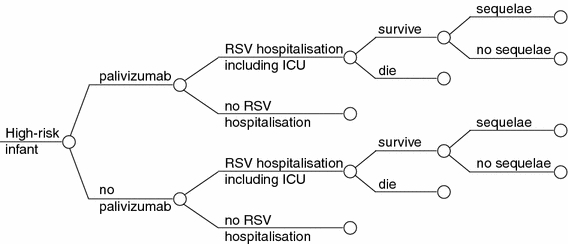
An existing decision tree model, designed using data from a large international clinical trial of palivizumab versus no prophylaxis, was updated to include Spanish observational hospitalisation data. The analysis was performed for preterm children born at or before 32 weeks gestational age, who are at high risk of developing severe RSV disease requiring hospitalisation. Data sources included published literature, official price/tariff lists and national population statistics. The primary perspective of the study was that of the Spanish National Health Service in 2006.
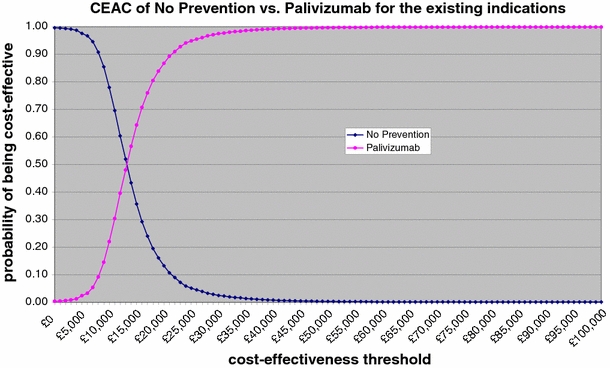
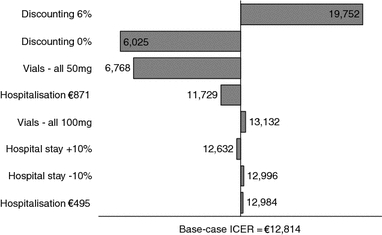
The base-case analysis included the direct medical costs associated with palivizumab prophylaxis and hospital care for RSV infections. Use of palivizumab produces an undiscounted incremental cost-effectiveness ratio (ICER) of euro6,142 per quality-adjusted life-year (QALY), and a discounted ICER of euro12,814/QALY.
Palivizumab provides a cost-effective method of prophylaxis against severe RSV disease requiring hospitalisation among preterm infants in Spain.
评估在西班牙,使用帕利珠单抗预防高危婴儿发生严重呼吸道合胞病毒(RSV)疾病的成本效益,该研究纳入了特定国家的观察性住院数据。
使用帕利珠单抗与未预防治疗的大型国际临床试验数据设计的现有决策树模型,纳入了西班牙观察性住院数据进行了更新。该分析针对胎龄 32 周或以下出生的早产儿,这些婴儿有发生严重 RSV 疾病并需要住院治疗的高风险。数据来源包括已发表的文献、官方价格/关税清单和国家人口统计数据。本研究的主要观点是 2006 年西班牙国家卫生服务的观点。
基础情况分析包括与帕利珠单抗预防和 RSV 感染住院治疗相关的直接医疗成本。使用帕利珠单抗的未贴现增量成本效益比(ICER)为每质量调整生命年(QALY)6142 欧元,贴现 ICER 为 12814 欧元/QALY。
在西班牙,帕利珠单抗为预防需要住院治疗的严重 RSV 疾病提供了一种具有成本效益的预防方法,适用于早产儿。