• 文献检索
  • 文档翻译
  • 深度研究
  • 学术资讯
  • Suppr Zotero 插件Zotero 插件
  • 邀请有礼
  • 套餐&价格
  • 历史记录
应用&插件
Suppr Zotero 插件Zotero 插件浏览器插件Mac 客户端Windows 客户端微信小程序
定价
高级版会员购买积分包购买API积分包
服务
文献检索文档翻译深度研究API 文档MCP 服务
关于我们
关于 Suppr公司介绍联系我们用户协议隐私条款
关注我们

Suppr 超能文献

核心技术专利:CN118964589B侵权必究
粤ICP备2023148730 号-1Suppr @ 2026

文献检索

告别复杂PubMed语法,用中文像聊天一样搜索,搜遍4000万医学文献。AI智能推荐,让科研检索更轻松。

立即免费搜索

文件翻译

保留排版,准确专业,支持PDF/Word/PPT等文件格式,支持 12+语言互译。

免费翻译文档

深度研究

AI帮你快速写综述,25分钟生成高质量综述,智能提取关键信息,辅助科研写作。

立即免费体验

科尔多瓦农村社区的民族植物学知识:文化和生物地理因素的重要性。

Ethnobotanical knowledge in rural communities of Cordoba (Argentina): the importance of cultural and biogeographical factors.

机构信息

Cát, Antropología, Facultad de Ciencias Exactas, Físicas y Naturales, Universidad Nacional de Córdoba, Av, Vélez Sarsfield 299 - X5000JJC - Córdoba, Argentina.

出版信息

J Ethnobiol Ethnomed. 2009 Dec 15;5:40. doi: 10.1186/1746-4269-5-40.

DOI:10.1186/1746-4269-5-40
PMID:20003502
原文链接:https://pmc.ncbi.nlm.nih.gov/articles/PMC2804588/
Abstract

BACKGROUND

The possibility to better understand the relationships within the men, the nature and their culture has extreme importance because allows the characterisation of social systems through their particular environmental perception, and provides useful tools for the development of conservation policies.

METHODS

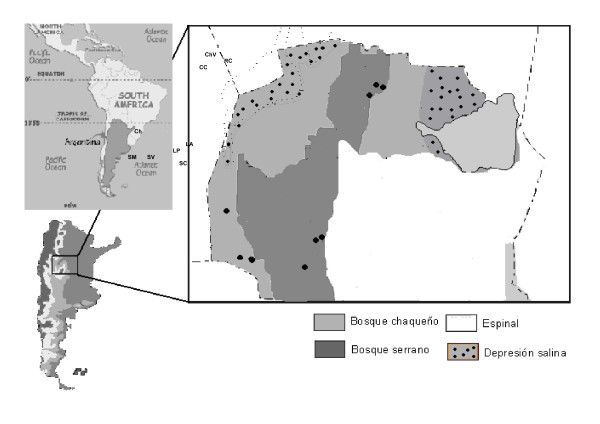
The present study was planned to disentangle environmental and cultural factors that are influencing the perception, knowledge and uses of edible and medicinal plants in rural communities of Cordoba (Argentina). Interviews an participant observation were conducted in nine rural communities located in three different biogeographical areas. Data about knowledge of medicinal and edible plants and sociocultural variables were obtained. Data were analysed by Principal Components Analysis (PCA).

RESULTS

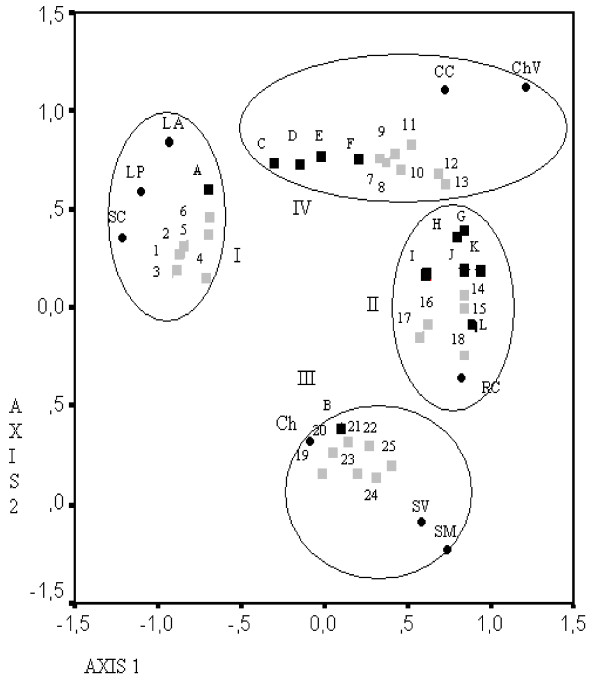
The analysis of data confirmed that medicinal species are widely used whereas the knowledge on edible plants is eroding. The PCA showed four groups of communities, defined by several particular combinations of sociocultural and/or natural variables.

CONCLUSION

This comprehensive approach suggests that in general terms the cultural environment has a stronger influence than the natural environment on the use of medicinal and edible plants in rural communities of Cordoba (Argentina).

摘要

背景

更好地理解男性、自然及其文化之间的关系具有极端重要性,因为这可以通过其特定的环境感知来描述社会系统,并为保护政策的制定提供有用的工具。

方法

本研究旨在梳理影响科尔多瓦(阿根廷)农村社区对食用和药用植物的认知、知识和使用的环境和文化因素。在三个不同的生物地理区域的九个农村社区进行了访谈和参与式观察。收集了关于药用和食用植物以及社会文化变量的知识数据。通过主成分分析(PCA)对数据进行了分析。

结果

数据分析证实,药用物种被广泛使用,而对食用植物的知识正在减少。PCA 显示了四个社区组,这些社区组由几个特定的社会文化和/或自然变量的组合定义。

结论

这种综合方法表明,在一般情况下,文化环境对科尔多瓦(阿根廷)农村社区对药用和食用植物的使用的影响强于自然环境。
https://cdn.ncbi.nlm.nih.gov/pmc/blobs/a4cd/2804588/c98d67fbc72e/1746-4269-5-40-2.jpg
https://cdn.ncbi.nlm.nih.gov/pmc/blobs/a4cd/2804588/4a40eb285dfb/1746-4269-5-40-1.jpg
https://cdn.ncbi.nlm.nih.gov/pmc/blobs/a4cd/2804588/c98d67fbc72e/1746-4269-5-40-2.jpg
https://cdn.ncbi.nlm.nih.gov/pmc/blobs/a4cd/2804588/4a40eb285dfb/1746-4269-5-40-1.jpg
https://cdn.ncbi.nlm.nih.gov/pmc/blobs/a4cd/2804588/c98d67fbc72e/1746-4269-5-40-2.jpg

相似文献

1
Ethnobotanical knowledge in rural communities of Cordoba (Argentina): the importance of cultural and biogeographical factors.科尔多瓦农村社区的民族植物学知识:文化和生物地理因素的重要性。
J Ethnobiol Ethnomed. 2009 Dec 15;5:40. doi: 10.1186/1746-4269-5-40.
2
Cultural, economic, and ecological factors influencing management of wild plants and mushrooms interchanged in Purépecha markets of Mexico.墨西哥普埃布拉地区市场中野生植物和蘑菇的交换受到文化、经济和生态因素的影响。
J Ethnobiol Ethnomed. 2018 Nov 20;14(1):68. doi: 10.1186/s13002-018-0269-9.
3
To what extent are medicinal plants shared between country home gardens and urban ones? A case study from Misiones, Argentina.乡村家庭花园和城市家庭花园之间药用植物的共享程度如何?来自阿根廷米西奥内斯省的案例研究。
Pharm Biol. 2016 Sep;54(9):1628-40. doi: 10.3109/13880209.2015.1110600. Epub 2016 Feb 9.
4
Medicines in the forest: Ethnobotany of wild medicinal plants in the pharmacopeia of the Wichí people of Salta province (Argentina).森林中的药物:萨尔塔省威奇人药典中的野生药用植物民族植物学。
J Ethnopharmacol. 2019 Mar 1;231:525-544. doi: 10.1016/j.jep.2018.10.026. Epub 2018 Nov 7.
5
Cognition, culture and utility: plant classification by Paraguayan immigrant farmers in Misiones, Argentina.认知、文化与效用:阿根廷米西奥内斯省的巴拉圭裔移民农民的植物分类。
J Ethnobiol Ethnomed. 2017 Jul 25;13(1):42. doi: 10.1186/s13002-017-0169-4.
6
Sociocultural and ecological factors influencing management of edible and non-edible plants: the case of Ixcatlán, Mexico.社会文化和生态因素对食用和非食用植物管理的影响:以墨西哥伊察坦为例。
J Ethnobiol Ethnomed. 2017 Oct 30;13(1):59. doi: 10.1186/s13002-017-0185-4.
7
Perceived health and medicinal properties of six species of wild edible plants in north-east Lebanon.黎巴嫩东北部六种野生可食用植物的感知健康和药用特性
Public Health Nutr. 2009 Oct;12(10):1902-11. doi: 10.1017/S1368980009004832. Epub 2009 Feb 23.
8
Diversity and use of medicinal plants for soup making in traditional diets of the Hakka in West Fujian, China.中国闽西客家传统饮食中汤料的药用植物多样性及其应用。
J Ethnobiol Ethnomed. 2019 Nov 28;15(1):60. doi: 10.1186/s13002-019-0335-y.
9
Ethnomedicinal plants used by the people of Manang district, central Nepal.尼泊尔中部马囊地区人们使用的民族药用植物。
J Ethnobiol Ethnomed. 2006 Oct 4;2:41. doi: 10.1186/1746-4269-2-41.
10
Medicinal ethnobotany of wild plants: a cross-cultural comparison around Georgia-Turkey border, the Western Lesser Caucasus.野生植物的药用民族植物学:格鲁吉亚-土耳其边境,小高加索西部地区的跨文化比较。
J Ethnobiol Ethnomed. 2020 Nov 23;16(1):71. doi: 10.1186/s13002-020-00415-y.

引用本文的文献

1
Rizoma: a new comprehensive database on traditional uses of Chilean native plants.《根茎:智利本土植物传统用途新综合数据库》
Biodivers Data J. 2022 Mar 4;10:e80002. doi: 10.3897/BDJ.10.e80002. eCollection 2022.
2
Cross-cultural comparison of plant use knowledge in Baitadi and Darchula districts, Nepal Himalaya.尼泊尔喜马拉雅邦巴蒂亚迪和达丘拉地区植物利用知识的跨文化比较。
J Ethnobiol Ethnomed. 2018 Jun 11;14(1):40. doi: 10.1186/s13002-018-0242-7.
3
Knowledge and use of wild edible plants in rural communities along Paraguay River, Pantanal, Brazil.

本文引用的文献

1
Medicinal plants used by the Yi ethnic group: a case study in central Yunnan.彝族使用的药用植物:以云南中部为例的研究
J Ethnobiol Ethnomed. 2009 Apr 23;5:13. doi: 10.1186/1746-4269-5-13.
2
Continuity and change in the Mediterranean medical tradition: Ruta spp. (rutaceae) in Hippocratic medicine and present practices.地中海医学传统中的延续与变迁:希波克拉底医学及当代实践中的芸香属植物(芸香科)
J Ethnopharmacol. 2008 Mar 28;116(3):469-82. doi: 10.1016/j.jep.2007.12.013. Epub 2008 Jan 3.
3
Analyzing factors that influence the folk use and phytonomy of 18 medicinal plants in Navarra.
巴西潘塔纳尔湿地巴拉圭河沿岸农村社区对野生可食用植物的认知与利用
J Ethnobiol Ethnomed. 2015 May 30;11:46. doi: 10.1186/s13002-015-0026-2.
4
Food flora in 17th century Northeast region of Brazil in Historia Naturalis Brasiliae.《巴西自然史》中17世纪巴西东北地区的食用植物群。
J Ethnobiol Ethnomed. 2014 Jun 25;10:50. doi: 10.1186/1746-4269-10-50.
5
The effect of management systems and ecosystem types on bark regeneration in Himatanthus drasticus (Apocynaceae): recommendations for sustainable harvesting.管理体系和生态系统类型对 Himatanthus drasticus(夹竹桃科)树皮再生的影响:可持续收获的建议。
Environ Monit Assess. 2014 Jan;186(1):349-59. doi: 10.1007/s10661-013-3378-x.
6
Antifertility activity of Cryptolepis sanguinolenta leaf ethanolic extract in male rats.红叶白叶藤叶乙醇提取物对雄性大鼠的抗生育活性
J Hum Reprod Sci. 2012 Jan;5(1):43-7. doi: 10.4103/0974-1208.97799.
7
Intracultural variation of knowledge about wild plant uses in the Biosphere Reserve Grosses Walsertal (Austria).大沃尔特地区生物保护区(奥地利)内关于野生植物利用的文化内变异性知识。
J Ethnobiol Ethnomed. 2012 Jul 6;8:23. doi: 10.1186/1746-4269-8-23.
8
Indigenous knowledge of medicinal plants used by Saperas community of Khetawas, Jhajjar District, Haryana, India.印度哈里亚纳邦贾杰尔地区凯塔瓦斯的萨佩拉斯社区使用的药用植物的本土知识。
J Ethnobiol Ethnomed. 2010 Jan 28;6:4. doi: 10.1186/1746-4269-6-4.
分析影响纳瓦拉地区18种药用植物民间应用和植物分类学的因素。
J Ethnobiol Ethnomed. 2007 Apr 13;3:16. doi: 10.1186/1746-4269-3-16.
4
Plants used in home medicine in the Zenta River basin, Northwest Argentina.阿根廷西北部泽塔河流域用于家庭医药的植物。
J Ethnopharmacol. 2001 Jun;76(1):11-34. doi: 10.1016/s0378-8741(01)00190-8.