Center for Reproductive Research, Northwestern University, Evanston, Illinois, USA.
Fertil Steril. 2010 May 15;93(8):2633-9. doi: 10.1016/j.fertnstert.2009.10.027. Epub 2009 Dec 11.
To develop an in vitro strategy to support the growth of early-stage follicles and produce mature oocytes competent for fertilization.
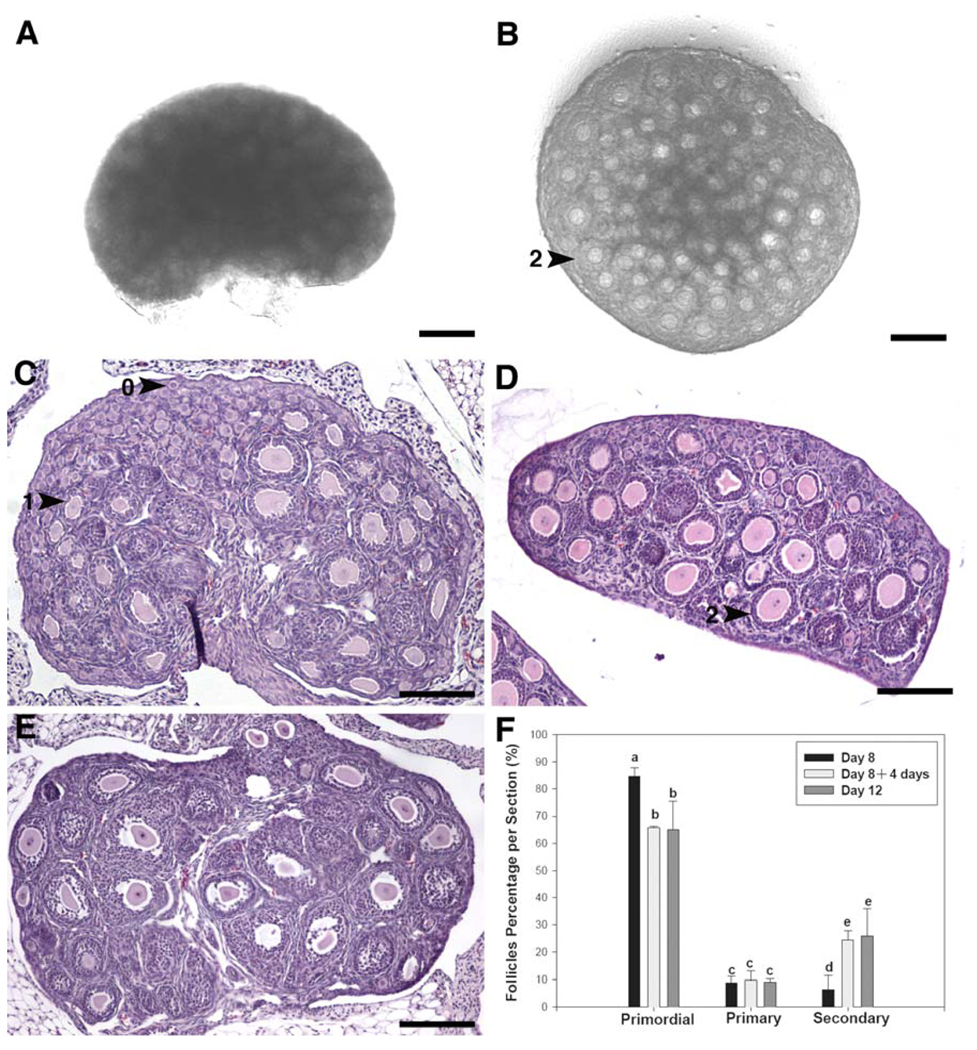
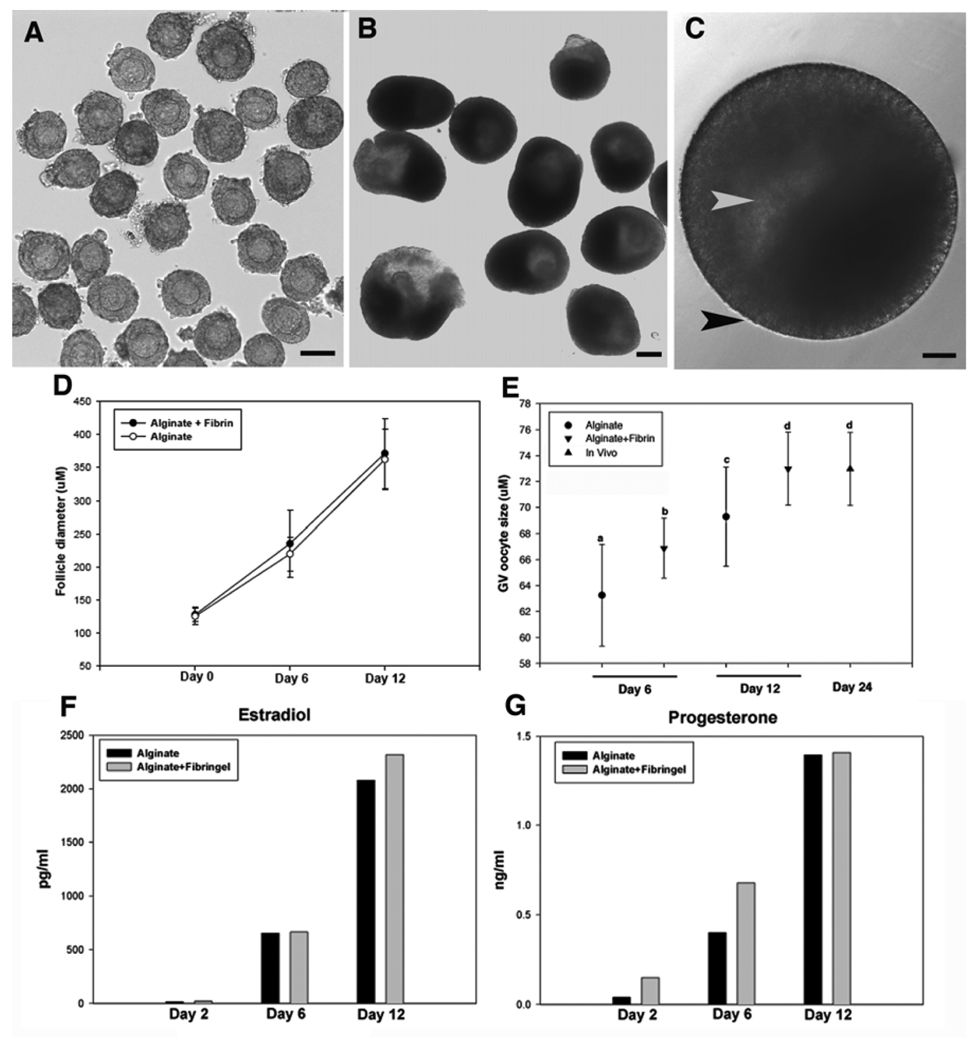
Whole ovaries from 8-day-old mice were cultured for 4 days, and then secondary follicles were isolated and cultured for 12 days in a three-dimensional alginate or fibrin-alginate (FA) hydrogel matrix.
University-affiliated laboratory.
Mice.
INTERVENTION(S): None.
Histologic evaluation of follicle development, steroid hormone production, and rates of oocyte maturation, oocyte fertilization, and embryo formation.
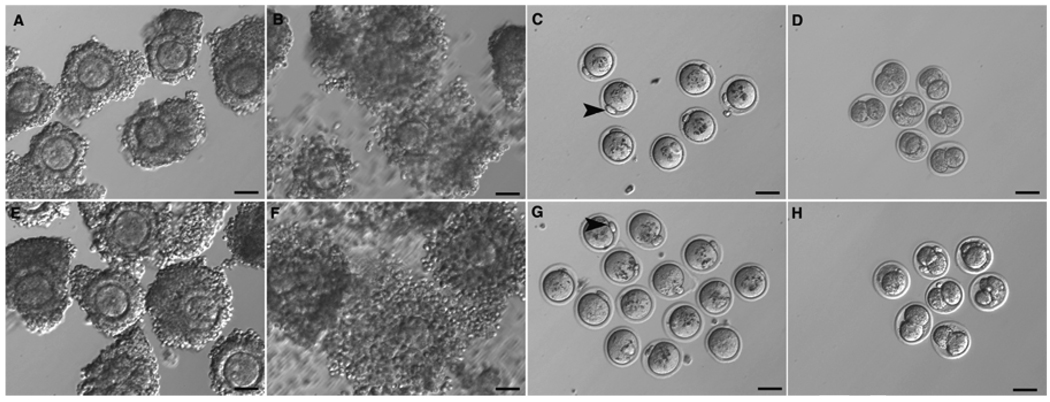
RESULT(S): Culture of 8-day-old mouse ovaries for 4 days resulted in transition of the follicle population from primordial and primary follicles to secondary follicles, similar to that seen in a 12-day-old ovary. Isolated secondary follicles cultured for 12 days showed larger increases in oocyte diameter and more frequent antrum formation and theca cell differentiation in the FA-hydrogel matrix compared with the alginate matrix. Steroid hormone secretion patterns were consistent with the changes in follicle morphology and cell differentiation observed in the cultured follicles. Compared with oocytes from alginate follicle cultures, a greater number of oocytes retrieved from the FA-based follicle cultures progressed to metaphase I, reached metaphase II, and could be fertilized and cleaved to two-cell embryos. The organ culture plus FA-hydrogel follicle culture strategy produced a very high rate of oocyte progression to metaphase II (88 +/- 8.7% [mean +/- SEM]) and formation of two-cell embryos (54 +/- 4%).
CONCLUSION(S): A strategy combining whole ovary culture of early-stage follicles and subsequent FA hydrogel in vitro follicle culture produced a high percentage of oocytes competent for fertilization; this might provide new options for fertility preservation in women and prepubertal girls facing fertility-threatening diseases or treatments.
开发一种体外策略,以支持早期卵泡的生长并产生具有受精能力的成熟卵母细胞。
将 8 日龄小鼠的整个卵巢培养 4 天,然后分离二级卵泡,并在三维藻酸盐或纤维蛋白-藻酸盐(FA)水凝胶基质中培养 12 天。
大学附属实验室。
小鼠。
无。
卵泡发育、类固醇激素产生以及卵母细胞成熟、卵母细胞受精和胚胎形成的比率的组织学评估。
培养 4 天的 8 日龄小鼠卵巢导致卵泡群体从原始卵泡和初级卵泡向次级卵泡过渡,与 12 日龄卵巢中的变化相似。在 FA 水凝胶基质中培养 12 天的分离的次级卵泡显示出更大的卵母细胞直径增加,并且更频繁地形成腔和卵泡膜细胞分化,与藻酸盐基质相比。类固醇激素分泌模式与培养卵泡中观察到的卵泡形态和细胞分化变化一致。与从藻酸盐卵泡培养中获得的卵母细胞相比,从基于 FA 的卵泡培养中回收的更多卵母细胞进展到中期 I,达到中期 II,并且可以受精并分裂成 2 细胞胚胎。器官培养加 FA 水凝胶卵泡培养策略产生了非常高的卵母细胞进展到中期 II 的比例(88 +/- 8.7%[平均值 +/- SEM])和 2 细胞胚胎形成的比例(54 +/- 4%)。
结合早期卵泡的整个卵巢培养和随后的 FA 水凝胶体外卵泡培养的策略产生了具有高受精能力的卵母细胞的高比例;这可能为面临生育威胁的疾病或治疗的女性和青春期前女孩提供新的生育保存选择。