University of Rochester, Department of Family Medicine, United States.
Patient Educ Couns. 2010 Aug;80(2):241-7. doi: 10.1016/j.pec.2009.10.024. Epub 2009 Dec 16.
We examined how navigation, defined as the assessment and alleviation of barriers to adequate health care, influences patients' perspectives on the quality of their cancer care.
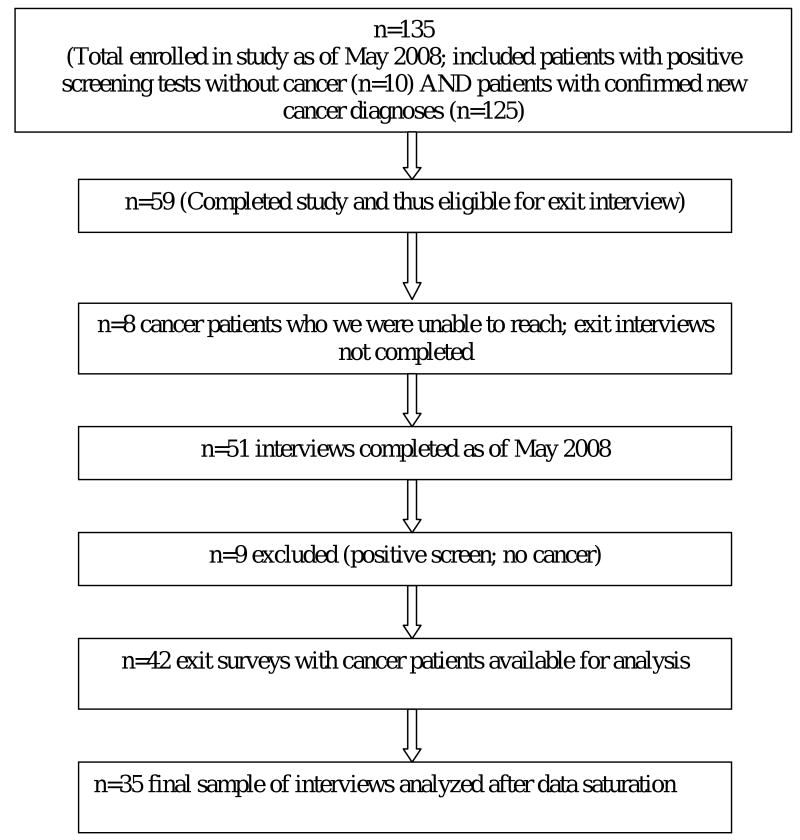
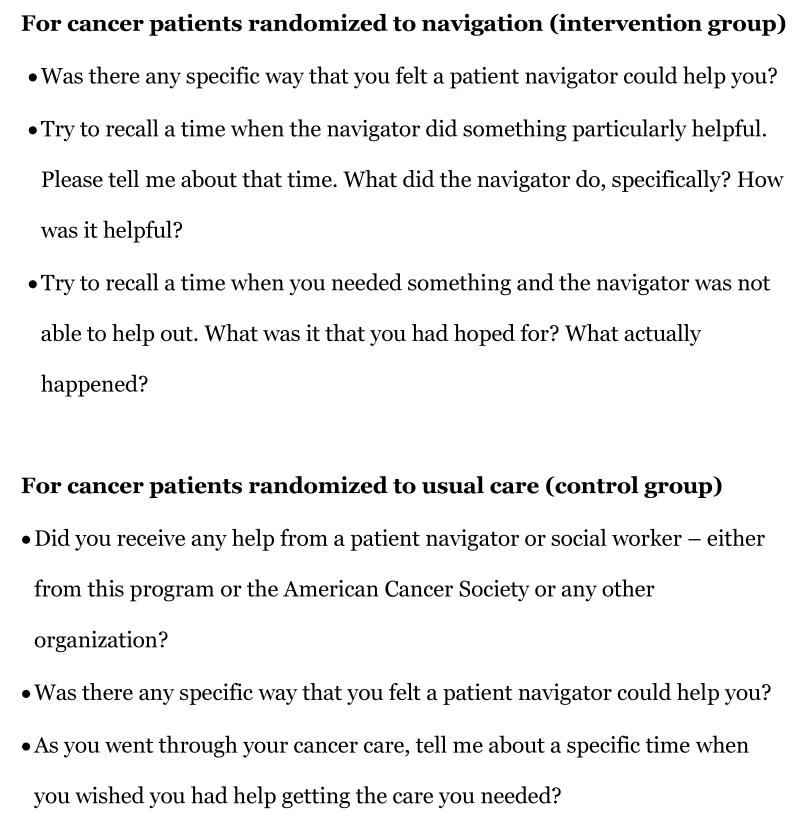
We conducted post-study patient interviews from a randomized controlled trial (usual care vs. patient navigation services) from cancer diagnosis through treatment completion. Patients were recruited from 11 primary care, hospital and community oncology practices in New York. We interviewed patients about their expectations and experience of patient navigation or, for non-navigated patients, other sources of assistance.
Thirty-five patients newly diagnosed with breast or colorectal cancer. Valued aspects of navigation included emotional support, assistance with information needs and problem-solving, and logistical coordination of cancer care. Unmet cancer care needs expressed by patients randomized to usual care consisted of lack of assistance or support with childcare, household responsibilities, coordination of care, and emotional support.
Cancer patients value navigation. Instrumental benefits were the most important expectations for navigation from navigated and non-navigated patients. Navigated patients received emotional support and assistance with information needs, problem-solving, and logistical aspects of cancer care coordination.
Navigation services may help improve cancer care outcomes important to patients by addressing fragmented, confusing, uncoordinated, or inefficient care.
我们研究了导航(即评估和缓解充分医疗保健的障碍)如何影响患者对癌症护理质量的看法。
我们从一项随机对照试验(常规护理与患者导航服务)中进行了研究后的患者访谈,该试验从癌症诊断到治疗完成。患者是从纽约的 11 个初级保健、医院和社区肿瘤学诊所招募的。我们采访了患者关于他们对患者导航的期望和体验,或者对于未接受导航的患者,他们从其他来源获得的帮助。
35 名新诊断为乳腺癌或结直肠癌的患者。导航的有价值方面包括情感支持、信息需求和解决问题的帮助,以及癌症护理的协调。接受常规护理的随机分组患者表达的未满足的癌症护理需求包括缺乏对儿童保育、家庭责任、护理协调和情感支持的帮助或支持。
癌症患者重视导航。导航最受接受导航和未接受导航的患者重视的是其工具性好处。接受导航的患者获得了情感支持和信息需求、解决问题以及癌症护理协调的后勤方面的帮助。
导航服务通过解决零碎、混乱、不协调或低效的护理问题,可能有助于改善患者认为重要的癌症护理结果。