Division of Diabetes Translation, Centers for Disease Control and Prevention, Atlanta, GA 30341, USA.
Med Care. 2010 Jan;48(1):31-7. doi: 10.1097/MLR.0b013e3181bd4783.
Although preventing diabetes complications requires long-term management, little is known about which patients persistently fail to get recommended care.
To determine the frequency and correlates of persistent, long-term gaps in diabetes care.
: The study population included 8392 patients with diabetes. Patient surveys and medical records from 10 health plans over 3 years provided data on socioeconomic characteristics, access to care, social support, and mental and physical health, and diabetes preventive care services. We defined a "persistent gap" as a participant's missing a preventive care service for the entire 3 years. Services considered included hemoglobin A1c, cholesterol, and albuminuria tests, and foot and dilated eye examinations.
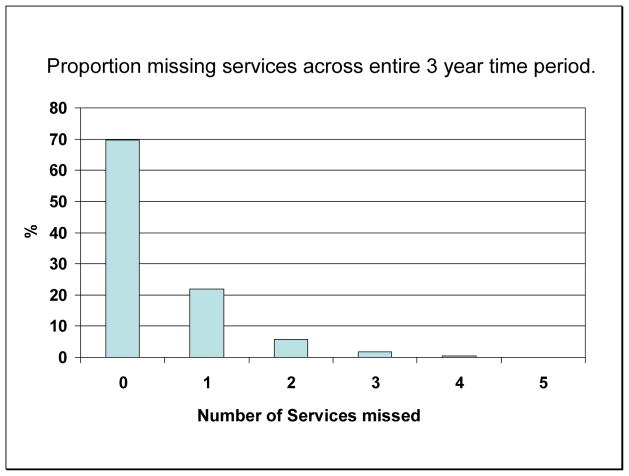
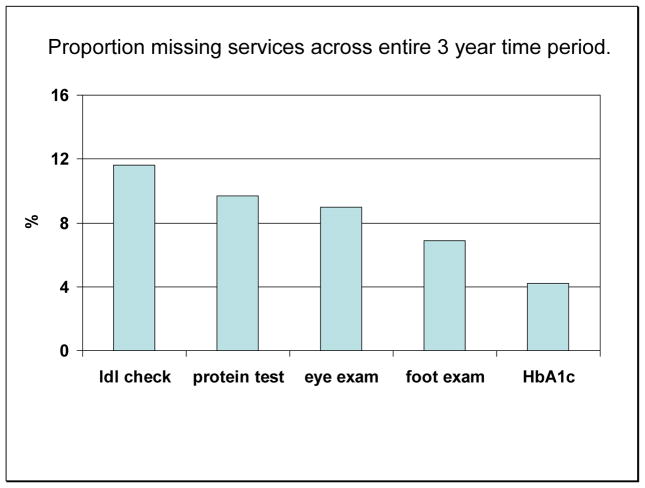
Thirty percent of participants had at least 1 persistent gap. The most common gaps were lipid testing (11.6%), microalbuminuria testing (9.7%), and eye examinations (9.0%). Persistent gaps were 18% to 42% higher for young patients, lean persons, those with low income, employed persons, smokers, those with diabetes less than 5 years, and patients with none or 1 comorbid conditions. Sex, education, marital status, family demands, transportation, trust in physicians, and mental health were not associated with gaps in care.
Persistent gaps in diabetes care are common even among insured patients. Patients with lower income, younger age, fewer years of diabetes, having fewer comorbidities, taking fewer medications, and poor health behaviors are vulnerable to persistent gaps in care and a group who warrant targeted interventions to improve preventive diabetes care.
尽管预防糖尿病并发症需要长期管理,但对于哪些患者持续无法获得推荐的护理,人们知之甚少。
确定糖尿病护理中长期持续存在差距的频率和相关因素。
研究人群包括 8392 名糖尿病患者。来自 10 个健康计划的患者调查和医疗记录在 3 年内提供了社会经济特征、获得护理的机会、社会支持以及心理和身体健康以及糖尿病预防保健服务的数据。我们将“持续差距”定义为参与者在整个 3 年内错过预防保健服务。考虑的服务包括血红蛋白 A1c、胆固醇和白蛋白尿测试以及足部和散瞳检查。
30%的参与者至少有 1 个持续存在的差距。最常见的差距是血脂检测(11.6%)、微量白蛋白尿检测(9.7%)和眼部检查(9.0%)。年轻患者、消瘦者、低收入者、就业者、吸烟者、糖尿病病史不足 5 年者和无合并症或仅有 1 种合并症者的持续差距高出 18%至 42%。性别、教育程度、婚姻状况、家庭需求、交通、对医生的信任和心理健康与护理差距无关。
即使在有保险的患者中,糖尿病护理的持续差距也很常见。收入较低、年龄较小、糖尿病病史较短、合并症较少、服用药物较少且健康行为较差的患者容易出现持续的护理差距,这是一组需要针对性干预以改善预防糖尿病护理的人群。