Moores Cancer Center, University of California San Diego, La Jolla, California, United States of America.
PLoS One. 2009 Dec 14;4(12):e8294. doi: 10.1371/journal.pone.0008294.
Aberrant activation of Wnt/beta-catenin signaling promotes the development of several cancers. It has been demonstrated that the Wnt signaling pathway is activated in chronic lymphocytic leukemia (CLL) cells, and that uncontrolled Wnt/beta-catenin signaling may contribute to the defect in apoptosis that characterizes this malignancy. Thus, the Wnt signaling pathway is an attractive candidate for developing targeted therapies for CLL.
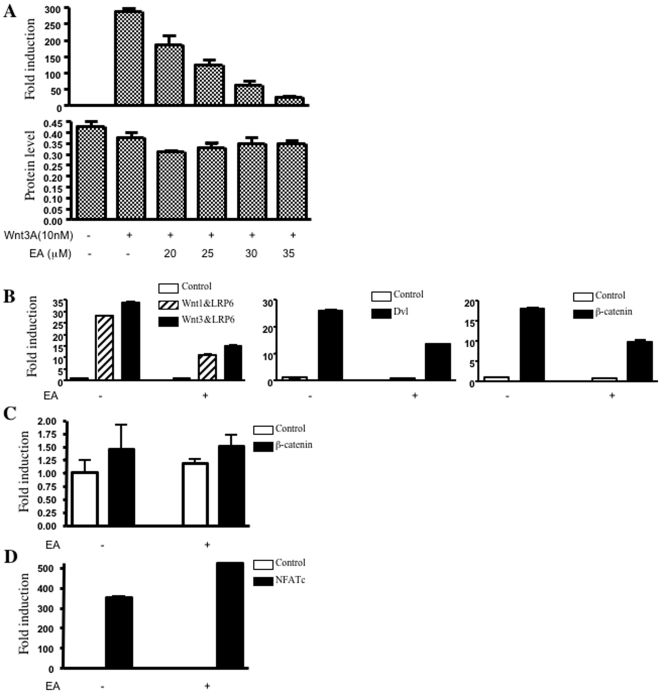
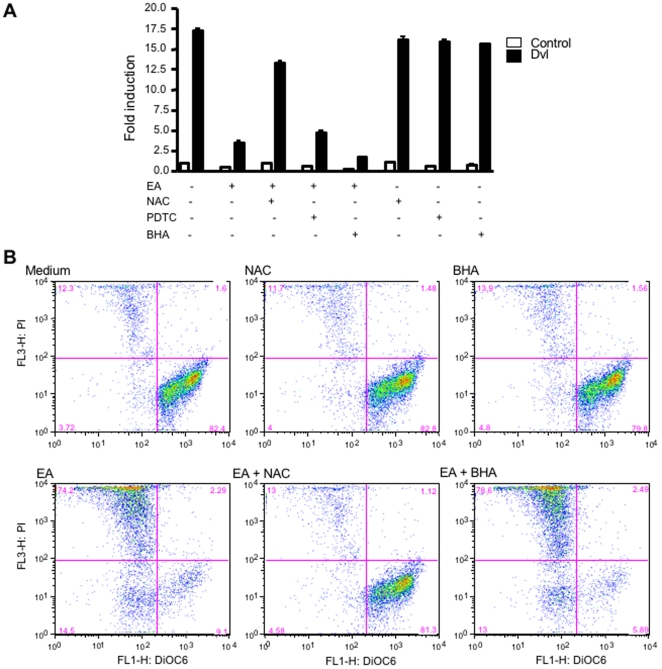
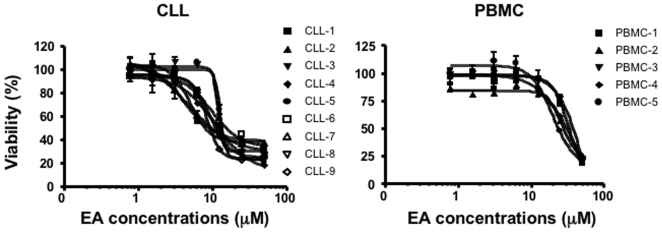
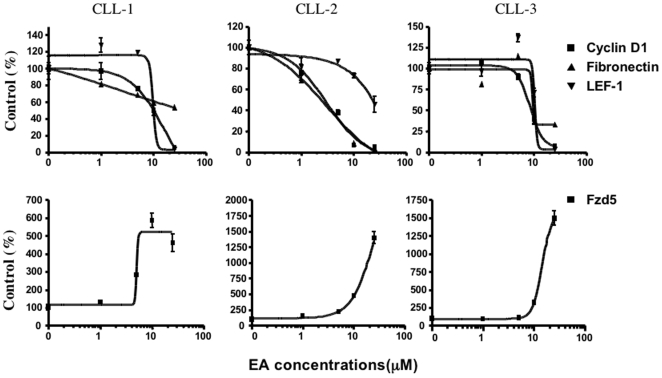
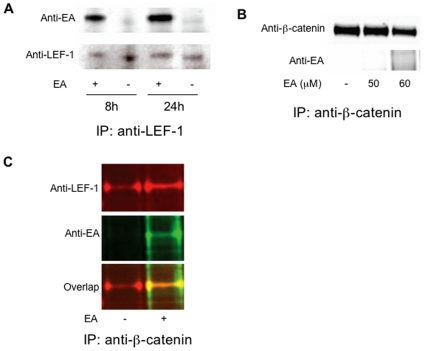
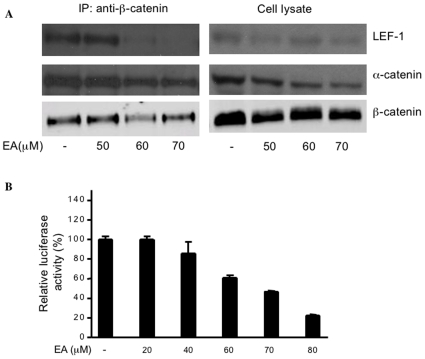
METHODOLOGY/PRINCIPAL FINDINGS: The diuretic agent ethacrynic acid (EA) was identified as a Wnt inhibitor using a cell-based Wnt reporter assay. In vitro assays further confirmed the inhibitory effect of EA on Wnt/beta-catenin signaling. Cell viability assays showed that EA selectively induced cell death in primary CLL cells. Exposure of CLL cells to EA decreased the expression of Wnt/beta-catenin target genes, including LEF-1, cyclin D1 and fibronectin. Immune co-precipitation experiments demonstrated that EA could directly bind to LEF-1 protein and destabilize the LEF-1/beta-catenin complex. N-acetyl-L-cysteine (NAC), which can react with the alpha, beta-unsaturated ketone in EA, but not other anti-oxidants, prevented the drug's inhibition of Wnt/beta-catenin activation and its ability to induce apoptosis in CLL cells.
CONCLUSIONS/SIGNIFICANCE: Our studies indicate that EA selectively suppresses CLL survival due to inhibition of Wnt/beta-catenin signaling. Antagonizing Wnt signaling in CLL with EA or related drugs may represent an effective treatment of this disease.
Wnt/β-连环蛋白信号的异常激活促进了几种癌症的发展。已经证明,Wnt 信号通路在慢性淋巴细胞白血病(CLL)细胞中被激活,并且不受控制的 Wnt/β-连环蛋白信号可能导致该恶性肿瘤的凋亡缺陷。因此,Wnt 信号通路是开发针对 CLL 的靶向治疗的有吸引力的候选者。
方法/主要发现:利尿剂乙叉羟酸(EA)在基于细胞的 Wnt 报告基因测定中被鉴定为 Wnt 抑制剂。体外实验进一步证实了 EA 对 Wnt/β-连环蛋白信号的抑制作用。细胞活力测定表明,EA 选择性地诱导原代 CLL 细胞死亡。CLL 细胞暴露于 EA 可降低 Wnt/β-连环蛋白靶基因的表达,包括 LEF-1、细胞周期蛋白 D1 和纤维连接蛋白。免疫共沉淀实验表明,EA 可以直接与 LEF-1 蛋白结合并使 LEF-1/β-连环蛋白复合物不稳定。N-乙酰-L-半胱氨酸(NAC)可以与 EA 中的α,β-不饱和酮反应,但不能与其他抗氧化剂反应,可防止药物抑制 Wnt/β-连环蛋白的激活及其在 CLL 细胞中诱导凋亡的能力。
结论/意义:我们的研究表明,EA 通过抑制 Wnt/β-连环蛋白信号选择性地抑制 CLL 的存活。用 EA 或相关药物拮抗 CLL 中的 Wnt 信号可能代表治疗该疾病的有效方法。