Department of Biomedical Engineering, Duke University, Room 136 Hudson Hall, Durham, NC 27708, USA.
Regen Med. 2010 Jan;5(1):87-105. doi: 10.2217/rme.09.69.
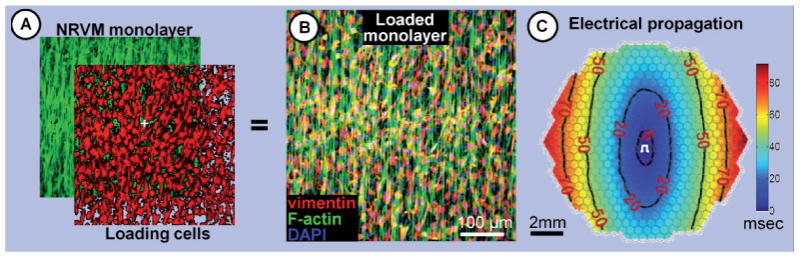
Despite the progress in traditional pharmacological and organ transplantation therapies, heart failure still afflicts 5.3 million Americans. Since June 2000, stem cell-based approaches for the prevention and treatment of heart failure have been pursued in clinics with great excitement; however, the exact mechanisms of how transplanted cells improve heart function remain elusive. One of the main difficulties in answering these questions is the limited ability to directly access and study interactions between implanted cells and host cardiomyocytes in situ. With the growing number of candidate cell types for potential clinical use, it is becoming increasingly more important to establish standardized, well-controlled in vitro and in situ assays to compare the efficacy and safety of different stem cells in cardiac repair. This article describes recent innovative methodologies to characterize direct functional interactions between stem cells and cardiomyocytes, aimed to facilitate the rational design of future cell-based therapies for heart disease.
尽管在传统的药理学和器官移植治疗方面取得了进展,但心力衰竭仍困扰着 530 万美国人。自 2000 年 6 月以来,基于干细胞的方法已在临床上用于预防和治疗心力衰竭,并引起了极大的关注;然而,移植细胞改善心脏功能的确切机制仍难以捉摸。回答这些问题的主要困难之一是,直接获取和研究植入细胞与原位宿主心肌细胞之间相互作用的能力有限。随着潜在临床应用的候选细胞类型数量不断增加,建立标准化、良好控制的体外和原位检测方法来比较不同干细胞在心脏修复中的疗效和安全性变得越来越重要。本文描述了最近用于描述干细胞与心肌细胞之间直接功能相互作用的创新方法,旨在促进针对心脏病的未来基于细胞疗法的合理设计。