Department of Pharmacology, Toxicology, and Neuroscience, Louisiana State University Health Sciences Center, Shreveport, Louisiana, USA.
PLoS One. 2009 Dec 23;4(12):e8466. doi: 10.1371/journal.pone.0008466.
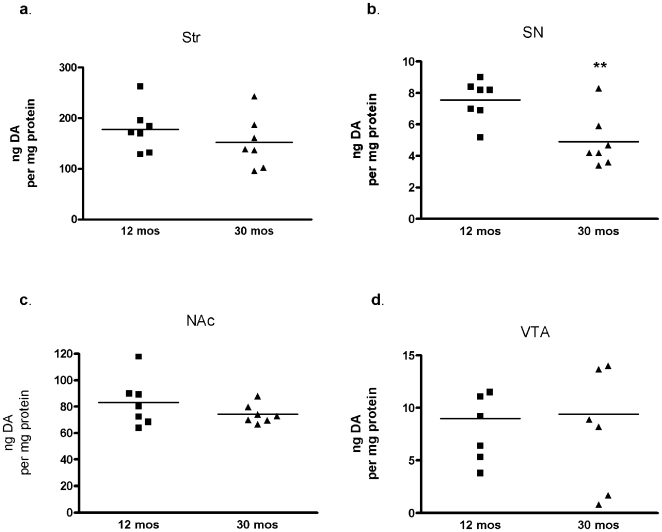
Tyrosine hydroxylase (TH) regulates dopamine (DA) bioavailability. Its product, L-DOPA, is an established treatment for Parkinson's disease (PD), suggesting that TH regulation influences locomotion. Site-specific phosphorylation of TH at ser31 and ser40 regulates activity. No direct evidence shows that ser40 phosphorylation is the dominating mechanism of regulating TH activity in vivo, and physiologically-relevant stimuli increase L-DOPA biosynthesis independent of ser40 phosphorylation. Significant loss of locomotor activity occurs in aging as in PD, despite less loss of striatal DA or TH in aging compared to the loss associated with symptomatic PD. However, in the substantia nigra (SN), there is equivalent loss of DA or TH in aging and at the onset of PD symptoms. Growth factors increase locomotor activity in both PD and aging models and increase DA bioavailability and ser31 TH phosphorylation in SN, suggesting that ser31 TH phosphorylation status in the SN, not striatum, regulates DA bioavailability necessary for locomotor activity.
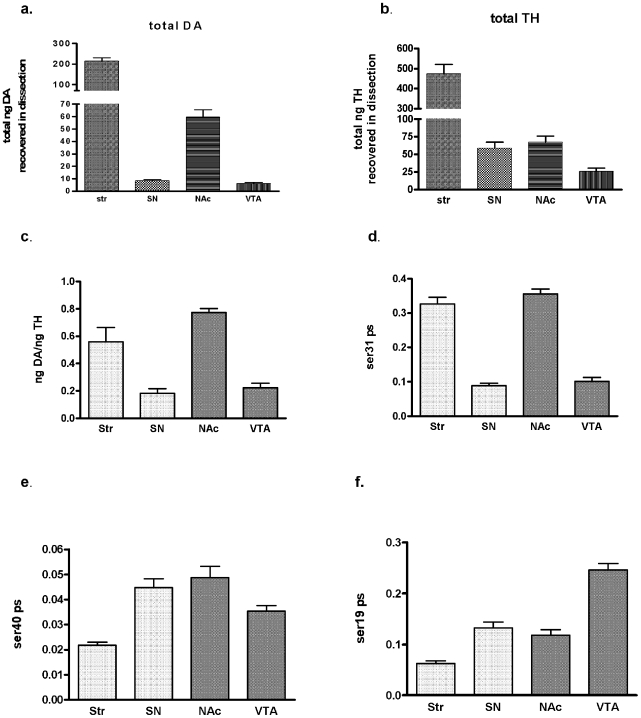
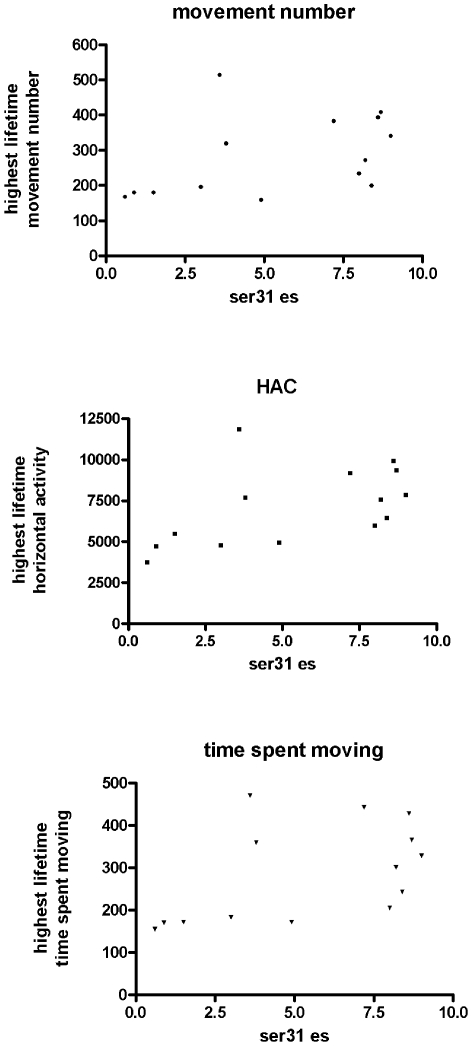
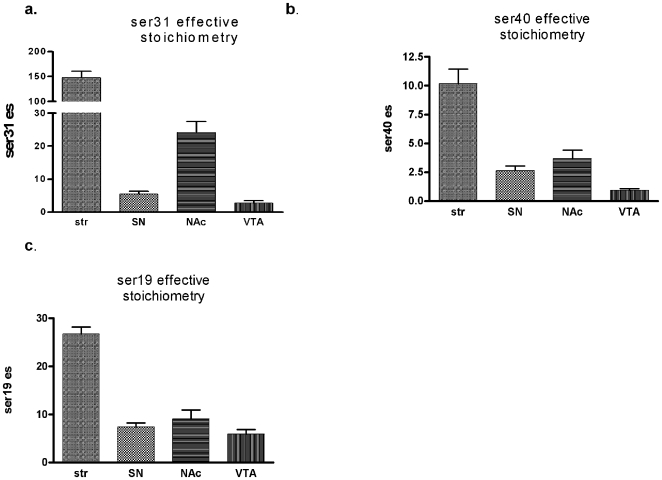
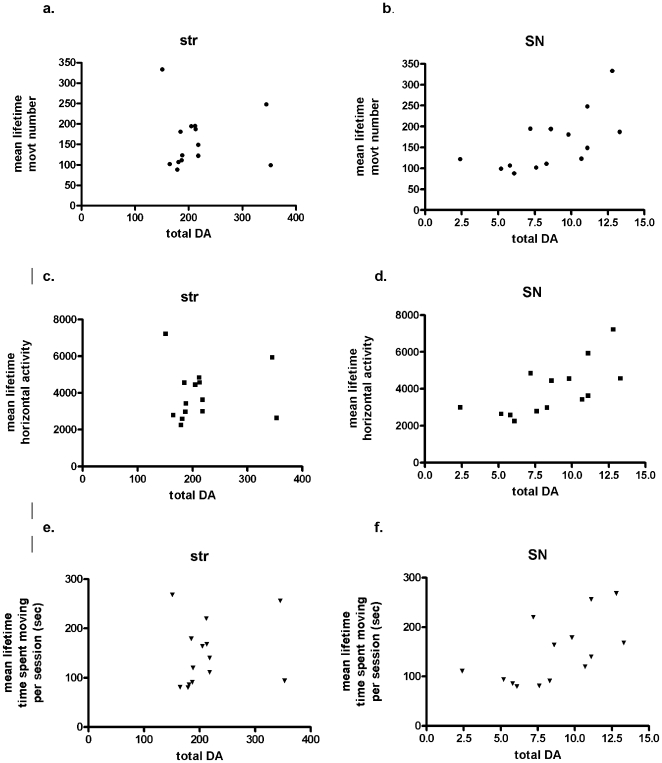
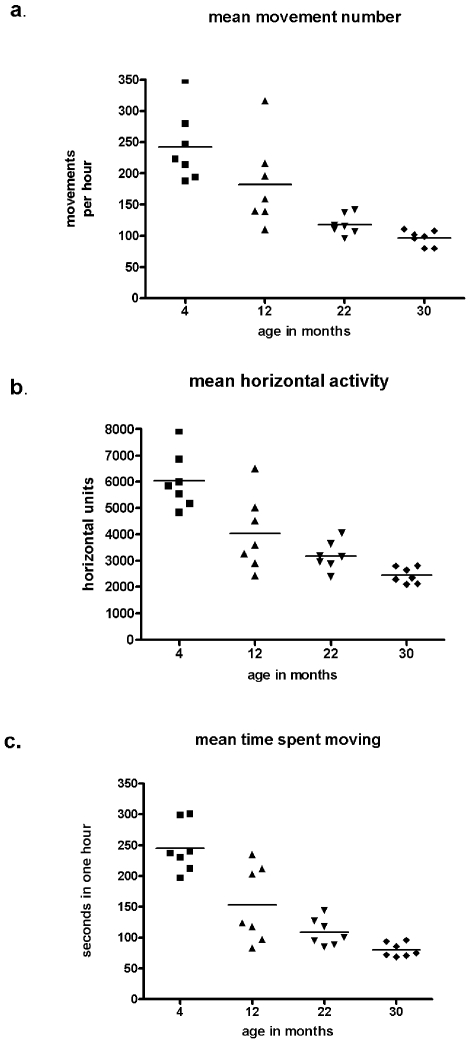
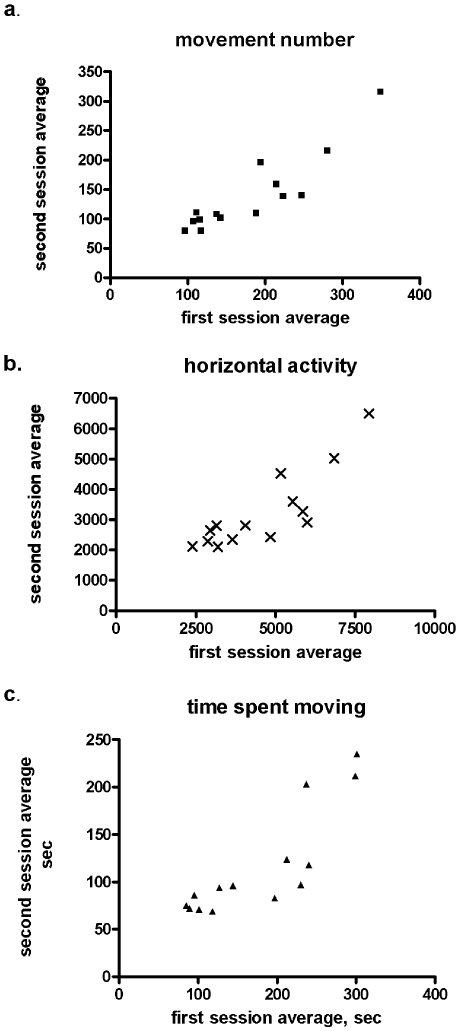
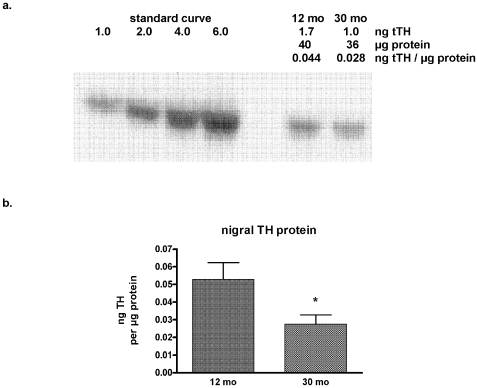
We longitudinally characterized locomotor activity in young and older Brown-Norway Fischer 344 F(1) hybrid rats (18 months apart in age) at two time periods, eight months apart. The aged group served as an intact and pharmacologically-naïve source of deficient locomotor activity. Following locomotor testing, we analyzed DA tissue content, TH protein, and TH phosphorylation in striatum, SN, nucleus accumbens, and VTA. Levels of TH protein combined with ser31 phosphorylation alone reflected inherent differences in DA levels among the four regions. Measures strictly pertaining to locomotor activity initiation significantly correlated to DA content only in the SN. Nigral TH protein and ser31 phosphorylation together significantly correlated to test subject's maximum movement number, horizontal activity, and duration.
CONCLUSIONS/SIGNIFICANCE: Together, these results show ser31 TH phosphorylation regulates DA bioavailability in intact neuropil, its status in the SN may regulate locomotor activity generation, and it may represent an accurate target for treating locomotor deficiency. They also show that neurotransmitter regulation in cell body regions can mediate behavioral outcomes and that ser31 TH phosphorylation plays a role in behaviors dependent upon catecholamines, such as dopamine.
酪氨酸羟化酶(TH)调节多巴胺(DA)的生物利用度。其产物左旋多巴(L-DOPA)是治疗帕金森病(PD)的既定方法,这表明 TH 的调节会影响运动。TH 在丝氨酸 31 位和丝氨酸 40 位的特异性磷酸化调节其活性。没有直接证据表明丝氨酸 40 位磷酸化是体内调节 TH 活性的主要机制,并且与丝氨酸 40 位磷酸化无关的生理相关刺激会增加 L-DOPA 的生物合成。衰老和 PD 一样,运动能力会显著下降,尽管与 PD 相关的症状相比,衰老时纹状体 DA 或 TH 的损失较少。然而,在黑质(SN)中,衰老和 PD 症状发作时 DA 或 TH 的损失是相等的。生长因子可增加 PD 和衰老模型中的运动能力,并增加 SN 中 DA 的生物利用度和丝氨酸 31 TH 磷酸化,这表明 SN 中丝氨酸 31 TH 磷酸化状态而不是纹状体调节运动活动所需的 DA 生物利用度。
我们在两个时间点(相隔 8 个月)对年轻和年老的 Brown-Norway Fischer 344 F(1) 杂种大鼠进行了纵向的运动能力测试,它们的年龄相差 18 个月。老年组作为运动能力不足的完整且未经药物治疗的来源。运动能力测试后,我们分析了纹状体、SN、伏隔核和腹侧被盖区中的 DA 含量、TH 蛋白和 TH 磷酸化。TH 蛋白水平加上丝氨酸 31 磷酸化单独反映了四个区域之间 DA 水平的固有差异。与运动起始严格相关的测量指标仅与 SN 中的 DA 含量显著相关。黑质 TH 蛋白和丝氨酸 31 磷酸化共同与测试对象的最大运动次数、水平活动和持续时间显著相关。
结论/意义:综上所述,这些结果表明丝氨酸 31 TH 磷酸化调节完整神经突中的 DA 生物利用度,其在 SN 中的状态可能调节运动活动的产生,并且它可能是治疗运动缺陷的准确靶点。它们还表明,细胞体区域的神经递质调节可以介导行为结果,并且丝氨酸 31 TH 磷酸化在依赖儿茶酚胺(如多巴胺)的行为中发挥作用。