Salvatore Michael F, Calipari Erin S, Jones Sara R
Department of Pharmacology, Toxicology and Neuroscience, Louisiana State University Health Sciences Center , Shreveport, Louisiana 71130, United States.
Department of Physiology and Pharmacology, Wake Forest School of Medicine , Winston-Salem, North Carolina 27157, United States.
ACS Chem Neurosci. 2016 Jul 20;7(7):941-51. doi: 10.1021/acschemneuro.6b00064. Epub 2016 May 10.
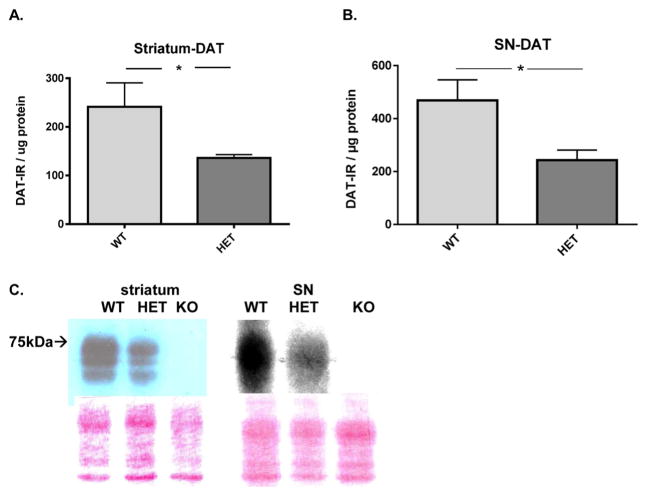
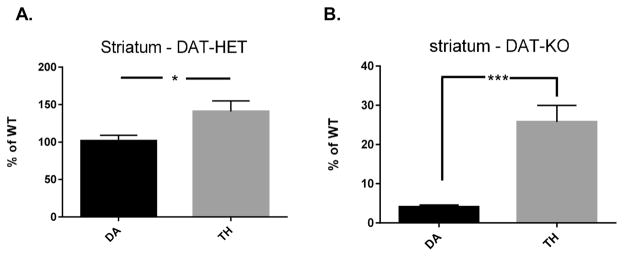
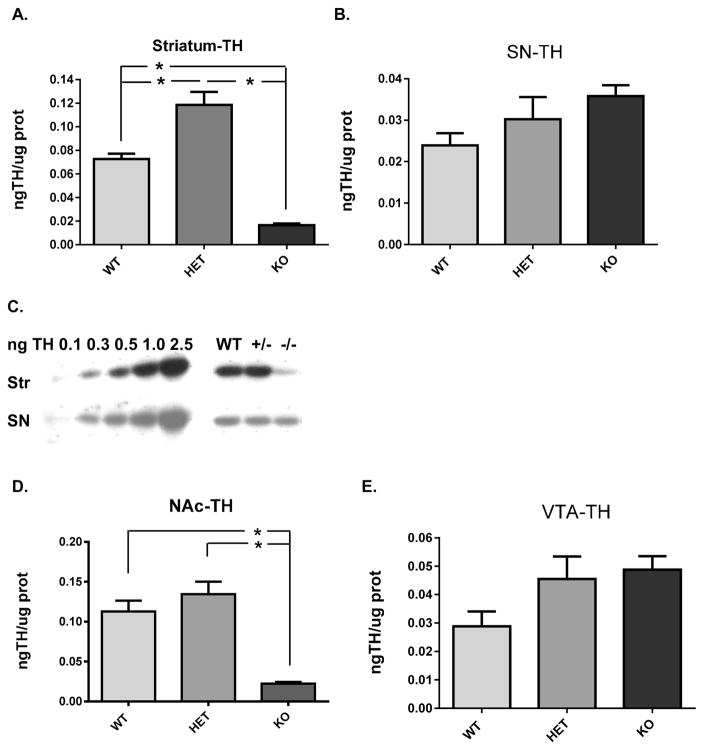
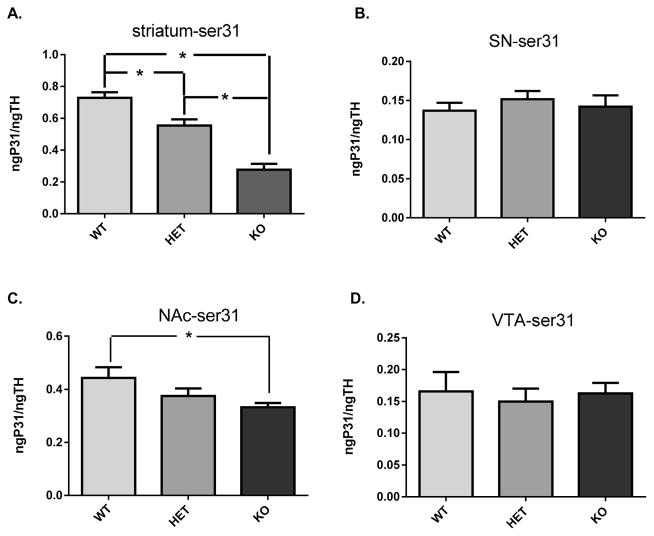
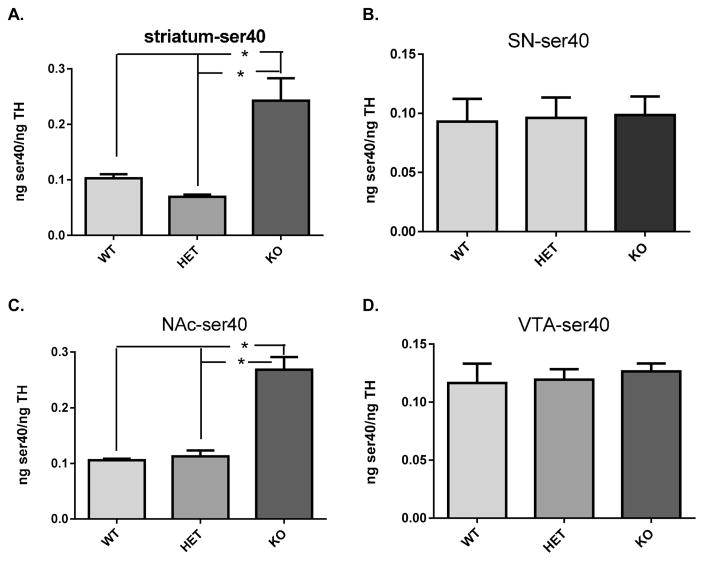
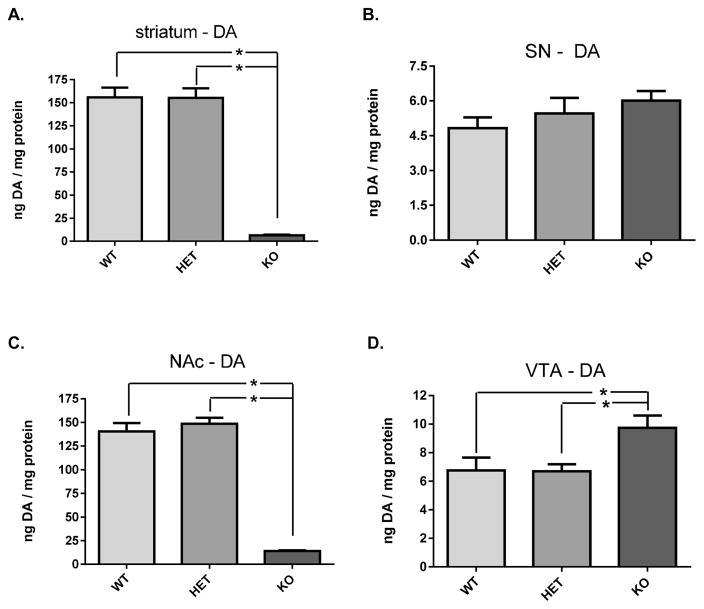
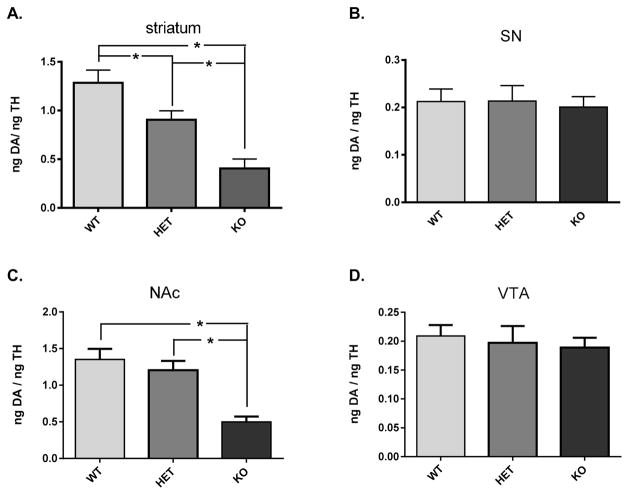
Tyrosine hydroxylase (TH) and dopamine transporters (DATs) regulate dopamine (DA) neurotransmission at the biosynthesis and reuptake steps, respectively. Dysfunction or loss of these proteins occurs in impaired locomotor or addictive behavior, but little is known about the influence of DAT expression on TH function. Differences in TH phosphorylation, DA tissue content, l-DOPA biosynthesis, and DA turnover exist between the somatodendritic and terminal field compartments of nigrostriatal and mesoaccumbens pathways. We examined whether differential DAT expression affects these compartmental differences in DA regulation by comparing TH expression and phosphorylation at ser31 and ser40. In heterozygous DAT knockout (KO) (+/-) mice, DA tissue content and DA turnover were unchanged relative to wild-type mice, despite a 40% reduction in DAT protein expression. In DAT KO (-/-) mice, DA turnover increased in all DA compartments, but DA tissue content decreased (90-96%) only in terminal fields. TH protein expression and phosphorylation were differentially affected within DA pathway compartments by relative expression of DAT. TH protein decreased (∼74%), though to a significantly lesser extent than DA, in striatum and nucleus accumbens (NAc) in DAT -/- mice, with no decrease in substantia nigra or ventral tegmental area. Striatal ser31 TH phosphorylation and recovery of DA relative to TH protein expression in DAT +/- and DAT -/- mice decreased, whereas ser40 TH phosphorylation increased ∼2- to 3-fold in striatum and NAc of DAT -/- mice. These results suggest that DAT expression affects TH expression and phosphorylation largely in DA terminal field compartments, further corroborating evidence for dichotomous regulation of TH between somatodendritic and terminal field compartments of the nigrostriatal and mesoaccumbens pathways.
酪氨酸羟化酶(TH)和多巴胺转运体(DATs)分别在生物合成和再摄取步骤调节多巴胺(DA)神经传递。这些蛋白质的功能障碍或缺失会出现在运动受损或成瘾行为中,但关于DAT表达对TH功能的影响却知之甚少。黑质纹状体和中伏隔核通路的树突体和终末区域之间,TH磷酸化、DA组织含量、左旋多巴生物合成以及DA周转率存在差异。我们通过比较TH在ser31和ser40位点的表达和磷酸化,研究了不同的DAT表达是否会影响DA调节中的这些区域差异。在杂合DAT基因敲除(KO)(+/-)小鼠中,尽管DAT蛋白表达降低了40%,但相对于野生型小鼠,DA组织含量和DA周转率并未改变。在DAT基因敲除(-/-)小鼠中,所有DA区域的DA周转率均增加,但DA组织含量仅在终末区域降低(90 - 96%)。TH蛋白表达及磷酸化在DA通路各区域受DAT相对表达的影响存在差异。在DAT -/-小鼠的纹状体和伏隔核(NAc)中,TH蛋白减少(约74%),尽管程度明显低于DA,而在黑质或腹侧被盖区中没有减少。相对于DAT +/-和DAT -/-小鼠中TH蛋白表达,纹状体ser31 TH磷酸化以及DA的恢复降低,而在DAT -/-小鼠的纹状体和NAc中,ser40 TH磷酸化增加约2至3倍。这些结果表明,DAT表达主要在DA终末区域影响TH表达和磷酸化,进一步证实了黑质纹状体和中伏隔核通路的树突体和终末区域之间对TH进行二分调控的证据。