Department of Physiology and Pathophysiology, Fudan University Shanghai Medical College, Shanghai 200032, PR China.
Lipids Health Dis. 2009 Dec 30;8:60. doi: 10.1186/1476-511X-8-60.
Circadian patterns of cardiovascular vulnerability were well characterized, with a peak incidence of acute myocardial infarction and stroke secondary to atherosclerosis in the morning, which showed the circadian clock may take part in the pathological process of atherosclerosis induced by hyperlipidemia. Hence, the effect of hyperlipidemia on the expression of circadian genes was investigated in atherosclerotic mouse model.
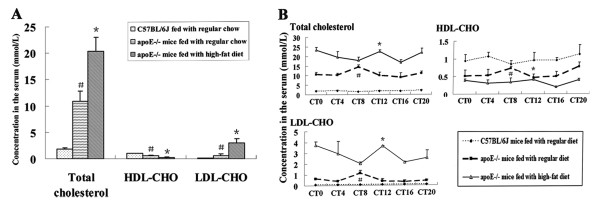
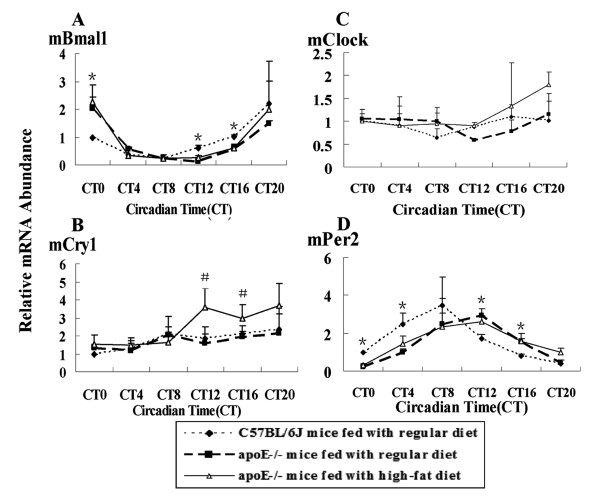
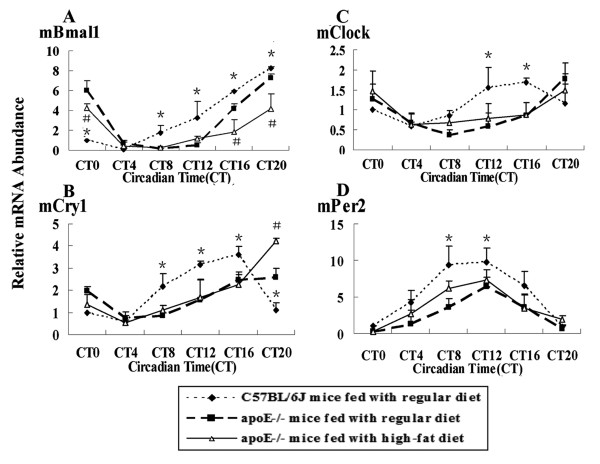
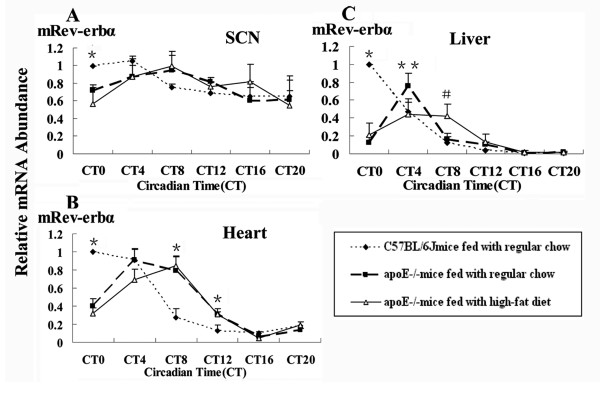
In apoE-/-mice on regular chow or high-fat diet, an atherosclerotic mouse model induced by heperlipidemia, we found that the peak concentration of serum lipids was showed four or eight hours later in apoE-/- mice, compared to C57BL/6J mice. During the artificial light period, a reduce in circulating level of serum lipids corresponded with the observed increase of the expression levels of some the transcription factors involved in lipid metabolism, such as PPARalpha and RXRalpha. Meanwhile, the expression of circadian genes was changed following with amplitude reduced or the peak mRNA level delayed.
Our studies indicated that heperlipidemia altered both the rhythmicity and expression of circadian genes. Diet-induced circadian disruption may affect the process of atherosclerosis and some acute cardiovascular disease.
心血管脆弱性的昼夜节律模式已经得到很好的描述,由于动脉粥样硬化导致的急性心肌梗死和中风在早晨的发病率最高,这表明生物钟可能参与了由高血脂引起的动脉粥样硬化的病理过程。因此,研究了高血脂对昼夜节律基因表达的影响。
在正常饮食或高脂肪饮食的 apoE-/- 小鼠(一种由高血脂诱导的动脉粥样硬化小鼠模型)中,我们发现与 C57BL/6J 小鼠相比,apoE-/- 小鼠的血清脂质峰值浓度出现了四到八小时的延迟。在人工光照期,循环血清脂质水平的降低与一些参与脂质代谢的转录因子(如 PPARalpha 和 RXRalpha)的表达水平的观察到的增加相对应。同时,昼夜节律基因的表达也发生了变化,振幅降低或峰值 mRNA 水平延迟。
我们的研究表明,高血脂改变了昼夜节律基因的节律性和表达。饮食引起的昼夜节律紊乱可能会影响动脉粥样硬化和一些急性心血管疾病的进程。