Abbott Laboratories, Abbott Park, IL, USA.
Int J Health Geogr. 2009 Dec 31;8:73. doi: 10.1186/1476-072X-8-73.
A semiparametric density ratio method which borrows strength from two or more samples can be applied to moving window of variable size in cluster detection. The method requires neither the prior knowledge of the underlying distribution nor the number of cases before scanning. In this paper, the semiparametric cluster detection procedure is combined with Storey's q-value, a type of controlling false discovery rate (FDR) method, to take into account the multiple testing problem induced by the overlapping scanning windows.
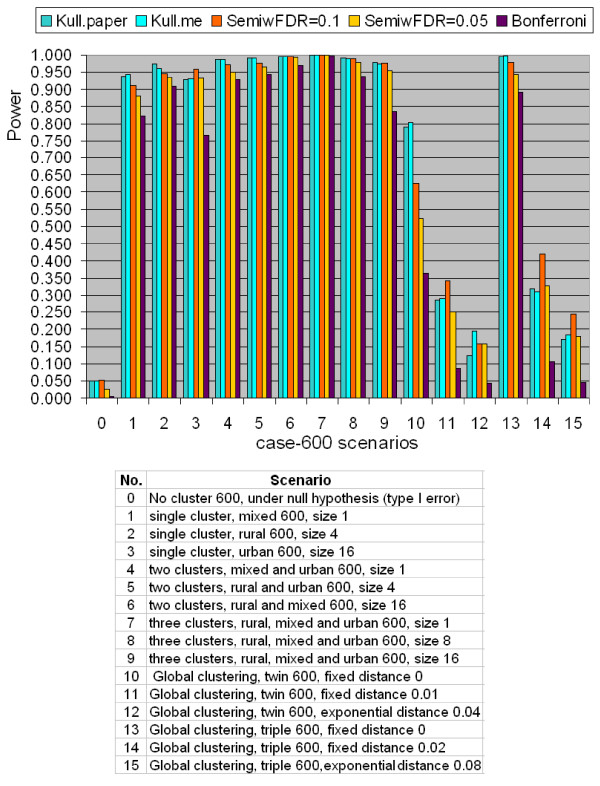
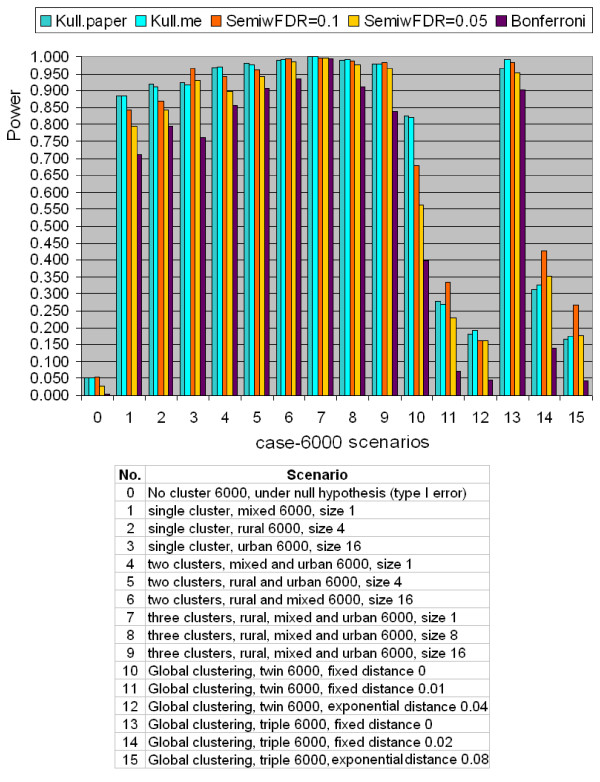
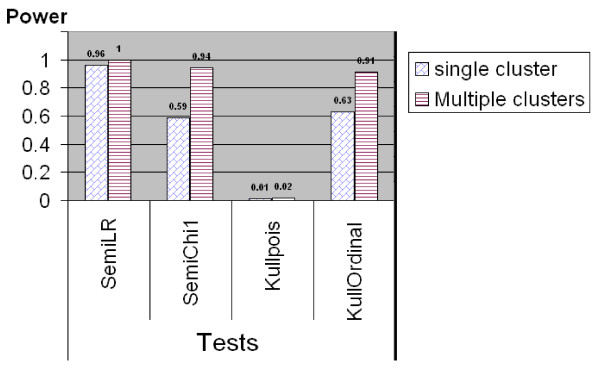
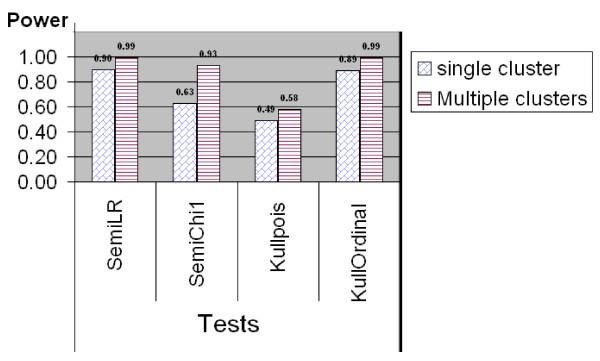
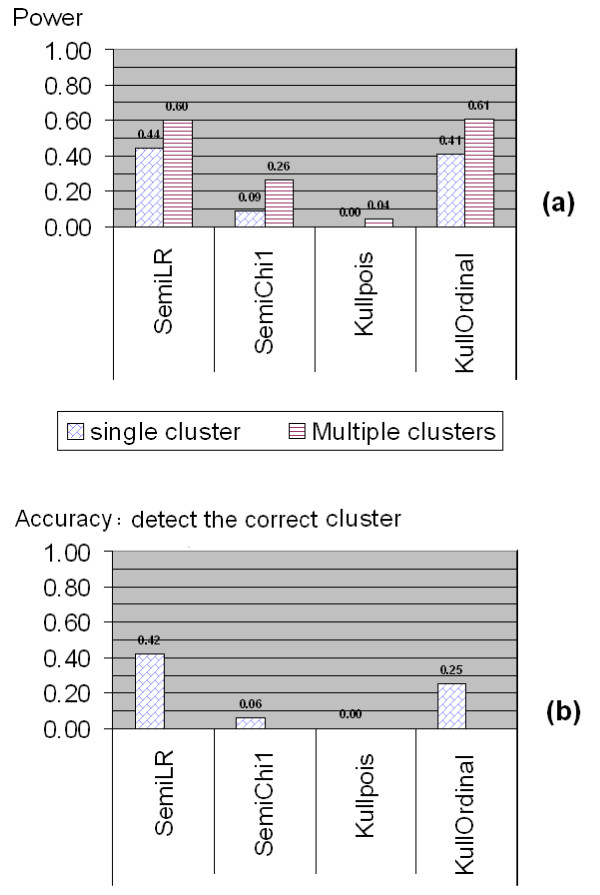
It is shown by simulations that for binary data, using Kulldorff's Northeastern benchmark data, the semiparametric method and Kulldorff's method performs similarly well. When the data are not binary, the semiparametric methodology still works in many cases, but Kulldorff's method requires the choices of a correct probability model, namely the correct scan statistic, in order to achieve comparable power as the semiparametric method achieves. Kulldorff's method with an inappropriate probability model may lose power.
The semiparametric method proposed in the paper can achieve good power when detecting localized cluster. The method does not require a specific distributional assumption other than the tilt function. In addition, it is possible to adapt other scan schemes (e.g., elliptic spatial scan, flexible shape scan) to search for clusters as well.
一种可以从两个或更多样本中获取优势的半参数密度比方法可应用于簇检测中的可变大小的移动窗口。该方法既不需要先验的分布知识,也不需要在扫描前知道病例数。在本文中,半参数聚类检测程序与 Storey 的 q 值(一种控制错误发现率(FDR)的方法)相结合,以考虑由重叠扫描窗口引起的多次测试问题。
通过模拟表明,对于二进制数据,使用 Kulldorff 的东北基准数据,半参数方法和 Kulldorff 的方法表现得同样出色。当数据不是二进制时,半参数方法在许多情况下仍然有效,但 Kulldorff 的方法需要选择正确的概率模型,即正确的扫描统计量,才能达到与半参数方法相当的功效。使用不正确的概率模型的 Kulldorff 方法可能会失去功效。
本文提出的半参数方法在检测局部簇时可以获得良好的功效。该方法除了倾斜函数外,不需要特定的分布假设。此外,还可以采用其他扫描方案(如椭圆空间扫描、灵活形状扫描)来搜索聚类。