Begemann Sebastian, Galimi Francesco, Karlseder Jan
The Salk Institute for Biological Studies, La Jolla, CA 92037, USA .
Aging (Albany NY). 2009 Jan;1(1):122-130. doi: 10.18632/aging.100015.
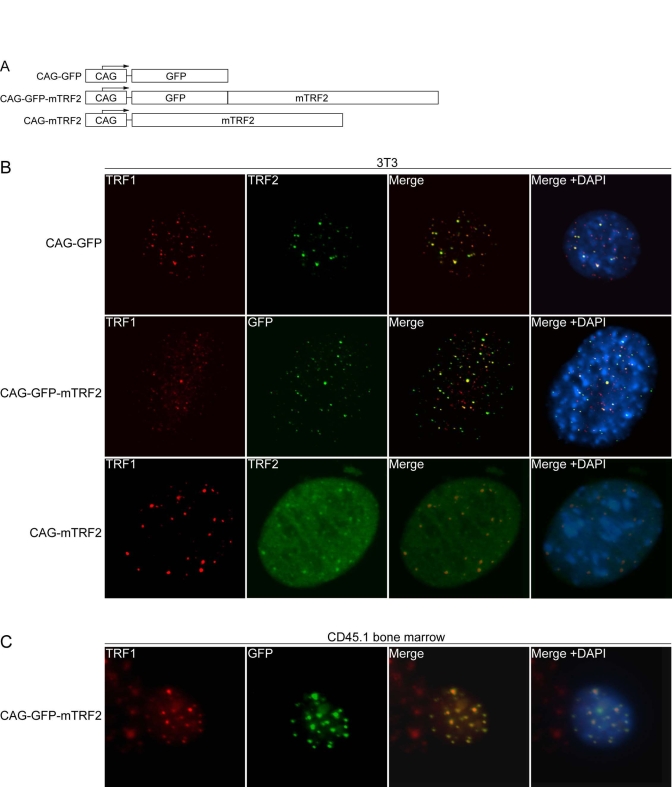
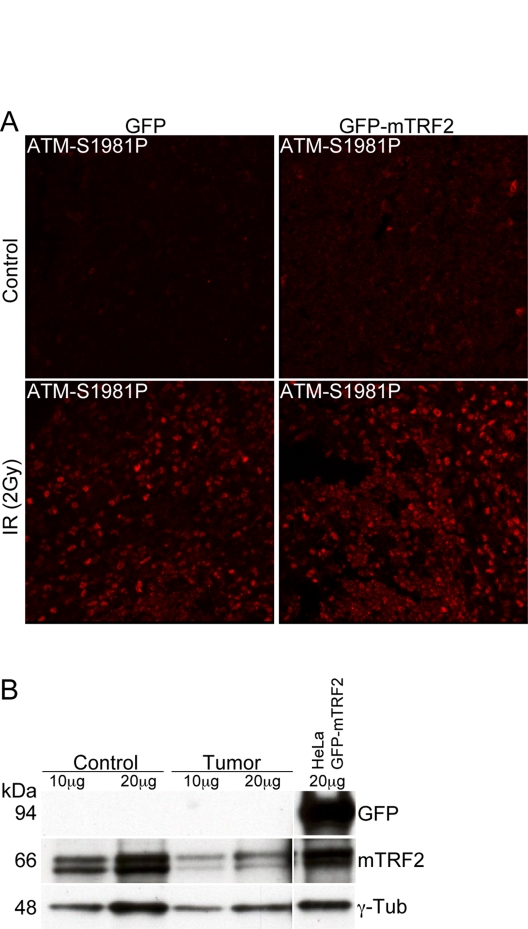
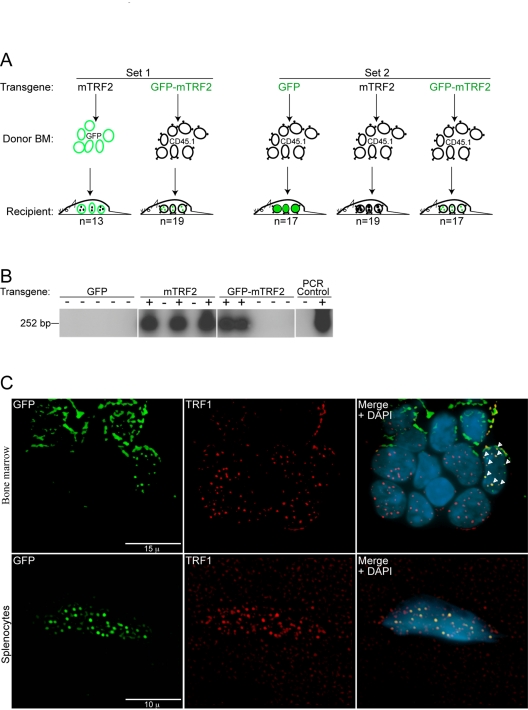
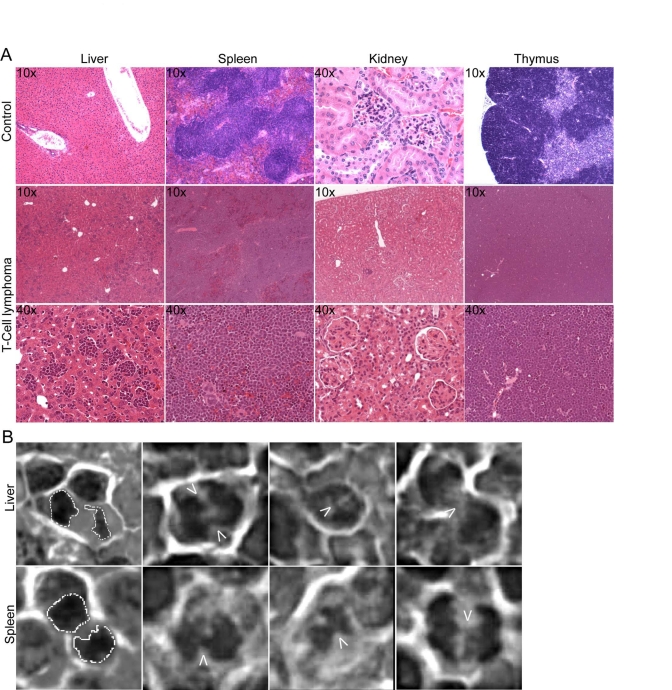
The telomeric repeat binding factor 2 (TRF2) plays a central role in the protection of chromosome ends by inhibiting telomeres from initiating a DNA damage cascade. TRF2 overexpression has been suggested to induce tumor development in the mouse, and TRF2 levels have been found increased in human tumors. Here we tested whether moderate expression of TRF2 in the hematopoietic system leads to cancer development in the mouse. TRF2 and a GFP-TRF2 fusion protein were introduced into hematopoietic precursors, and tested for function. TRF2 overexpressing cells were integrated into the hematopoietic system of C57BL/6J recipient mice, and animals were put on tumor watch. An increase in the development of T-cell lymphomas was observed in secondary recipient animals, however, overexpression of the TRF2 transgene was not detectable anymore in the tumors. The tumors were characterized as large cell blastic T-cell lymphomas and displayed signs of genome instability as evidenced by chromosome fusions. However, the rate of lymphoma development in TRF2-overexpressing animals was low, suggesting the TRF2 does not serve as a dominant oncogene in the system used.
端粒重复序列结合因子2(TRF2)通过抑制端粒引发DNA损伤级联反应,在保护染色体末端方面发挥核心作用。已有研究表明,TRF2过表达可诱导小鼠肿瘤发生,且在人类肿瘤中也发现TRF2水平升高。在此,我们测试了造血系统中适度表达TRF2是否会导致小鼠发生癌症。将TRF2和绿色荧光蛋白-TRF2融合蛋白导入造血前体细胞,并对其功能进行测试。将过表达TRF2的细胞整合到C57BL/6J受体小鼠的造血系统中,并对动物进行肿瘤监测。在二级受体动物中观察到T细胞淋巴瘤的发生有所增加,然而,在肿瘤中已无法检测到TRF2转基因的过表达。这些肿瘤被鉴定为大细胞母细胞性T细胞淋巴瘤,并表现出基因组不稳定的迹象,如染色体融合。然而,过表达TRF2的动物中淋巴瘤的发生率较低,这表明在所用系统中TRF2不作为显性癌基因起作用。