Institut für Biologie-Mikrobiologie, FU Berlin, Berlin, Germany.
EMBO Mol Med. 2009 Apr;1(1):37-49. doi: 10.1002/emmm.200900002.
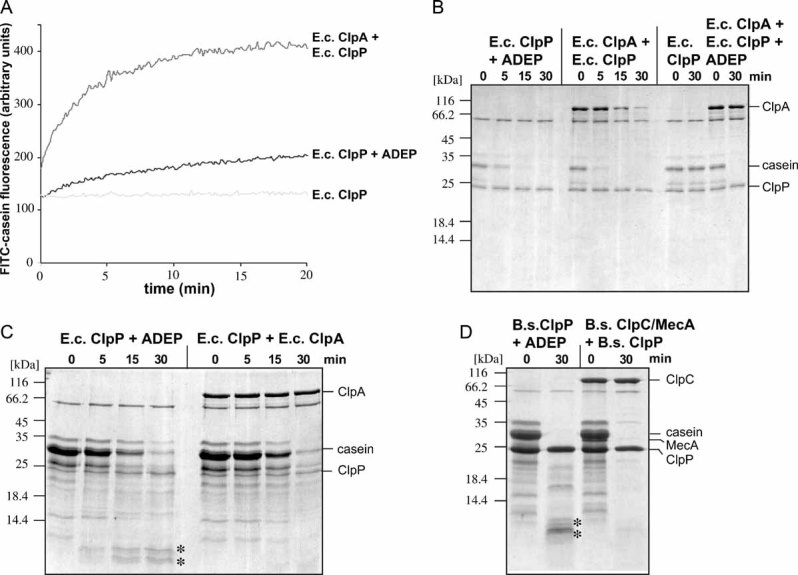
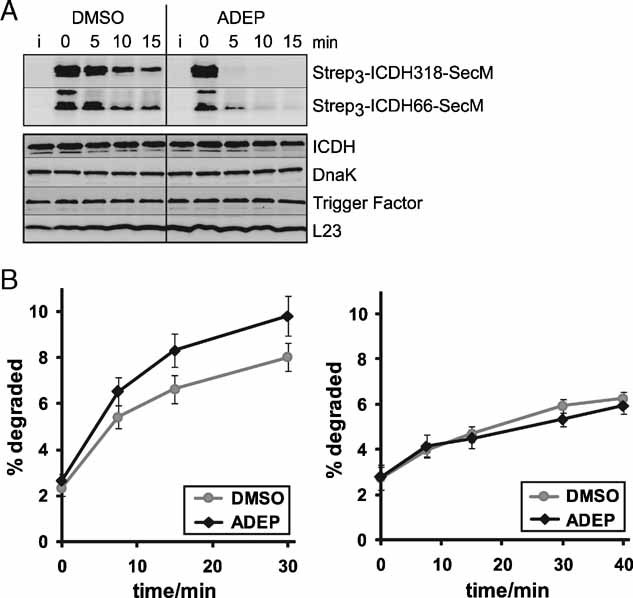
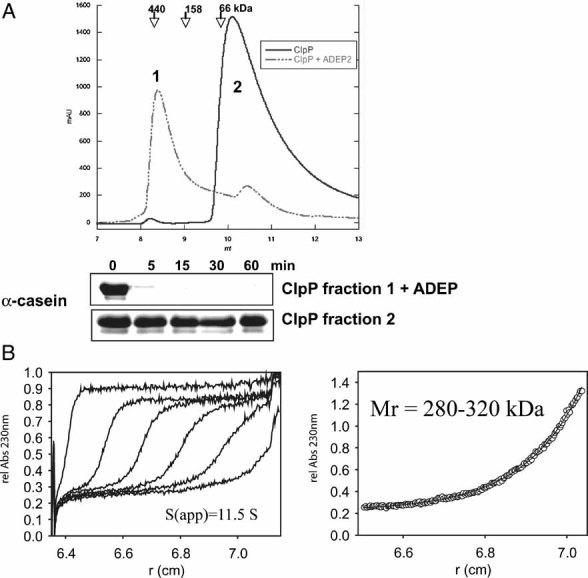
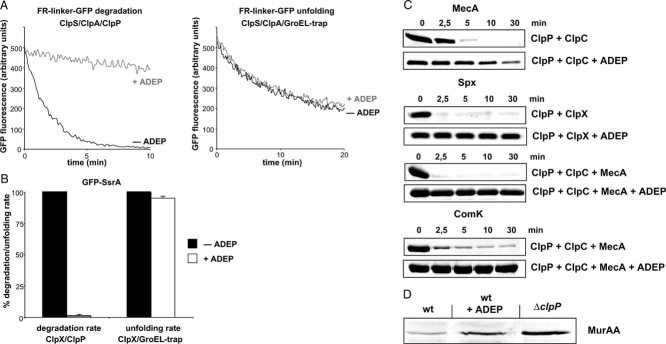
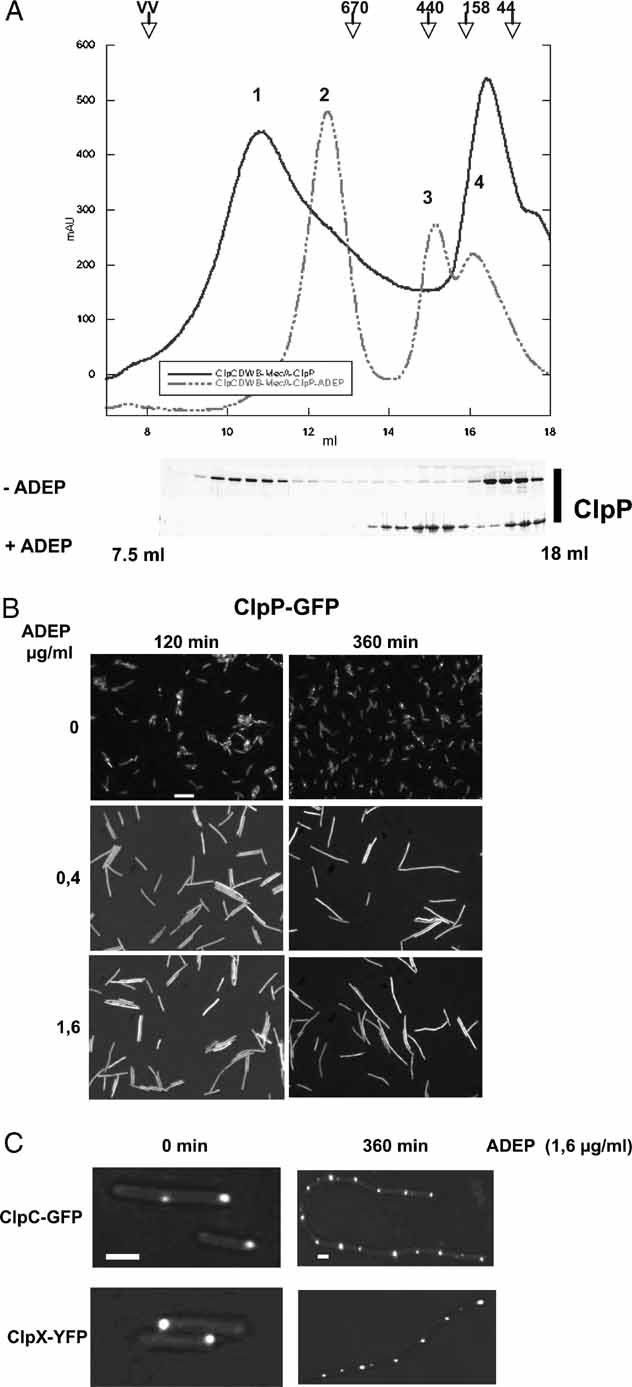
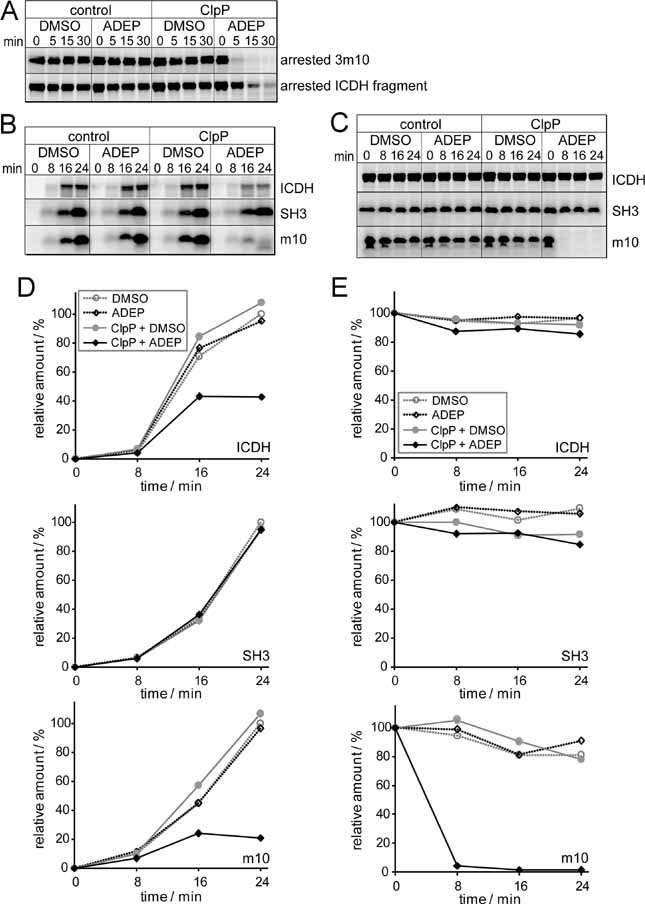
A novel class of antibiotic acyldepsipeptides (designated ADEPs) exerts its unique antibacterial activity by targeting the peptidase caseinolytic protease P (ClpP). ClpP forms proteolytic complexes with heat shock proteins (Hsp100) that select and process substrate proteins for ClpP-mediated degradation. Here, we analyse the molecular mechanism of ADEP action and demonstrate that ADEPs abrogate ClpP interaction with cooperating Hsp100 adenosine triphosphatases (ATPases). Consequently, ADEP treated bacteria are affected in ClpP-dependent general and regulatory proteolysis. At the same time, ADEPs also activate ClpP by converting it from a tightly regulated peptidase, which can only degrade short peptides, into a proteolytic machinery that recognizes and degrades unfolded polypeptides. In vivo nascent polypeptide chains represent the putative primary target of ADEP-activated ClpP, providing a rationale for the antibacterial activity of the ADEPs. Thus, ADEPs cause a complete functional reprogramming of the Clp-protease complex.
一类新型抗生素酰二肽(命名为 ADEP)通过靶向蛋白酶体 caseinolytic protease P(ClpP)发挥其独特的抗菌活性。ClpP 与热休克蛋白(Hsp100)形成蛋白酶复合物,用于选择和处理 ClpP 介导的降解的底物蛋白。在这里,我们分析了 ADEP 作用的分子机制,并证明 ADEP 会阻止 ClpP 与合作的 Hsp100 三磷酸腺苷酶(ATPase)相互作用。因此,用 ADEP 处理的细菌会受到 ClpP 依赖性的一般和调节性蛋白水解的影响。同时,ADEP 还通过将 ClpP 从一种只能降解短肽的严格调控的肽酶转换为一种识别和降解展开多肽的蛋白水解机制,从而激活 ClpP。体内新生多肽链代表 ADEP 激活的 ClpP 的假定主要靶标,为 ADEP 的抗菌活性提供了依据。因此,ADEP 导致 Clp 蛋白酶复合物的完全功能重新编程。