Department of Experimental Oncology, European Institute of Oncology, Milan, Italy.
PLoS Biol. 2010 Jan;8(1):e1000275. doi: 10.1371/journal.pbio.1000275. Epub 2010 Jan 5.
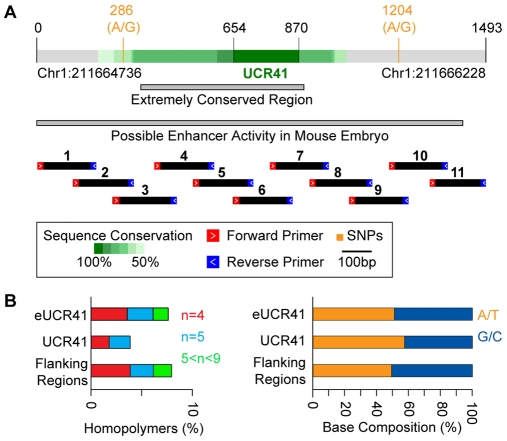
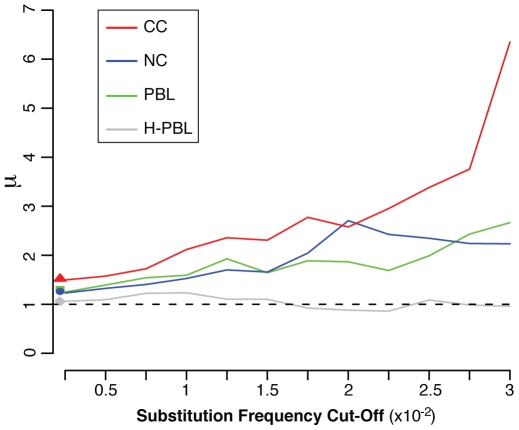
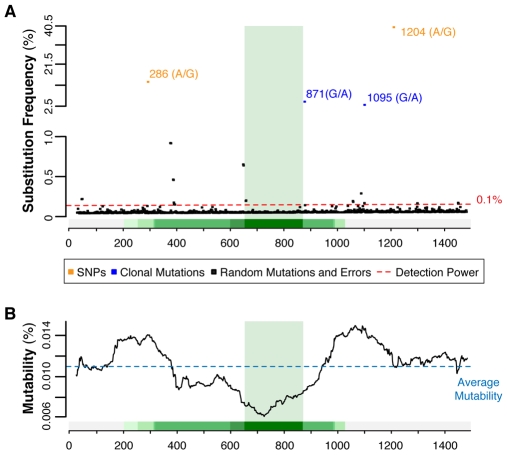
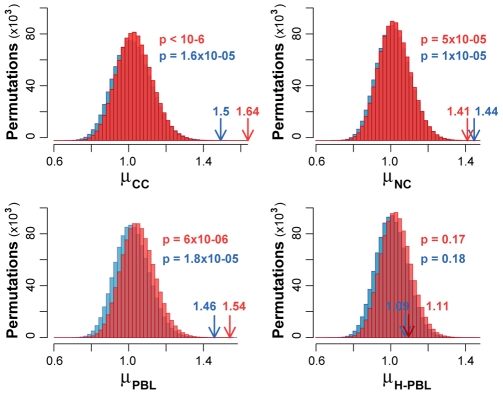
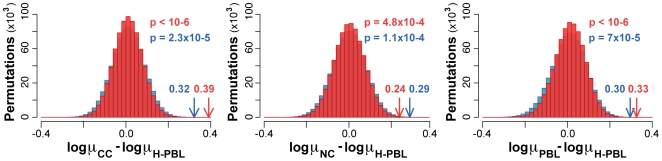
Early detection of cancer-associated genomic instability is crucial, particularly in tumour types in which this instability represents the essential underlying mechanism of tumourigenesis. Currently used methods require the presence of already established neoplastic cells because they only detect clonal mutations. In principle, parallel sequencing of single DNA filaments could reveal the early phases of tumour initiation by detecting low-frequency mutations, provided an adequate depth of coverage and an effective control of the experimental error. We applied ultradeep sequencing to estimate the genomic instability of individuals with hereditary non-polyposis colorectal cancer (HNPCC). To overcome the experimental error, we used an ultraconserved region (UCR) of the human genome as an internal control. By comparing the mutability outside and inside the UCR, we observed a tendency of the ultraconserved element to accumulate significantly fewer mutations than the flanking segments in both neoplastic and nonneoplastic HNPCC samples. No difference between the two regions was detectable in cells from healthy donors, indicating that all three HNPCC samples have mutation rates higher than the healthy genome. This is the first, to our knowledge, direct evidence of an intrinsic genomic instability of individuals with heterozygous mutations in mismatch repair genes, and constitutes the proof of principle for the development of a more sensitive molecular assay of genomic instability.
早期发现与癌症相关的基因组不稳定性至关重要,特别是在这种不稳定性代表肿瘤发生的基本潜在机制的肿瘤类型中。目前使用的方法需要已经存在的肿瘤细胞,因为它们只能检测克隆突变。原则上,通过检测低频突变,对单 DNA 丝的平行测序可以通过检测低频突变来揭示肿瘤起始的早期阶段,前提是有足够的覆盖深度和对实验误差的有效控制。我们应用超深度测序来估计遗传性非息肉病性结直肠癌 (HNPCC) 个体的基因组不稳定性。为了克服实验误差,我们使用了人类基因组的超保守区 (UCR) 作为内部对照。通过比较 UCR 内外的突变率,我们观察到在肿瘤和非肿瘤 HNPCC 样本中,超保守元件积累的突变明显少于侧翼片段的趋势。在来自健康供体的细胞中,两个区域之间没有差异,表明所有三个 HNPCC 样本的突变率均高于健康基因组。这是我们所知的第一个直接证据,证明错配修复基因杂合突变个体存在内在的基因组不稳定性,为开发更敏感的基因组不稳定性分子检测方法提供了原理证明。