Department of Cell and Molecular Physiology, Stritch School of Medicine, Loyola University Chicago, Chicago, IL 60153, USA.
J Mol Cell Cardiol. 2010 May;48(5):851-8. doi: 10.1016/j.yjmcc.2009.12.017. Epub 2010 Jan 4.
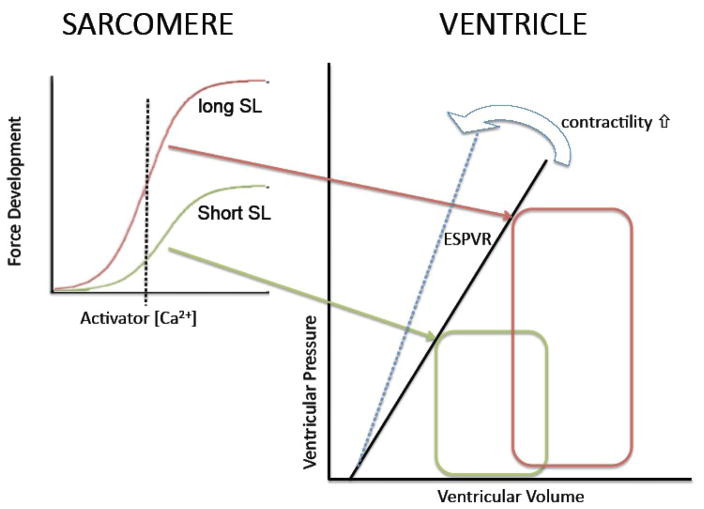
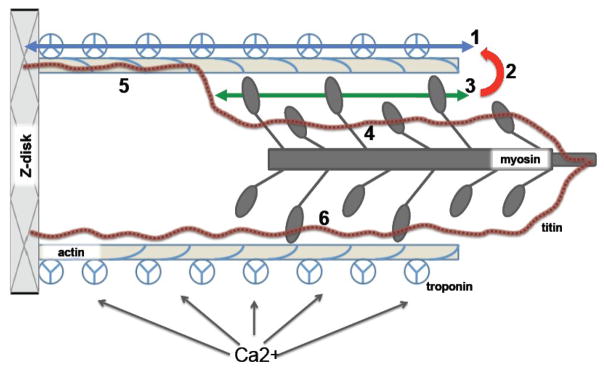
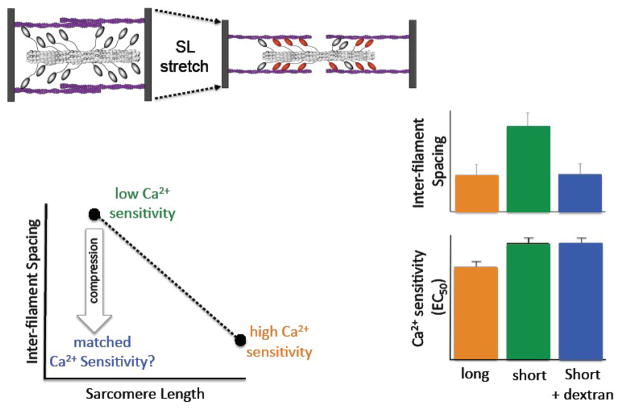
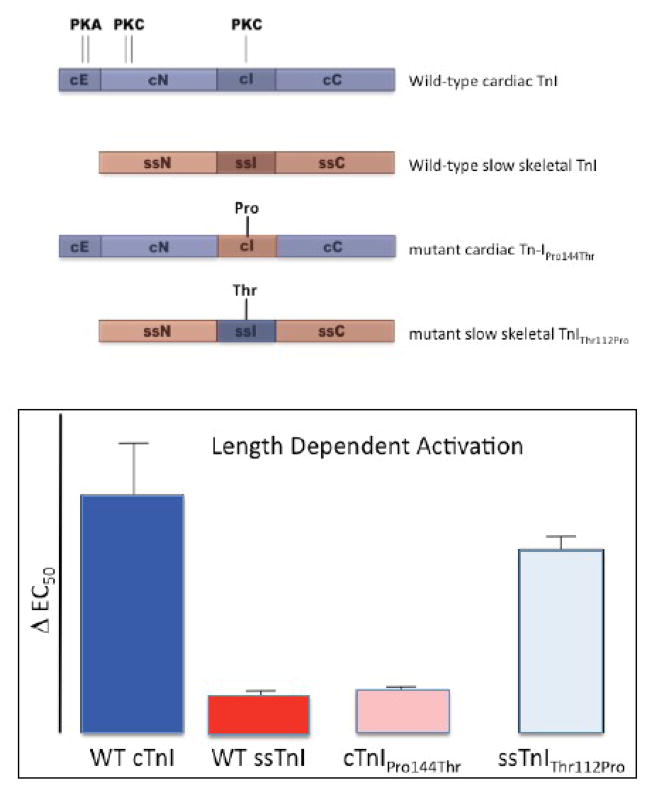
The Frank-Starling law of the heart describes the interrelationship between end-diastolic volume and cardiac ejection volume, a regulatory system that operates on a beat-to-beat basis. The main cellular mechanism that underlies this phenomenon is an increase in the responsiveness of cardiac myofilaments to activating Ca(2+) ions at a longer sarcomere length, commonly referred to as myofilament length-dependent activation. This review focuses on what molecular mechanisms may underlie myofilament length dependency. Specifically, the roles of inter-filament spacing, thick and thin filament based regulation, as well as sarcomeric regulatory proteins are discussed. Although the "Frank-Starling law of the heart" constitutes a fundamental cardiac property that has been appreciated for well over a century, it is still not known in muscle how the contractile apparatus transduces the information concerning sarcomere length to modulate ventricular pressure development.
心脏的 Frank-Starling 定律描述了舒张末期容积和心脏射血容积之间的相互关系,这是一个基于每一次心跳的调节系统。这种现象的主要细胞机制是在更长的肌节长度下,心肌纤维对激活 Ca(2+)离子的反应性增加,通常称为肌丝长度依赖性激活。这篇综述重点介绍了哪些分子机制可能是肌丝长度依赖性的基础。具体来说,讨论了肌丝间间距、粗丝和细丝的调节以及肌节调节蛋白的作用。尽管“心脏的 Frank-Starling 定律”构成了一个已经被人们认识了一个多世纪的基本心脏特性,但肌肉中仍然不知道收缩装置如何将有关肌节长度的信息转化为调节心室压力发展的信息。