Konfino Jonatan, Mejía Raúl, Majdalani María Pía, Pérez-Stable Eliseo J
Programa de Medicina Interna General, Departamento de Medicina, Hospital de Clínicas José de San Martín, Universidad de Buenos Aires, Argentina.
Medicina (B Aires). 2009;69(6):631-4.
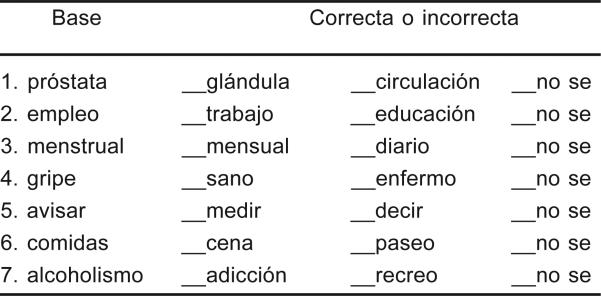
Health literacy in patients attending a University Hospital. Low level of health literacy is associated with poor communication between patients and clinicians and with increased hospitalization rates, less frequent screening for cancer, poor control of diabetes, and disproportionately high rates of disease and mortality. Despite the importance of health literacy in medicine, there is no information about its prevalence in Latin America. The aim of this study was to assess the prevalence of inadequate health literacy in a random sample of patients, at a University Hospital where a descriptive study was performed during 2007. Health literacy was assessed through the Short Assessment of Health Literacy for Spanish-speaking Adults. Participants were randomly selected from the ambulatory clinic and from the medical inpatient ward during 2007.There were a total of 2345 patients potentially eligible during the time of the study, 234 were approached after random selection and 229 patients were interviewed (98% response); 54.6% of respondents were women and 62% were recruited from the ambulatory clinic. The respondents had a median age of 56 years. The prevalence of inadequate health literacy was 30.1% (69 patients). Patients with ≤ 7 years of formal education had more risk of having inadequate health literacy compared with those with > 12 years of education OR = 45.1 (IC 9.6-211.6). We found a high prevalence of inadequate health literacy, being strongly associated with the level of formal education. It is important that health care providers know the implications of health literacy and its consequences.
大学医院患者的健康素养。健康素养水平低与患者和临床医生之间沟通不畅、住院率增加、癌症筛查频率降低、糖尿病控制不佳以及疾病和死亡率过高有关。尽管健康素养在医学中很重要,但拉丁美洲关于其患病率的信息却很少。本研究的目的是在一家大学医院对患者随机样本中健康素养不足的患病率进行评估,该医院在2007年进行了一项描述性研究。通过《西班牙语成人健康素养简短评估》对健康素养进行评估。2007年期间,参与者从门诊诊所和内科住院病房中随机选取。在研究期间共有2345名患者可能符合条件,随机选取后接触了234名患者,对229名患者进行了访谈(回应率98%);54.6%的受访者为女性,62%来自门诊诊所。受访者的中位年龄为56岁。健康素养不足的患病率为30.1%(69名患者)。与接受过12年以上教育的患者相比,接受正规教育≤7年的患者健康素养不足的风险更高,比值比=45.1(95%置信区间9.6 - 211.6)。我们发现健康素养不足的患病率很高,且与正规教育水平密切相关。医疗服务提供者了解健康素养的影响及其后果很重要。