HIV Research Section, San Francisco Department of Public Health, 25 Van Ness Avenue, San Francisco, CA 94102-6033, USA.
AIDS Behav. 2011 Feb;15(2):499-506. doi: 10.1007/s10461-009-9665-4.
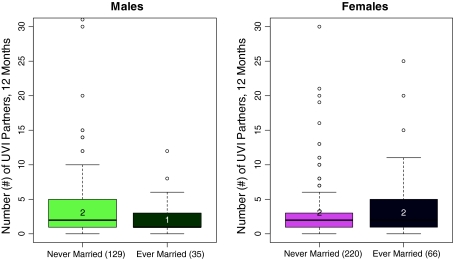
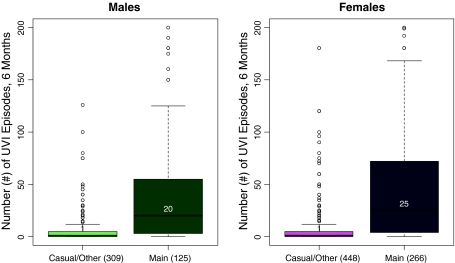
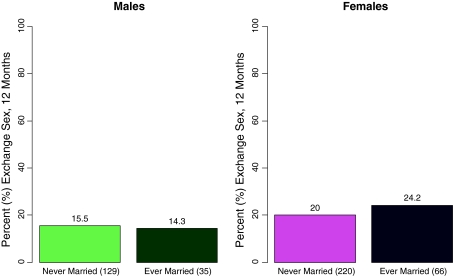
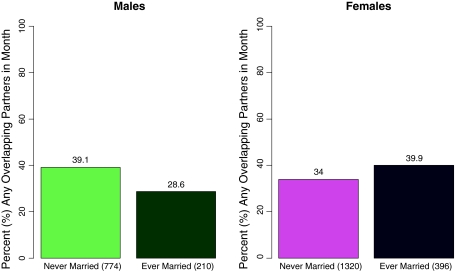
We assess whether there is evidence of an association between socioeconomic position (SEP) and HIV risk-relevant behavior among lower income heterosexual men and women in San Francisco. Respondents residing in low income areas with high heterosexual AIDS case burden in San Francisco were recruited through long-chain referral in 2006-2007. Risk measures included unprotected vaginal intercourse, concurrency and exchange sex. SEP was defined as household annual income, per capita income, and employment. Analyses utilized mixed and fixed effects models. A total of 164 men and 286 women were included in the study. SEP was only significant in the case of exchange sex among men: men reporting annual income greater than $30,000 had significantly lower odds of exchange sex relative to other men. Evaluating the connection between economic status and HIV requires additional studies covering diverse populations. Future studies should focus on community economic context as well as individual SEP.
我们评估了在旧金山,社会经济地位(SEP)与低收入异性恋男性和女性的 HIV 风险相关行为之间是否存在关联。通过 2006-2007 年的长链转介,在旧金山低收入地区和异性恋艾滋病病例负担较高的地区招募了受访者。风险措施包括无保护的阴道性交、同时发生性关系和交换性。SEP 定义为家庭年收入、人均收入和就业。分析采用混合和固定效应模型。共有 164 名男性和 286 名女性参与了这项研究。在男性中,只有在交换性行为方面,SEP 才具有统计学意义:年收入超过 30000 美元的男性与其他男性相比,交换性行为的可能性显著降低。评估经济状况和 HIV 之间的关系需要对不同人群进行更多的研究。未来的研究应关注社区经济背景以及个人的社会经济地位。