Department of Medical Microbiology, Nijmegen Centre for Molecular Life Sciences and Radboud University Nijmegen Medical Centre, Nijmegen, The Netherlands.
Diabetes. 2010 May;59(5):1182-91. doi: 10.2337/db09-1071. Epub 2010 Jan 13.
Type 1 diabetes is a chronic endocrine disorder in which enteroviruses, such as coxsackie B viruses and echoviruses, are possible environmental factors that can trigger or accelerate disease. The development or acceleration of type 1 diabetes depends on the balance between autoreactive effector T-cells and regulatory T-cells. This balance is particularly influenced by dendritic cells (DCs). The goal of this study was to investigate the interaction between enterovirus-infected human pancreatic islets and human DCs.
In vitro phagocytosis of human or porcine primary islets or Min6 mouse insuloma cells by DCs was investigated by flow cytometry and confocal analysis. Subsequent innate DC responses were monitored by quantitative PCR and Western blotting of interferon-stimulated genes (ISGs).
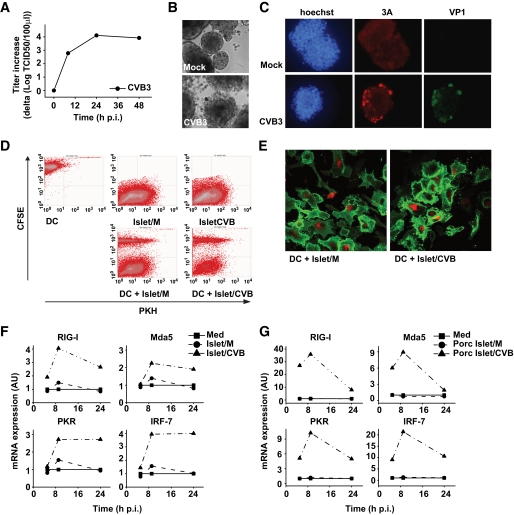
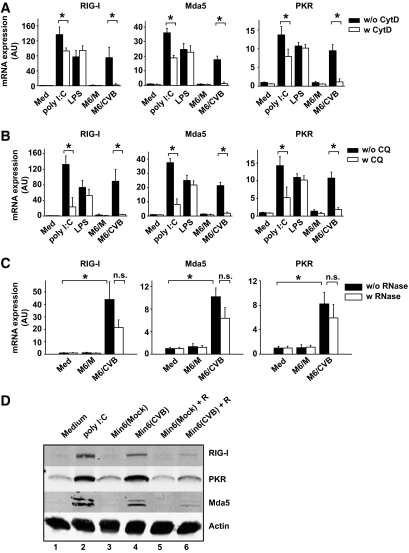
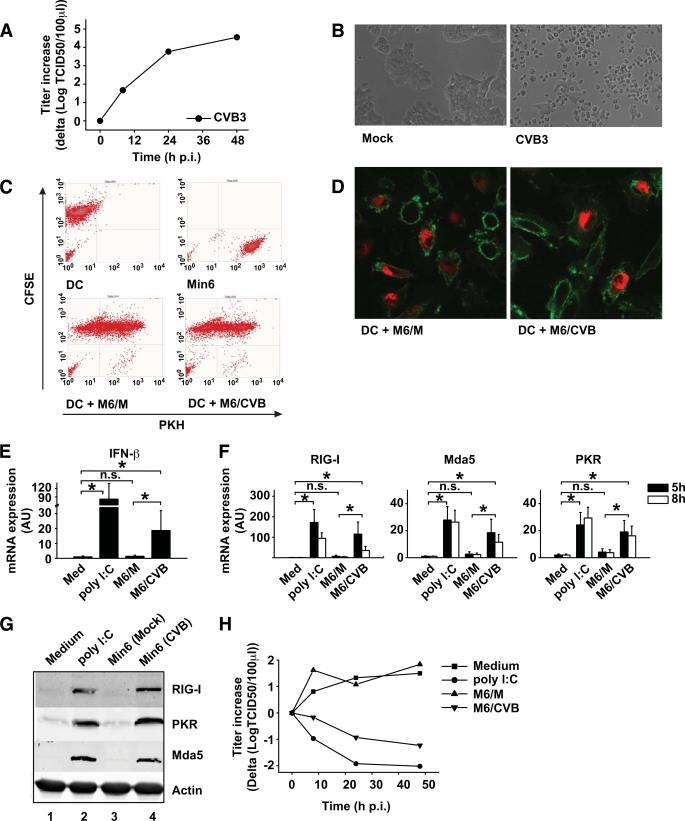
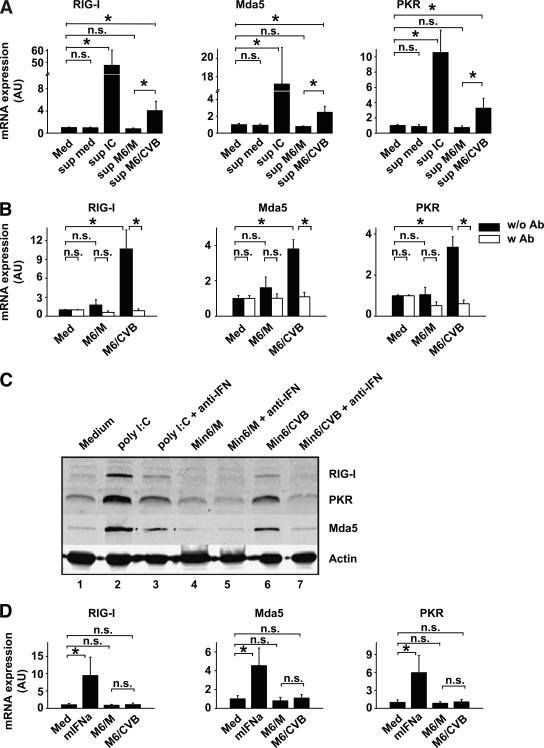
In this study, we show that both mock- and coxsackievirus B3 (CVB3)-infected human and porcine pancreatic islets were efficiently phagocytosed by human monocyte-derived DCs. Phagocytosis of CVB3-infected, but not mock-infected, human and porcine islets resulted in induction of ISGs in DCs, including the retinoic acid-inducible gene (RIG)-I-like helicases (RLHs), RIG-I, and melanoma differentiation-associated gene 5 (Mda5). Studies with murine Min6 insuloma cells, which were also efficiently phagocytosed, revealed that increased ISG expression in DCs upon encountering CVB-infected cells resulted in an antiviral state that protected DCs from subsequent enterovirus infection. The observed innate antiviral responses depended on RNA within the phagocytosed cells, required endosomal acidification, and were type I interferon dependent.
Human DCs can phagocytose enterovirus-infected pancreatic cells and subsequently induce innate antiviral responses, such as induction of RLHs. These responses may have important consequences for immune homeostasis in vivo and may play a role in the etiology of type 1 diabetes.
1 型糖尿病是一种慢性内分泌紊乱疾病,柯萨奇 B 病毒和埃可病毒等肠道病毒可能是触发或加速疾病的环境因素。1 型糖尿病的发展或加速取决于自身反应性效应 T 细胞和调节性 T 细胞之间的平衡。这种平衡特别受树突状细胞(DC)的影响。本研究旨在探讨感染肠道病毒的人胰腺胰岛与人类树突状细胞之间的相互作用。
通过流式细胞术和共聚焦分析研究了 DC 对人或猪原代胰岛或 Min6 小鼠胰岛细胞瘤细胞的体外吞噬作用。随后通过定量 PCR 和干扰素刺激基因(ISG)的 Western 印迹监测先天 DC 反应。
在这项研究中,我们表明,模拟和柯萨奇病毒 B3(CVB3)感染的人源和猪源胰腺胰岛均被人单核细胞衍生的树突状细胞有效吞噬。CVB3 感染而非模拟感染的人源和猪源胰岛的吞噬作用导致 DC 中 ISG 的诱导,包括视黄酸诱导基因(RIG)样螺旋酶(RLH)、RIG-I 和黑色素瘤分化相关基因 5(Mda5)。用也被有效吞噬的鼠 Min6 胰岛细胞瘤细胞进行的研究表明,在遇到 CVB 感染的细胞时,DC 中 ISG 表达的增加导致抗病毒状态,从而保护 DC 免受随后的肠道病毒感染。观察到的先天抗病毒反应依赖于吞噬细胞内的 RNA,需要内体酸化,并依赖于 I 型干扰素。
人树突状细胞可以吞噬感染肠道病毒的胰腺细胞,随后诱导先天抗病毒反应,如 RLH 的诱导。这些反应可能对体内免疫稳态有重要影响,并可能在 1 型糖尿病的病因学中发挥作用。