Department of Biotechnology and Molecular Science, University of Insubria, Varese, Italy.
BMC Neurosci. 2010 Jan 14;11:4. doi: 10.1186/1471-2202-11-4.
Stress involves alterations of brain functioning that may precipitate to mood disorders. The neurotrophin Brain Derived Neurotrophic Factor (BDNF) has recently been involved in stress-induced adaptation. BDNF is a key regulator of neuronal plasticity and adaptive processes. Regulation of BDNF is complex and may reflect not only stress-specific mechanisms but also hormonal and emotional responses. For this reason we used, as an animal model of stress, a fish whose brain organization is very similar to that of higher vertebrates, but is generally considered free of emotional reactions.
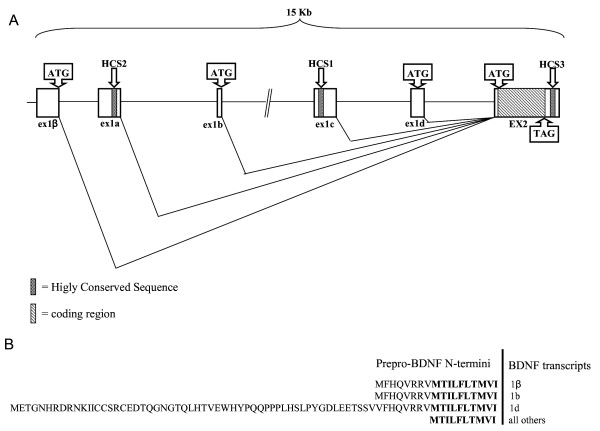
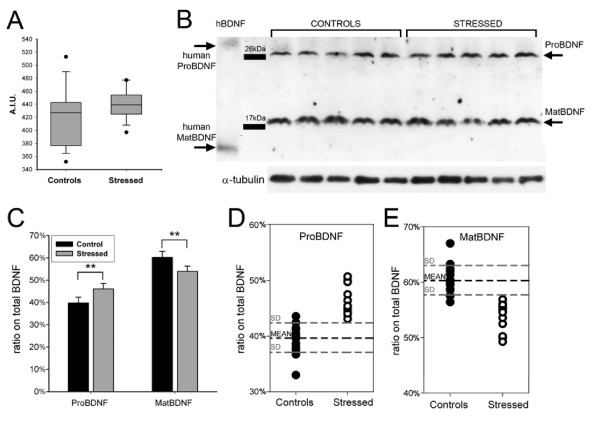
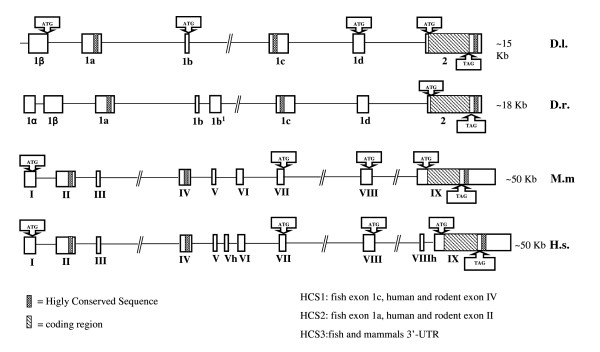
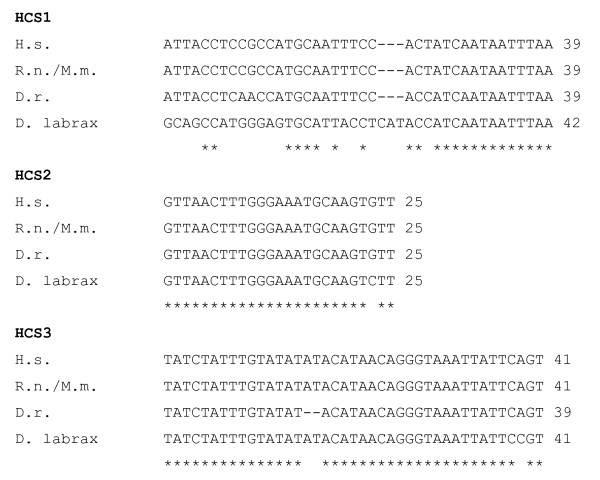
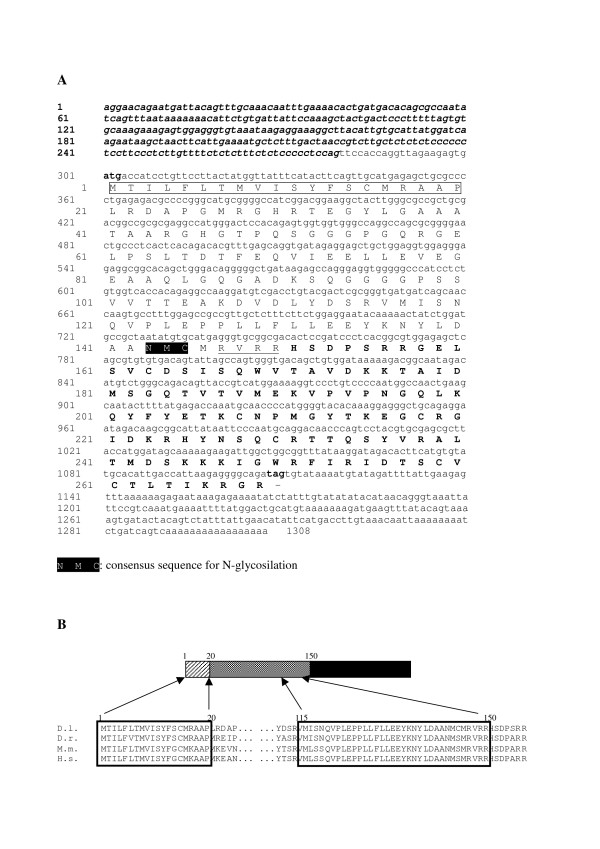
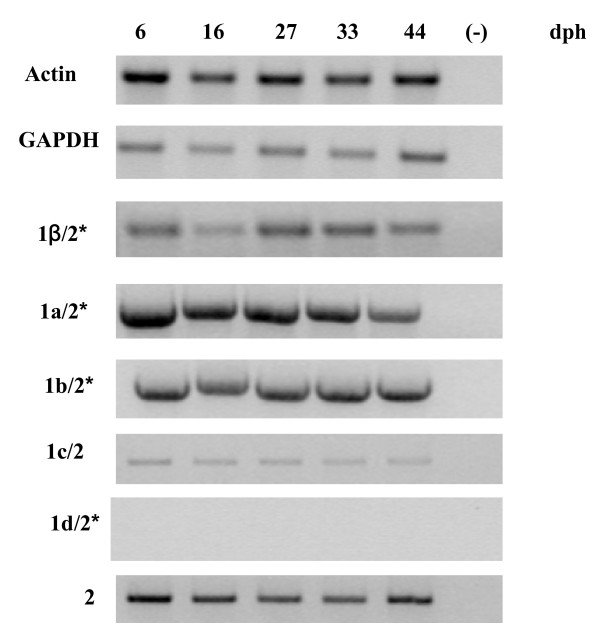
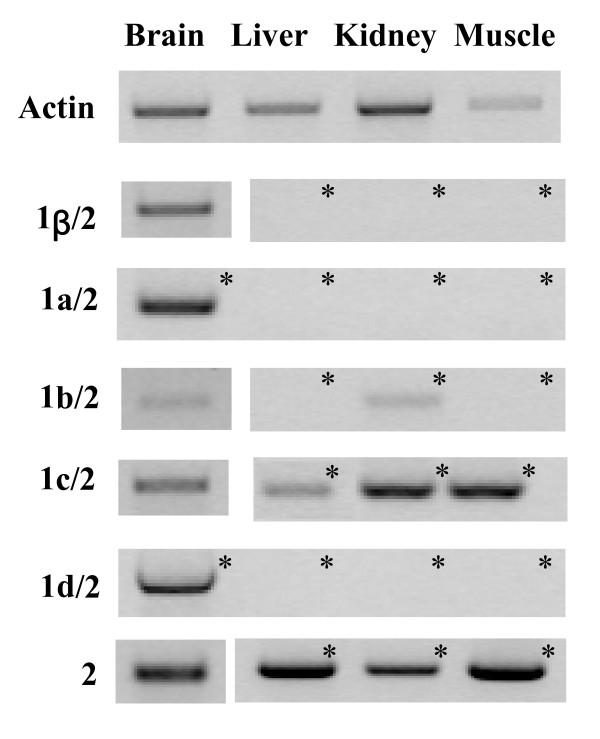
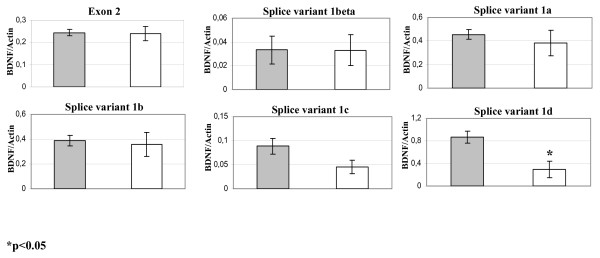
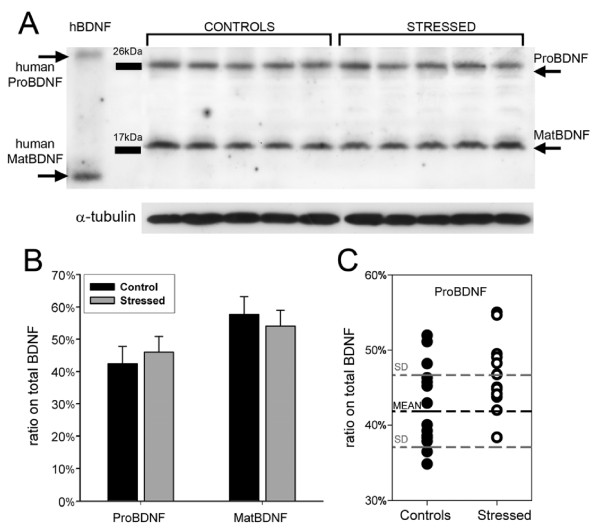
We provide a comprehensive characterization of BDNF gene in the Dicentrarchus labrax and its transcriptional, translational and post-translational regulation following acute stress. While total BDNF mRNA levels are unchanged, BDNF transcripts 1c and 1d resulted down regulated after acute stress. Acute stress induces also a significant increase in proBDNF levels and reduction in mature BDNF suggesting altered regulation of proBDNF proteolytic processing. Notably, we provide here the first evidence that fishes possess a simplified proteolytic regulation of BDNF since the pro28Kda form, generated by the SKI-1 protease in mammals, is absent in fishes because the cleavage site has first emerged in reptilians. Finally, we show that the proBDNF/totBDNF ratio is a highly predictive novel quantitative biomarker to detect stress in fishes with sensitivity = 100%, specificity = 87%, and Negative Predictive Value = 100%.
The high predictivity of proBDNF/totBDNF ratio for stress in lower vertebrates indicates that processing of BDNF is a central mechanism in adaptation to stress and predicts that a similar regulation of pro/mature BDNF has likely been conserved throughout evolution of vertebrates from fish to man.
压力涉及大脑功能的改变,可能会引发情绪障碍。神经营养因子脑源性神经营养因子(BDNF)最近与应激诱导适应有关。BDNF 是神经元可塑性和适应过程的关键调节剂。BDNF 的调节很复杂,不仅反映了应激特异性机制,还反映了激素和情绪反应。出于这个原因,我们使用了一种鱼类作为应激动物模型,这种鱼的大脑组织与高等脊椎动物非常相似,但通常被认为没有情绪反应。
我们全面描述了 D. labrax 的 BDNF 基因及其在急性应激后的转录、翻译和翻译后调节。虽然总 BDNF mRNA 水平不变,但 1c 和 1d 转录本在急性应激后下调。急性应激还诱导 proBDNF 水平显著增加和成熟 BDNF 减少,提示 proBDNF 蛋白水解加工的调节改变。值得注意的是,我们在这里首次提供了鱼类具有简化的 BDNF 蛋白水解调节的证据,因为哺乳动物中 SKI-1 蛋白酶产生的 pro28Kda 形式在鱼类中不存在,因为切割位点首先出现在爬行动物中。最后,我们表明 proBDNF/totBDNF 比值是一种高度预测性的新型定量生物标志物,可用于检测鱼类中的应激,其灵敏度为 100%,特异性为 87%,阴性预测值为 100%。
proBDNF/totBDNF 比值对低等脊椎动物应激的高预测性表明,BDNF 的加工是适应应激的核心机制,并预测类似的 pro/成熟 BDNF 调节可能在从鱼类到人类的脊椎动物进化过程中得到了保守。