Molecular Developmental Neurobiology Group, IRBLleida-UDL Rovira Roure 82, 25198, Lleida, Spain.
Unitat Trastorns Cognitius, IRBLleida-Hospital Universitari Santa Maria Lleida, Lleida, Spain.
Mol Brain. 2018 Nov 14;11(1):68. doi: 10.1186/s13041-018-0411-6.
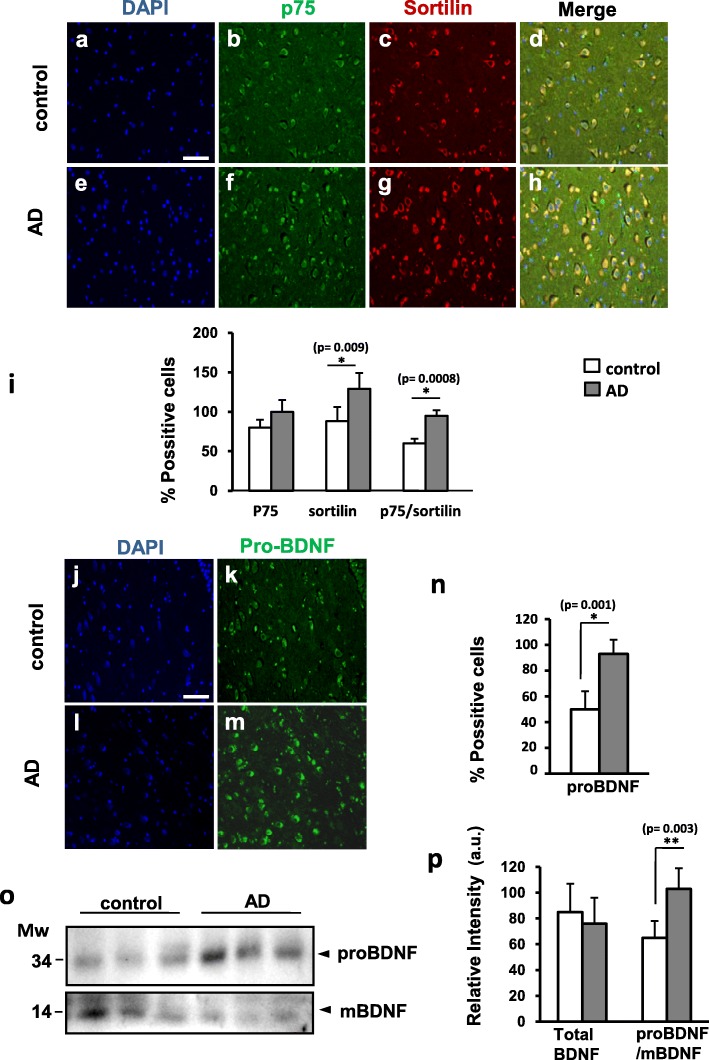
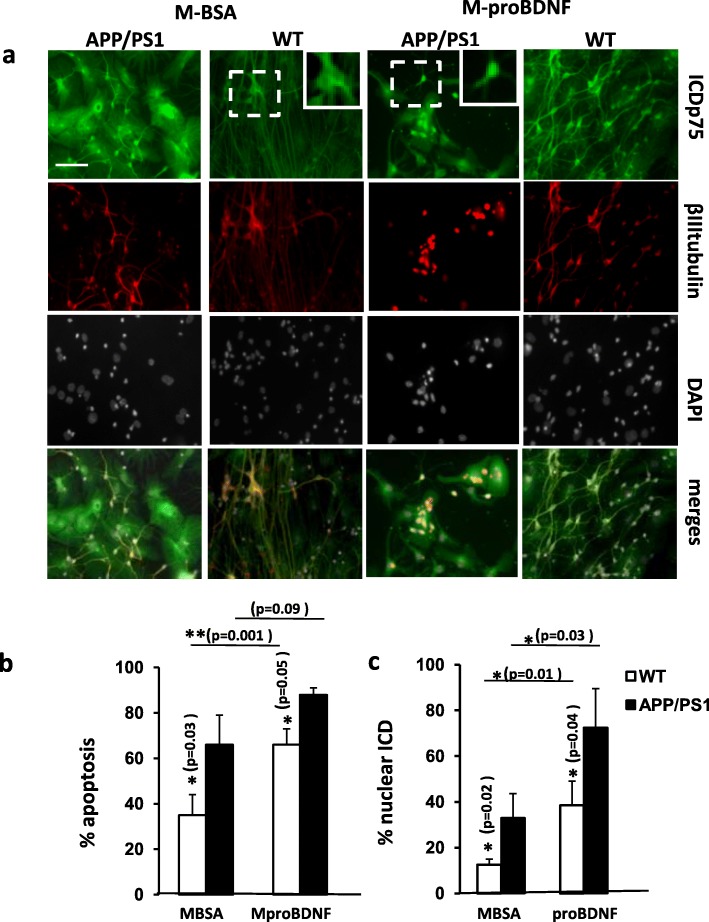
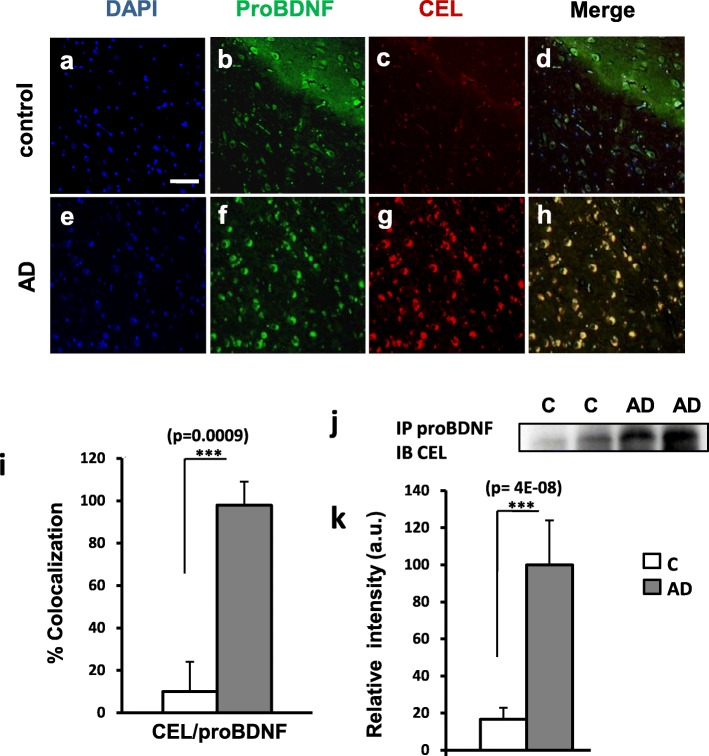
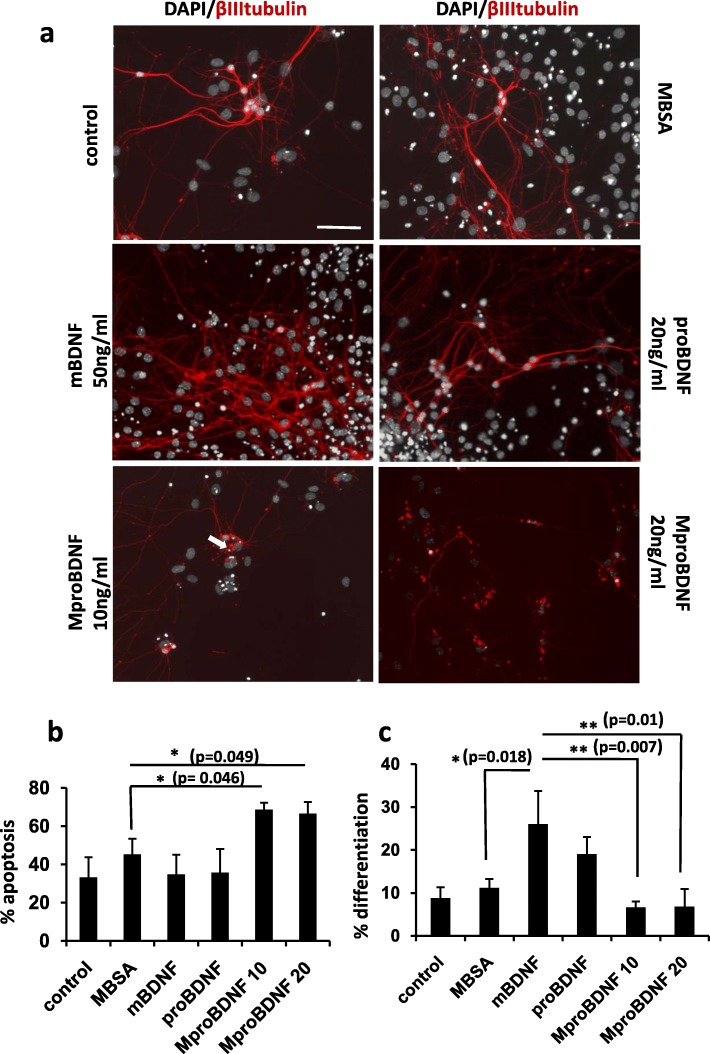
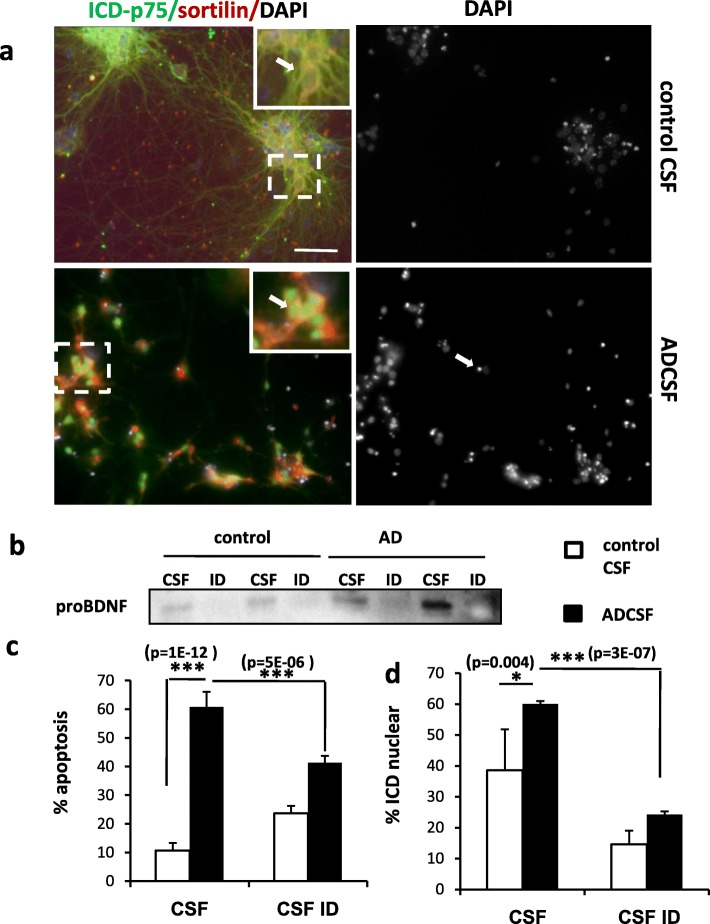
Alzheimer disease (AD) is a complex pathology related to multiple causes including oxidative stress. Brain-derived neurotrophic factor (BDNF) is a neutrotrophic factor essential for the survival and differentiation of neurons and is considered a key target in the pathophysiology of various neurodegenerative diseases, as for example AD. Contrarily to BDNF, the precursor form of BDNF (proBDNF) induces apoptosis through the specific interaction with p75 and its co-receptor, Sortilin.We used hippocampal tissue and cerebrospinal fluid from AD patients and controls. to study the localization and the levels of proBDNF, p75 and Sortilin as well as the post-traduccional modifications of proBDNF induced by Radical Oxygen Species, by immunofluorescence and Western blot. Differentiation and survival were assessed on differentiated mouse hippocampal neurons derived from postnatal neural stem cells from WT animals or from the transgenic AD animal model APP/PS1∆E9, based on mutations of familiar AD. In AD patients we observe a significative increase of proBDNF and Sortilin expression and a significative increase of the ratio proBDNF/BDNF in their cerebrospinal fluid compared to controls. In addition, the proBDNF of AD patients is modified by ROS-derived advanced glycation end products, which prevent the processing of the proBDNF to the mature BDNF, leading to an increase of pathogenicity and a decrease of trophic effects. The cerebrospinal fluid from AD patients, but not from controls, induces apoptosis in differentiated hippocampal neurons mainly by the action of AGE-modified proBDNF present in the cerebrospinal fluid of the patients. This effect is triggered by the activation and processing of p75 that stimulate the internalization of the intracellular domain (ICD) within the nucleus causing apoptosis. Induction of apoptosis and p75 ICD internalization by AD patients-derived proBDNF is further enhanced in neuron cultures from the AD model expressing the APP/PS1∆E9 transgene.Our results indicate the importance of proBDNF neurotoxic signaling in AD pathology essentially by three mechanisms: i) by an increase of proBDNF stability due to ROS-induced post-traductional modifications; ii) by the increase of expression of the p75 co-receptor, Sortilin and iii) by the increase of the basal levels of p75 processing found in AD.
阿尔茨海默病(AD)是一种与多种原因相关的复杂病理学,包括氧化应激。脑源性神经营养因子(BDNF)是一种神经营养因子,对神经元的存活和分化至关重要,被认为是各种神经退行性疾病病理生理学的关键靶点,例如 AD。与 BDNF 相反,BDNF 的前体形式(proBDNF)通过与 p75 及其共受体 Sortilin 的特异性相互作用诱导细胞凋亡。我们使用 AD 患者和对照者的海马组织和脑脊液来研究 proBDNF、p75 和 Sortilin 的定位和水平,以及由活性氧诱导的 proBDNF 的翻译后修饰,通过免疫荧光和 Western blot 来研究。分化和存活是基于来自 WT 动物或转 AD 动物模型 APP/PS1∆E9 的新生神经干细胞的分化的鼠海马神经元评估的,该模型基于常见 AD 的突变。在 AD 患者中,与对照组相比,我们观察到 proBDNF 和 Sortilin 的表达显著增加,脑脊液中 proBDNF/BDNF 的比值显著增加。此外,AD 患者的 proBDNF 被 ROS 衍生的高级糖基化终产物修饰,这阻止了 proBDNF 向成熟 BDNF 的加工,导致致病性增加和营养作用降低。AD 患者的脑脊液,但不是对照者的脑脊液,在分化的海马神经元中主要通过存在于患者脑脊液中的 AGE 修饰的 proBDNF 诱导凋亡。这种效应是由 p75 的激活和加工触发的,p75 刺激细胞内结构域(ICD)的内化到细胞核中,导致细胞凋亡。AD 患者来源的 proBDNF 诱导的凋亡和 p75 ICD 内化进一步增强了表达 APP/PS1∆E9 转基因的 AD 模型的神经元培养物中。我们的结果表明,proBDNF 神经毒性信号在 AD 病理学中的重要性主要通过三种机制:i)由于 ROS 诱导的翻译后修饰,proBDNF 的稳定性增加;ii)p75 共受体 Sortilin 的表达增加;iii)AD 中发现的基础水平的 p75 加工增加。