Departamento de Microbiología Molecular y Biología de las Infecciones, Centro de Investigaciones Biológicas, Consejo Superior de Investigaciones Científicas (CSIC), calle Ramiro de Maeztu, 9, 28040, Madrid, Spain.
BMC Genomics. 2010 Jan 14;11:31. doi: 10.1186/1471-2164-11-31.
The extracellular promastigote and the intracellular amastigote stages alternate in the digenetic life cycle of the trypanosomatid parasite Leishmania. Amastigotes develop inside parasitophorous vacuoles of mammalian phagocytes, where they tolerate extreme environmental conditions. Temperature increase and pH decrease are crucial factors in the multifactorial differentiation process of promastigotes to amastigotes. Although expression profiling approaches for axenic, cell culture- and lesion-derived amastigotes have already been reported, the specific influence of temperature increase and acidification of the environment on developmental regulation of genes has not been previously studied. For the first time, we have used custom L. infantum genomic DNA microarrays to compare the isolated and the combined effects of both factors on the transcriptome.
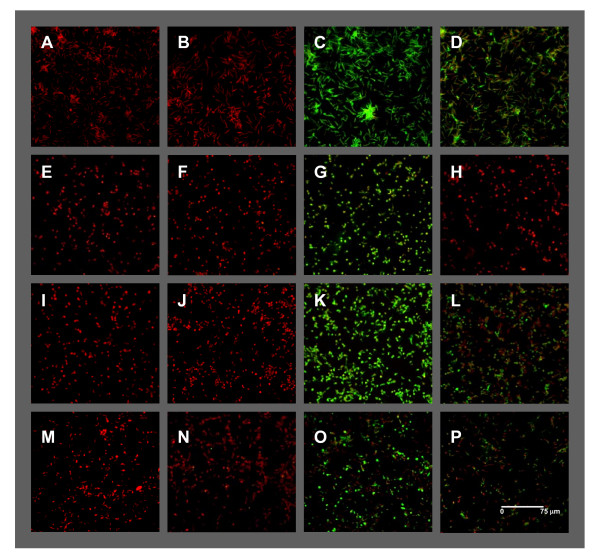
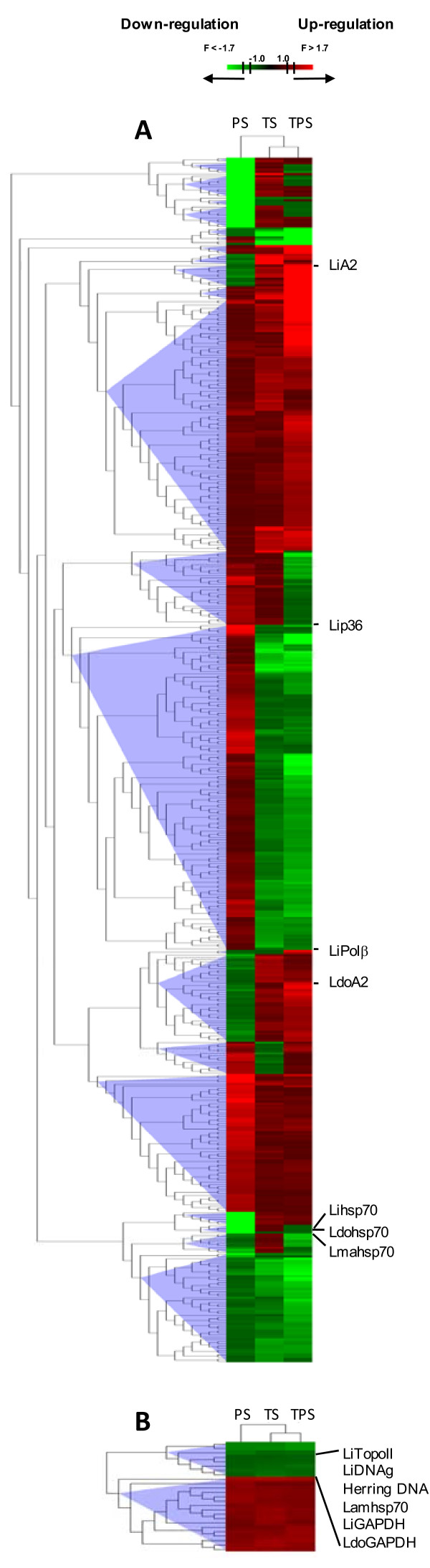
Immunofluorescence analysis of promastigote-specific glycoprotein gp46 and expression modulation analysis of the amastigote-specific A2 gene have revealed that concomitant exposure to temperature increase and acidification leads to amastigote-like forms. The temperature-induced gene expression profile in the absence of pH variation resembles the profile obtained under combined exposure to both factors unlike that obtained for exposure to acidification alone. In fact, the subsequent fold change-based global iterative hierarchical clustering analysis supports these findings.
The specific influence of temperature and pH on the differential regulation of genes described in this study and the evidence provided by clustering analysis is consistent with the predominant role of temperature increase over extracellular pH decrease in the amastigote differentiation process, which provides new insights into Leishmania physiology.
在原生动物门的利什曼原虫的双生活周期中,细胞外的前鞭毛体和细胞内的无鞭毛体阶段交替出现。无鞭毛体在哺乳动物吞噬细胞的吞噬小体内发育,在那里它们能耐受极端的环境条件。温度升高和 pH 值下降是前鞭毛体向无鞭毛体多因素分化过程中的关键因素。虽然已经报道了用于体外、细胞培养和病变来源的无鞭毛体的表达谱分析方法,但环境温度升高和酸化对基因发育调控的具体影响以前尚未研究过。我们首次使用定制的 L. infantum 基因组 DNA 微阵列来比较这两种因素的单独和联合作用对转录组的影响。
对前鞭毛体特异性糖蛋白 gp46 的免疫荧光分析和无鞭毛体特异性 A2 基因的表达调控分析表明,同时暴露于温度升高和酸化会导致类似无鞭毛体的形态。在 pH 值没有变化的情况下,温度诱导的基因表达谱与在两种因素共同暴露下获得的谱相似,而与单独暴露于酸化时获得的谱不同。事实上,随后基于折叠变化的全局迭代层次聚类分析支持了这些发现。
本研究描述的温度和 pH 值对基因差异调控的特定影响以及聚类分析提供的证据与温度升高相对于细胞外 pH 值下降在无鞭毛体分化过程中的主要作用一致,这为利什曼原虫生理学提供了新的见解。