Infectious Disease Research Centre, and Department of Microbiology and Immunology, Faculty of Medicine, Laval University, Quebec, Canada.
PLoS One. 2012;7(5):e35085. doi: 10.1371/journal.pone.0035085. Epub 2012 May 31.
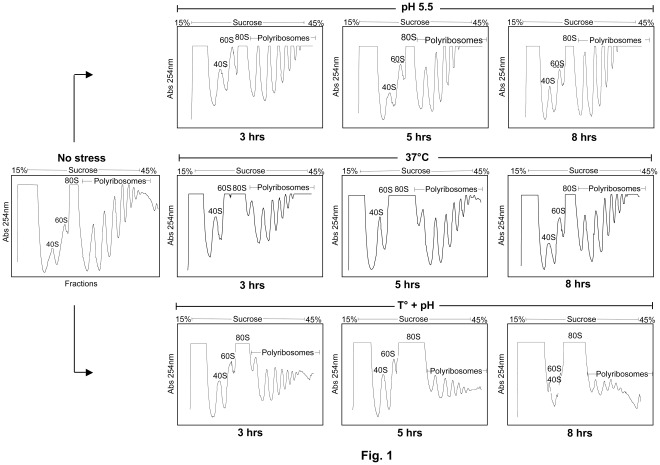
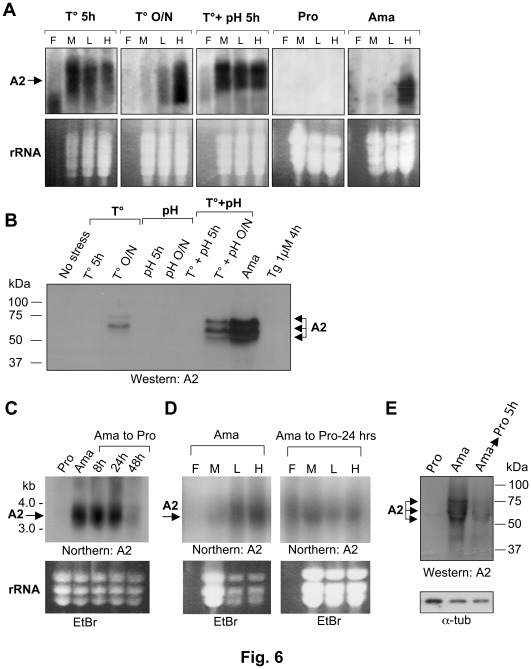
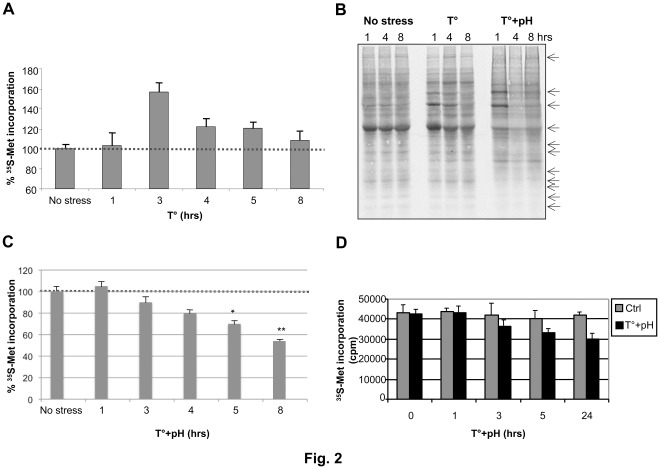
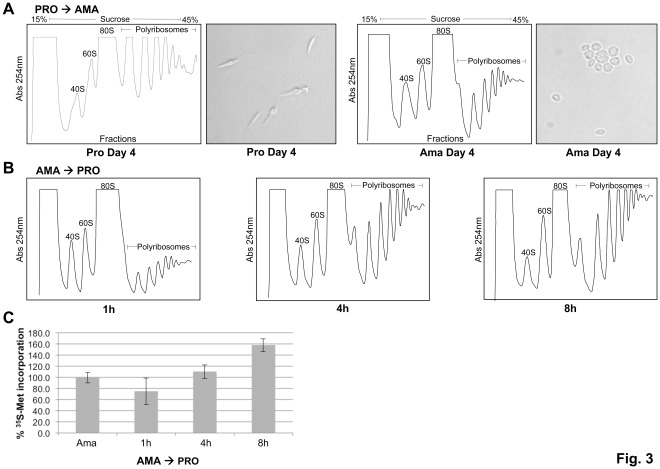
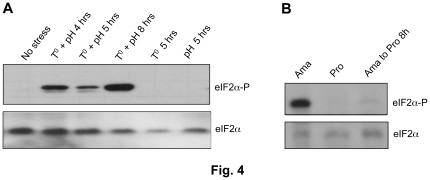
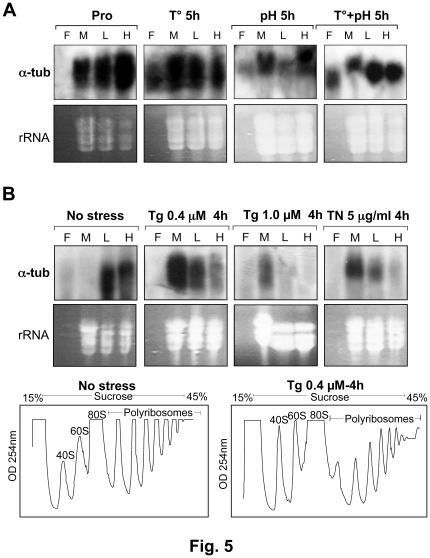
The parasitic protozoan Leishmania alternates between an invertebrate and a mammalian host. Upon their entry to mammalian macrophages, Leishmania promastigotes differentiate into amastigote forms within the harsh environment of the phagolysosomal compartment. Here, we provide evidence for the importance of translational control during the Leishmania differentiation process. We find that exposure of promastigotes to a combined elevated temperature and acidic pH stress, a key signal triggering amastigote differentiation, leads to a marked decrease in global translation initiation, which is associated with eIF2α phosphorylation. Interestingly, we show that amastigotes adapted to grow in a cell-free medium exhibit lower levels of protein synthesis in comparison to promastigotes, suggesting that amastigotes have to enter a slow growth state to adapt to the stressful conditions encountered inside macrophages. Reconversion of amastigotes back to promastigote growth results in upregulation of global translation and a decrease in eIF2α phosphorylation. In addition, we show that while general translation is reduced during amastigote differentiation, translation of amastigote-specific transcripts such as A2 is preferentially upregulated. We find that A2 developmental gene regulation is triggered by temperature changes in the environment and that occurs mainly at the level of translation. Upon elevated temperature, the A2 transcript is stabilized through its association with polyribosomes leading to high levels of translation. When temperature decreases during amastigote to promastigote differentiation, the A2 transcript is not longer associated with translating polyribosomes and is being gradually degraded. Overall, these findings contribute to our better understanding of the adaptive responses of Leishmania to stress during its development and highlight the importance of translational control in promastigote to amastigote differentiation and vice-versa.
寄生虫原生动物利什曼原虫在无脊椎动物和哺乳动物宿主之间交替。当它们进入哺乳动物巨噬细胞时,利什曼前鞭毛体在吞噬体溶酶体隔室的恶劣环境中分化为无鞭毛体形式。在这里,我们提供了在利什曼原虫分化过程中翻译控制重要性的证据。我们发现,前鞭毛体暴露于升高的温度和酸性 pH 应激联合作用下,这是触发无鞭毛体分化的关键信号,导致全局翻译起始显著减少,这与 eIF2α 磷酸化有关。有趣的是,我们表明,适应在无细胞培养基中生长的无鞭毛体与前鞭毛体相比,蛋白质合成水平较低,这表明无鞭毛体必须进入缓慢生长状态以适应巨噬细胞内遇到的应激条件。无鞭毛体重新转化为前鞭毛体生长会导致全局翻译上调和 eIF2α 磷酸化减少。此外,我们表明,虽然在无鞭毛体分化过程中普遍翻译减少,但无鞭毛体特异性转录物(如 A2)的翻译被优先上调。我们发现 A2 发育基因的调控是由环境温度变化触发的,主要发生在翻译水平。在温度升高时,A2 转录物通过与其结合多核糖体而稳定化,导致高水平的翻译。当无鞭毛体到前鞭毛体分化过程中温度降低时,A2 转录物不再与翻译多核糖体结合,并逐渐降解。总体而言,这些发现有助于我们更好地理解利什曼原虫在发育过程中对压力的适应反应,并强调翻译控制在前鞭毛体到无鞭毛体分化和反之亦然中的重要性。