Nofima, Norwegian Institute of Food, Fisheries and Aquaculture Research, As NO-1430, Norway.
BMC Genomics. 2010 Jan 17;11:39. doi: 10.1186/1471-2164-11-39.
Excessive fat deposition is one of the largest problems faced by salmon aquaculture industries, leading to production losses due to high volume of adipose tissue offal. In addition, increased lipid accumulation may impose considerable stress on adipocytes leading to adipocyte activation and production and secretion of inflammatory mediators, as observed in mammals.
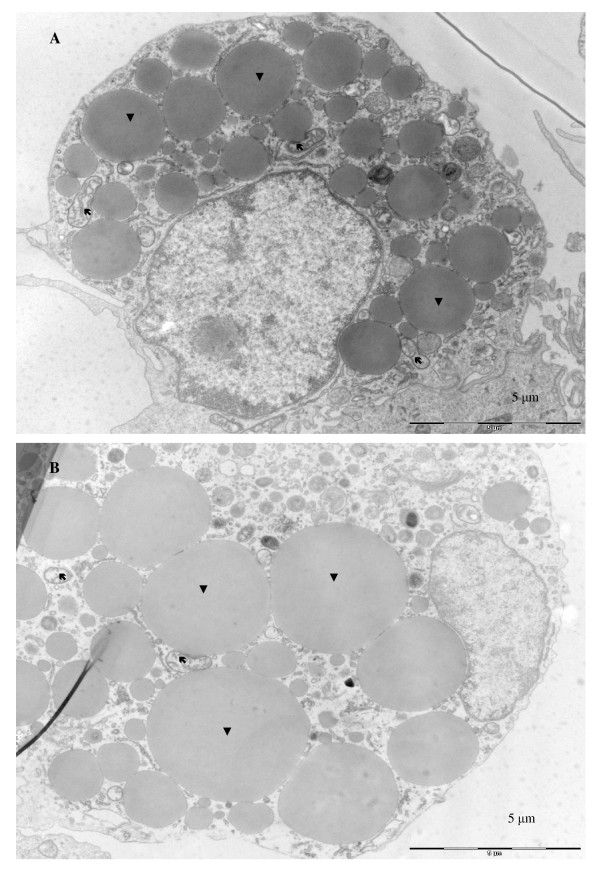
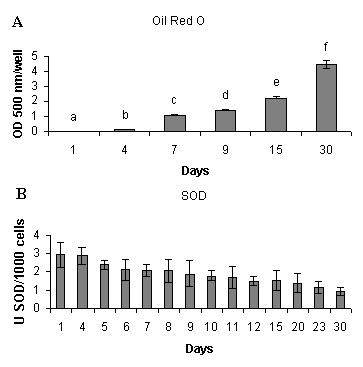
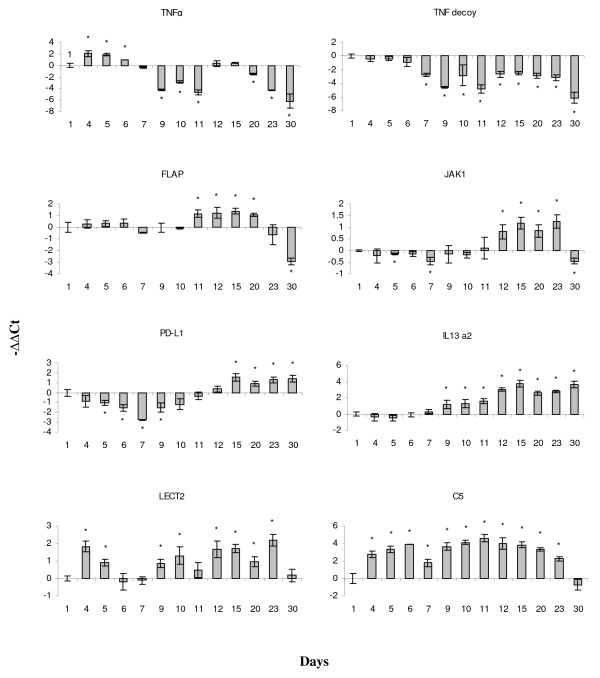
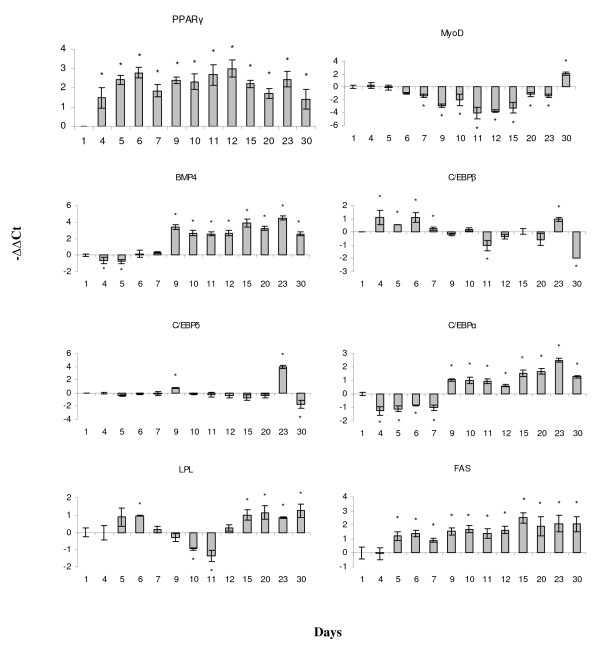
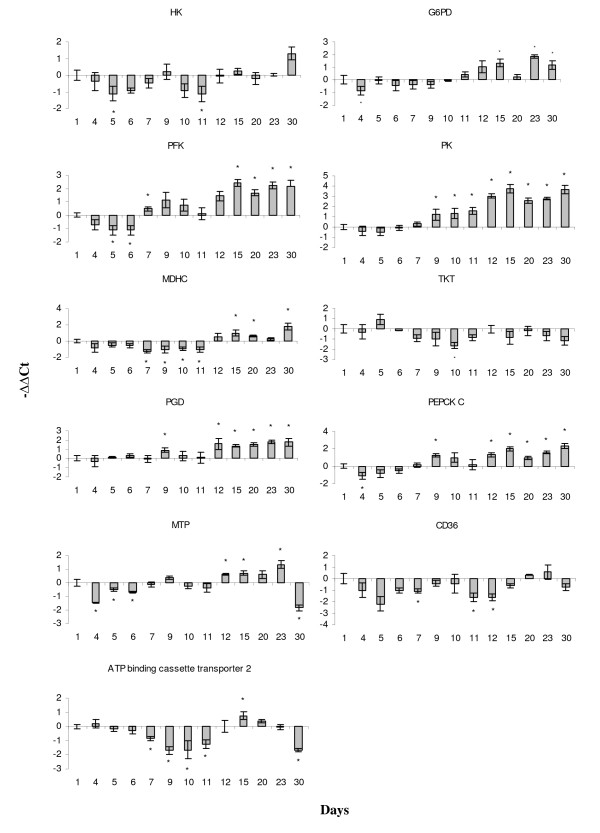
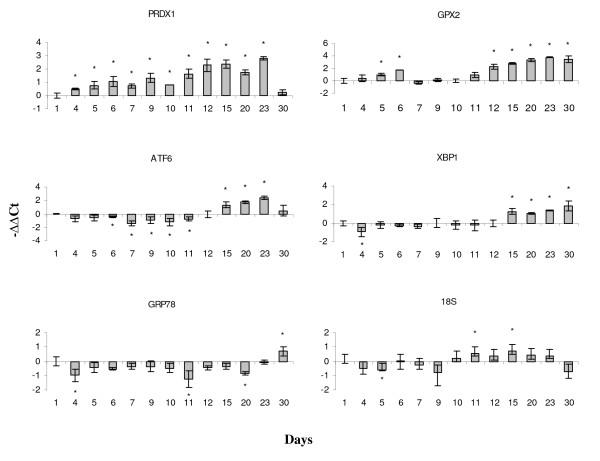
Microarray and qPCR analyses were performed to follow transcriptome changes during adipogenesis in the primary culture of adipose stromo-vascular fraction (aSVF) of Atlantic salmon. Cellular heterogeneity decreased by confluence as evidenced by the down-regulation of markers of osteo/chondrogenic, myogenic, immune and vasculature lineages. Transgelin (TAGLN), a marker of the multipotent pericyte, was prominently expressed around confluence while adipogenic PPARgamma was up-regulated already in subconfluent cells. Proliferative activity and subsequent cell cycle arrest were reflected in the fluctuations of pro- and anti-mitotic regulators. Marked regulation of genes involved in lipid and glucose metabolism and pathways producing NADPH and glycerol-3-phosphate (G3P) was seen during the terminal differentiation, also characterised by diverse stress responses. Activation of the glutathione and thioredoxin antioxidant systems and changes in the iron metabolism suggested the need for protection against oxidative stress. Signs of endoplasmic reticulum (ER) stress and unfolded protein response (UPR) occured in parallel with the increased lipid droplet (LD) formation and production of secretory proteins (adipsin, visfatin). The UPR markers XBP1 and ATF6 were induced together with genes involved in ubiquitin-proteasome and lysosomal proteolysis. Concurrently, translation was suppressed as evidenced by the down-regulation of genes encoding elongation factors and components of the ribosomal machinery. Notably, expression changes of a panel of genes that belong to different immune pathways were seen throughout adipogenesis. The induction of AP1 (Jun, Fos), which is a master regulator of stress responses, culminated by the end of adipogenesis, concurrent with the maximal observed lipid deposition.
Our data point to an intimate relationship between metabolic regulation and immune responses in white adipocytes of a cold-blooded vertebrate. Stress imposed on adipocytes by LD formation and expansion is prominently reflected in the ER compartment and the activated UPR response could have an important role at visceral obesity in fish.
脂肪过度沉积是鲑鱼养殖业面临的最大问题之一,由于大量脂肪组织内脏被丢弃,导致生产损失。此外,脂质积累的增加可能会对脂肪细胞造成相当大的压力,导致脂肪细胞激活和炎性介质的产生和分泌,就像在哺乳动物中观察到的那样。
对大西洋鲑鱼脂肪基质血管部分(aSVF)原代培养过程中的脂肪生成进行了微阵列和 qPCR 分析。细胞异质性随着汇合而降低,这表现为成骨/软骨、肌、免疫和血管谱系标志物的下调。转胶蛋白(TAGLN)是多能周细胞的标志物,在汇合时明显表达,而脂肪生成性过氧化物酶体增殖物激活受体γ(PPARγ)在亚汇合细胞中就已经上调。增殖活性和随后的细胞周期停滞反映在有丝分裂前和有丝分裂后调节剂的波动中。在终末分化过程中,还观察到与脂质和葡萄糖代谢以及产生 NADPH 和甘油-3-磷酸(G3P)的途径相关的基因的显著调节,这一过程还具有不同的应激反应特征。谷胱甘肽和硫氧还蛋白抗氧化系统的激活以及铁代谢的变化表明需要防止氧化应激。内质网(ER)应激和未折叠蛋白反应(UPR)的迹象与脂滴(LD)形成和分泌蛋白(脂联素、内脂素)的产生同时出现。UPR 标志物 XBP1 和 ATF6 与泛素-蛋白酶体和溶酶体蛋白水解相关基因一起被诱导。同时,由于编码延伸因子和核糖体成分的基因下调,翻译被抑制。值得注意的是,在整个脂肪生成过程中,观察到属于不同免疫途径的一组基因的表达变化。AP1(Jun、Fos)的诱导是应激反应的主要调节剂,在脂肪生成结束时达到高峰,同时观察到最大的脂质沉积。
我们的数据表明,在冷血脊椎动物的白色脂肪细胞中,代谢调节和免疫反应之间存在密切关系。由 LD 形成和扩张对脂肪细胞造成的压力在 ER 隔室中明显反映出来,激活的 UPR 反应在鱼类内脏肥胖中可能具有重要作用。