Program of Cancer Biology, Department of Cancer Biology and Pharmacology, University of Illinois College of Medicine at Peoria, One Illini Drive, Peoria, IL 61605, USA.
Br J Cancer. 2010 Feb 2;102(3):530-40. doi: 10.1038/sj.bjc.6605538. Epub 2010 Jan 19.
Secreted protein acidic and rich in cysteine (SPARC), a matricellular glycoprotein, modulates cellular interaction with the extracellular matrix and is capable of altering the growth of various cancers. We therefore sought to determine the effect of SPARC expression on medulloblastoma tumour growth and angiogenesis.
To this extent, we selected three SPARC full-length cDNA overexpressed clones (Daoy-SP). Consequences of SPARC overexpression were studied in terms of cell growth, angiogenesis using co-culture assay in vitro, dorsal skin-fold chamber assay in vivo, PCR Array for human angiogenic genes, as well as western blotting for angiogenic molecules and tumour growth, in an orthotopic tumour model.
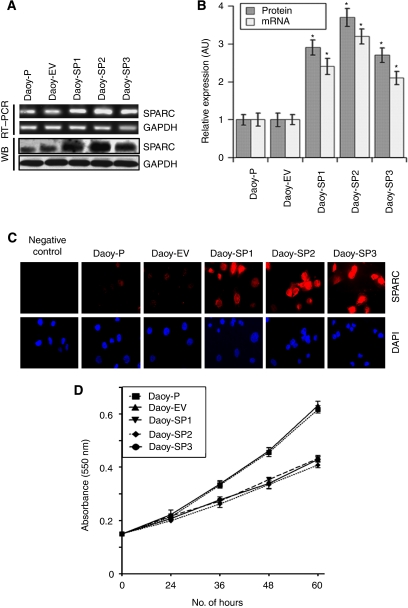
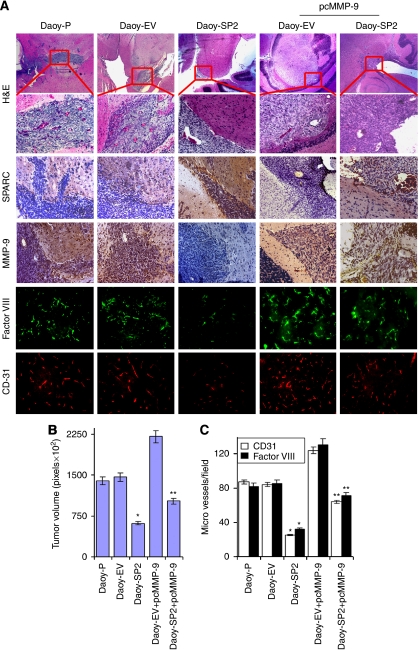
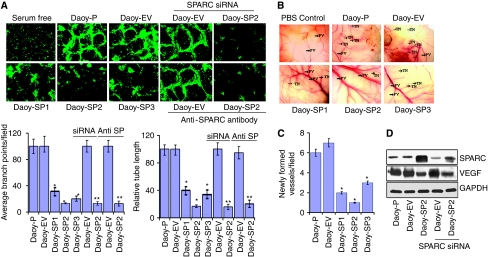
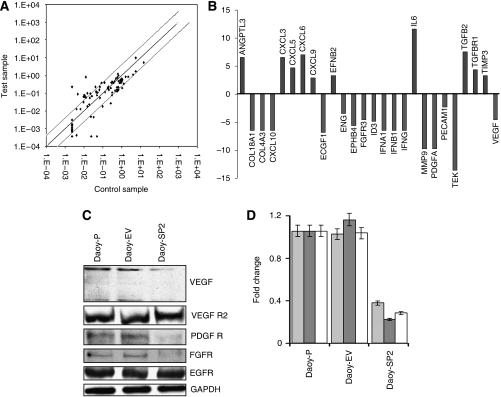
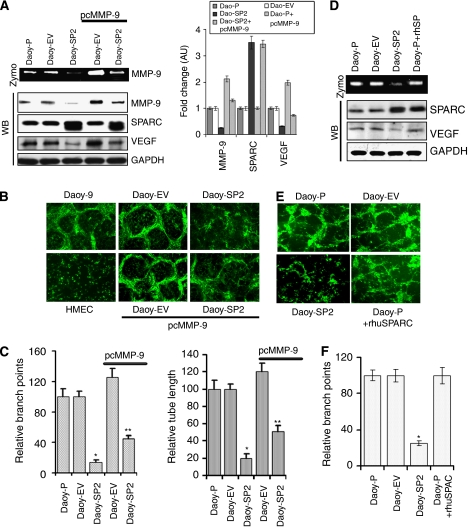
The SPARC protein and mRNA levels were increased by approximately three-fold in Daoy-SP cells compared with parental (Daoy-P) and vector (Daoy-EV) controls. Daoy-SP clones reduced tumour cell-induced angiogenesis in vitro and in vivo, and formed small tumours with fewer blood vessels when compared with controls. Matrix metalloprotease-9 (MMP-9) and vascular endothelial growth factor (VEGF) expression were decreased in Daoy-SP clones. Further, inhibition of MMP-9 expression caused SPARC-mediated inhibition of angiogenesis and tumour growth as MMP-9 rescued SPARC-mediated anti-angiogenic effect in vitro and tumour growth inhibition in vivo.
Overexpression of SPARC decreases angiogenesis, which leads to decreased tumour growth. Further, the role of MMP-9 could be attributed to the anti-angiogenic effect of SPARC.
富含半胱氨酸的酸性分泌蛋白(SPARC)是一种基质细胞糖蛋白,可调节细胞与细胞外基质的相互作用,并能改变多种癌症的生长。因此,我们试图确定 SPARC 表达对髓母细胞瘤肿瘤生长和血管生成的影响。
为此,我们选择了三个全长 SPARC cDNA 过表达克隆(Daoy-SP)。通过体外共培养试验、体内背部皮肤囊腔试验、人血管生成基因 PCR 阵列以及血管生成分子和肿瘤生长的 Western blot 分析,研究了 SPARC 过表达对细胞生长和血管生成的影响,在原位肿瘤模型中。
与亲本(Daoy-P)和载体(Daoy-EV)对照相比,Daoy-SP 细胞中的 SPARC 蛋白和 mRNA 水平增加了约三倍。Daoy-SP 克隆减少了体外和体内肿瘤细胞诱导的血管生成,并形成了较小的肿瘤,血管较少。基质金属蛋白酶-9(MMP-9)和血管内皮生长因子(VEGF)的表达在 Daoy-SP 克隆中降低。此外,抑制 MMP-9 的表达导致 SPARC 介导的血管生成和肿瘤生长抑制,因为 MMP-9 挽救了 SPARC 介导的体外血管生成抑制作用和体内肿瘤生长抑制作用。
SPARC 的过表达减少了血管生成,从而导致肿瘤生长减少。此外,MMP-9 的作用可能归因于 SPARC 的抗血管生成作用。