Department of Cancer Biology and Pharmacology, University of Illinois College of Medicine at Peoria, Peoria, IL 61656, USA.
Cell Signal. 2011 Dec;23(12):1978-87. doi: 10.1016/j.cellsig.2011.07.008. Epub 2011 Jul 23.
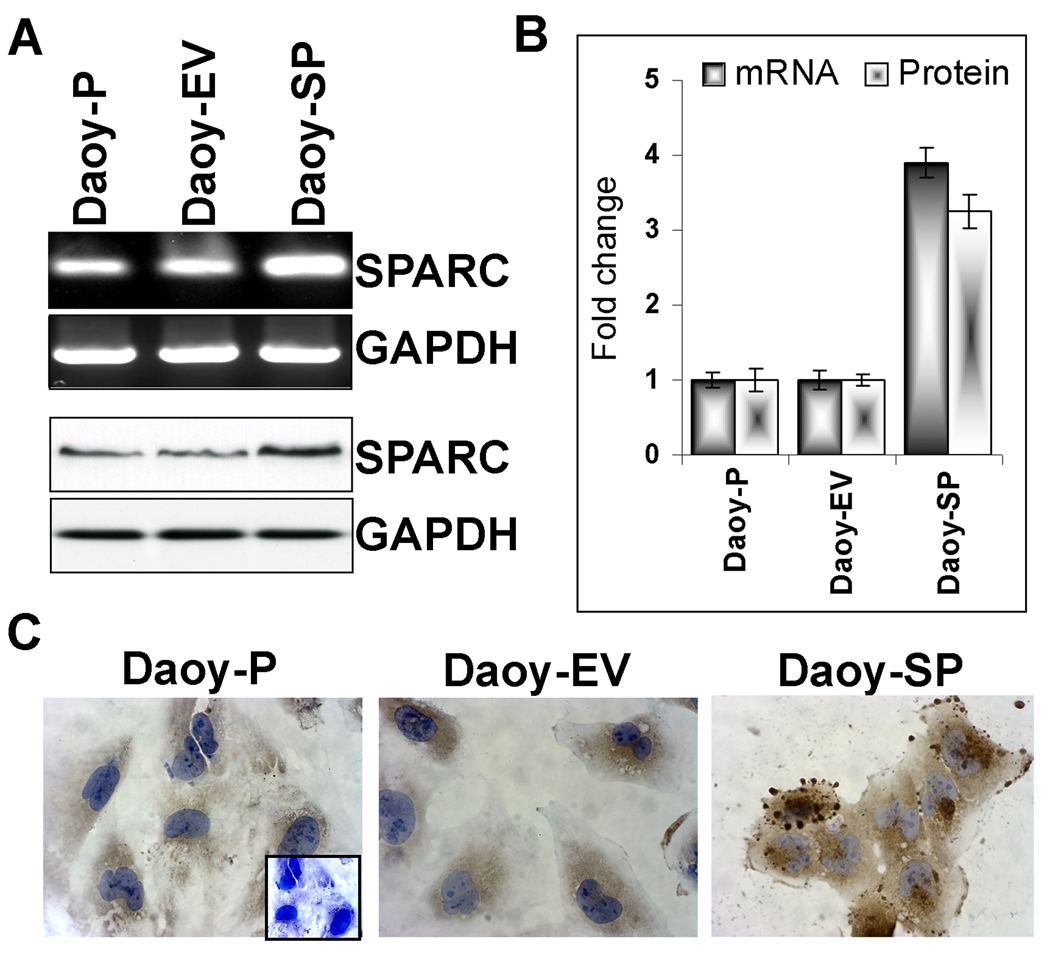
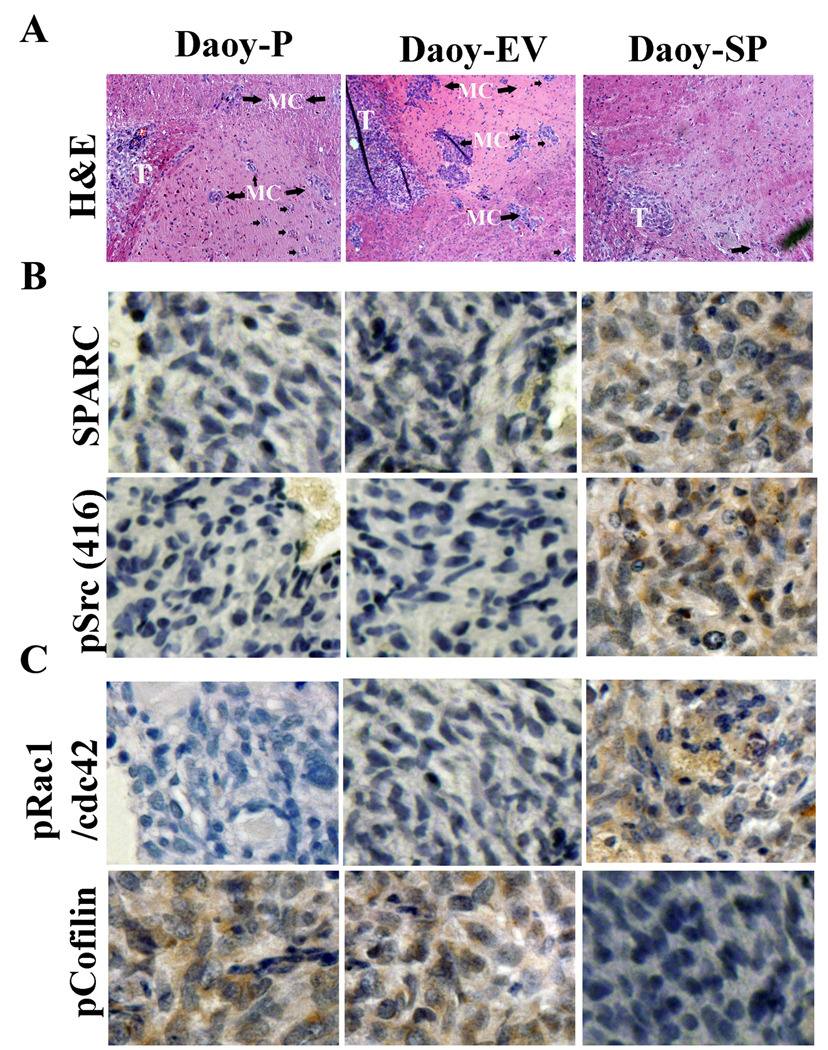
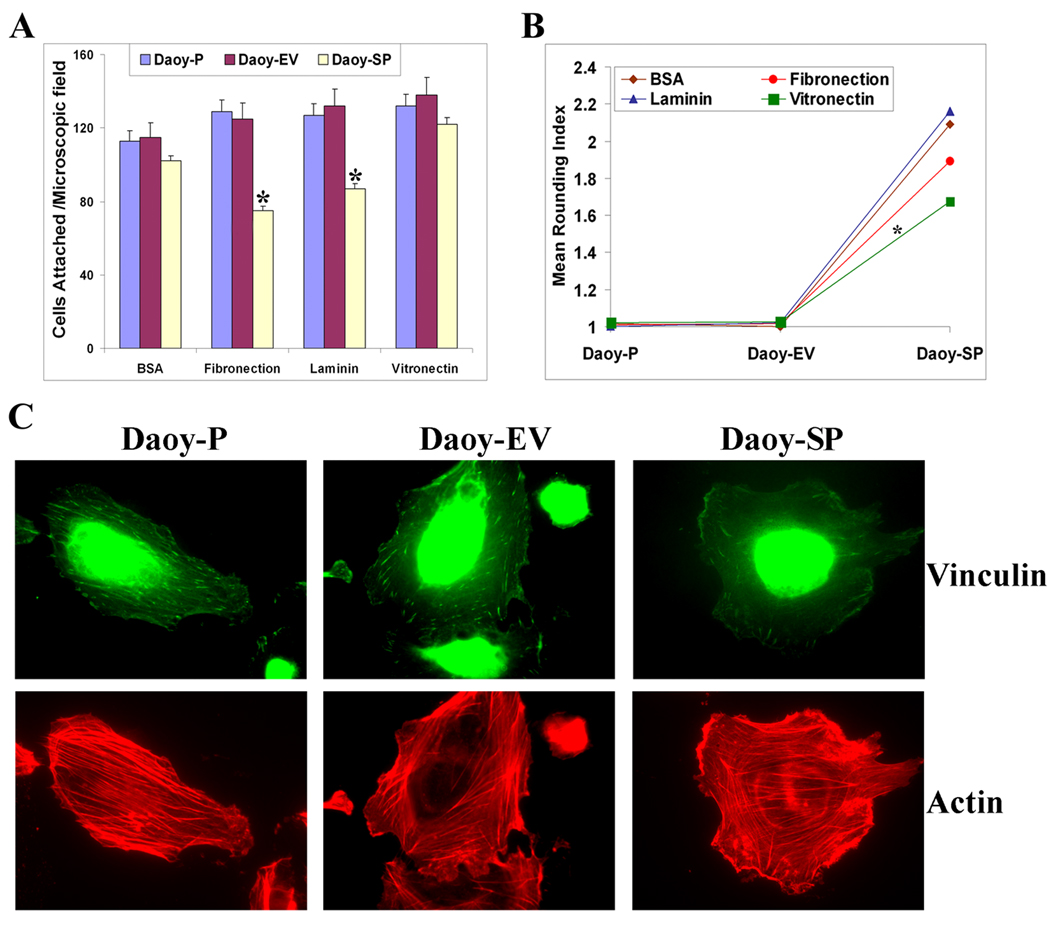
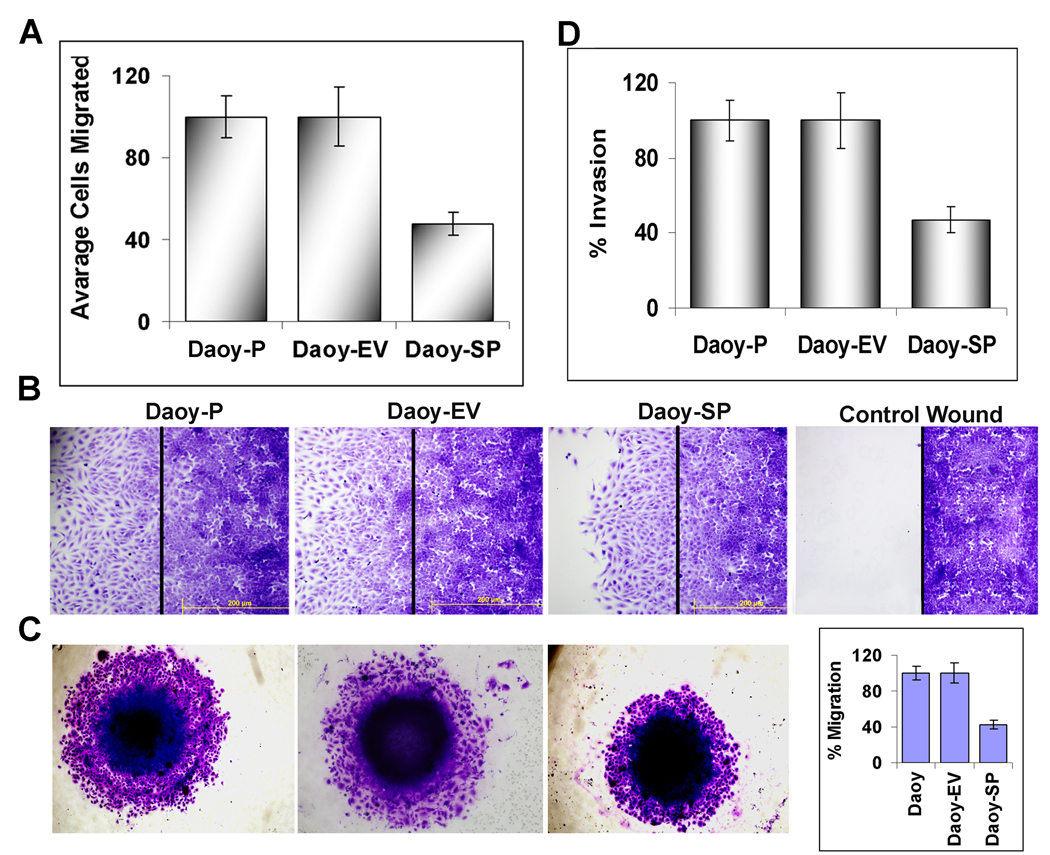
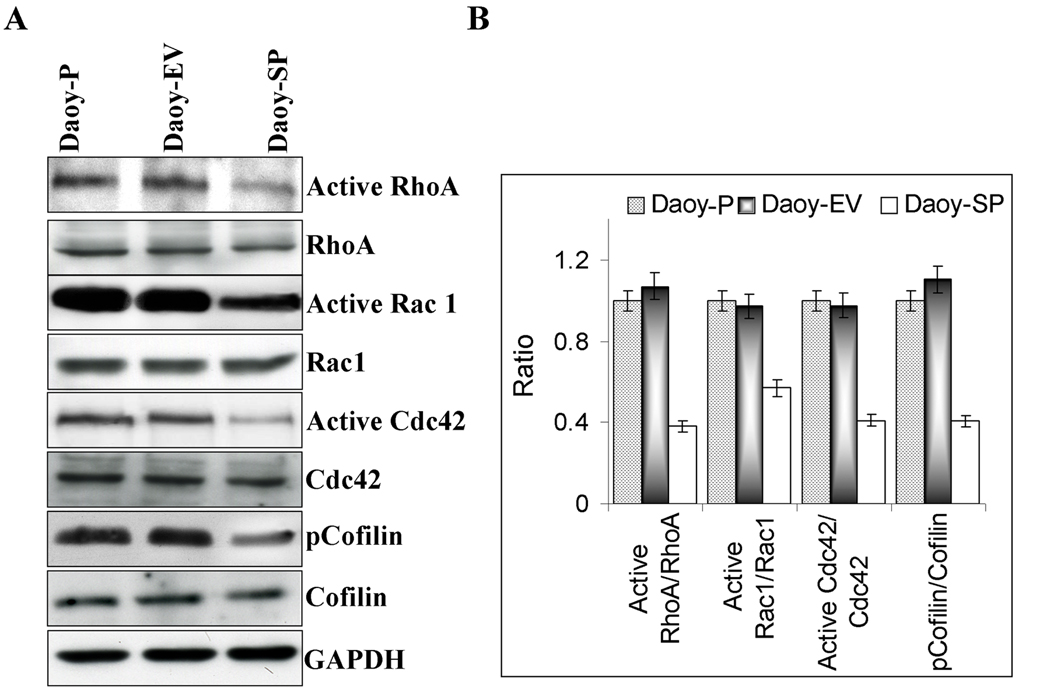
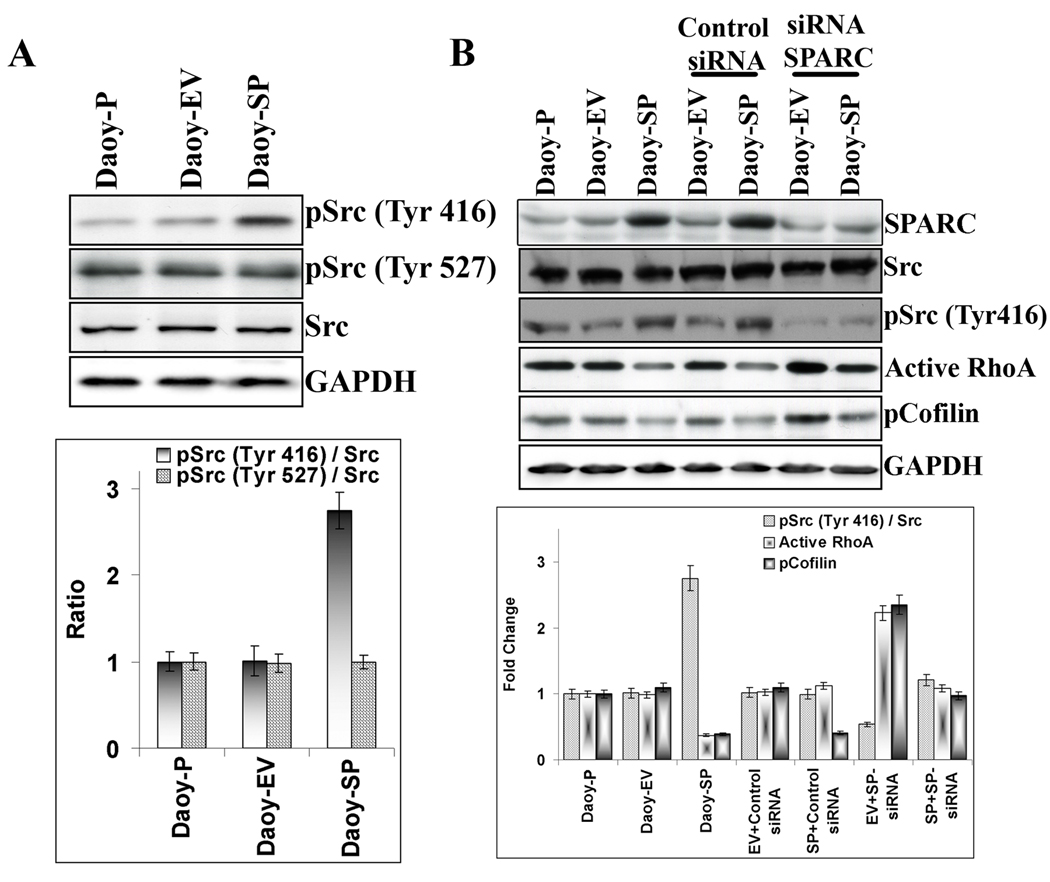
The matricellular glycoprotein Secreted Protein Acidic and Rich in Cysteine (SPARC) plays an important role in the regulation of cell adhesion and proliferation as well as in tumorigenesis and metastasis. Earlier, we reported that, in addition to its potent anti-angiogenic functions, SPARC also induces apoptosis in medulloblastoma cells, mediated by autophagy. We therefore sought to investigate the underlying molecular mechanism through which SPARC inhibits migration and invasion of Daoy medulloblastoma cells, both in vitro and in vivo. For this study, we used SPARC-overexpressing stable Daoy medulloblastoma cells. SPARC overexpression in Daoy medulloblastoma cells inhibited migration and invasion in vitro. Additionally, SPARC overexpression significantly suppressed the activity of Rho, Rac and Cdc42, which all regulate the actin cytoskeleton. This suppression was accompanied by an increase in the phosphorylation of Src at Tyr-416, which led to a loss of actin stress fibers and focal contacts and a decrease in the phosphorylation level of cofilin. The reduced phosphorylation level of cofilin, which is indicative of receding Rho function, in turn led to inhibition of active Rho A. To confirm the role of SPARC in inhibition of migration and invasion of Daoy medulloblastoma cells, we transfected parental and SPARC-overexpressing Daoy cells with a plasmid vector carrying siRNA against SPARC. Transfection with SPARC siRNA reversed Src-mediated disruption of the cytoskeleton organization as well as dephosphorylation of cofilin and activation of Rho A. Taken together, these results establish SPARC as an effector of Src-induced cytoskeleton disruption in Daoy medulloblastoma cells, which subsequently led to decreased migration and invasion.
基质细胞分泌酸性富含半胱氨酸的糖蛋白(SPARC)在细胞黏附、增殖以及肿瘤发生和转移的调控中发挥重要作用。我们先前的研究表明,除了具有强大的抗血管生成功能外,SPARC 还能通过自噬诱导成神经管细胞瘤细胞凋亡。因此,我们试图探究 SPARC 抑制 Daoy 成神经管细胞瘤细胞体外和体内迁移和侵袭的潜在分子机制。在本研究中,我们使用了过表达 SPARC 的稳定 Daoy 成神经管细胞瘤细胞。Daoy 成神经管细胞瘤细胞中 SPARC 的过表达抑制了体外迁移和侵袭。此外,SPARC 的过表达显著抑制了 Rho、Rac 和 Cdc42 的活性,这些蛋白均能调节细胞骨架中的肌动蛋白。这种抑制伴随着Src 在 Tyr-416 位的磷酸化增加,导致肌动蛋白应力纤维和焦点黏附的丧失以及细胞松弛素磷酸化水平的降低。提示 Rho 功能消退的细胞松弛素磷酸化水平降低,继而导致活性 Rho A 的抑制。为了确认 SPARC 在抑制 Daoy 成神经管细胞瘤细胞迁移和侵袭中的作用,我们用携带针对 SPARC 的 siRNA 的质粒载体转染亲本和过表达 SPARC 的 Daoy 细胞。SPARC siRNA 的转染逆转了 Src 介导的细胞骨架组织的破坏以及细胞松弛素的去磷酸化和 Rho A 的激活。综上所述,这些结果确立了 SPARC 作为 Src 诱导的 Daoy 成神经管细胞瘤细胞骨架破坏的效应物,继而导致迁移和侵袭减少。