Kunigal Sateesh, Gondi Christopher S, Gujrati Meena, Lakka Sajani S, Dinh Dzung H, Olivero William C, Rao Jasti S
Program of Cancer Biology, Department of Cancer Biology and Pharmacology, University of Illinois College of Medicine at Peoria, Peoria, IL 61605, USA.
Int J Oncol. 2006 Dec;29(6):1349-57.
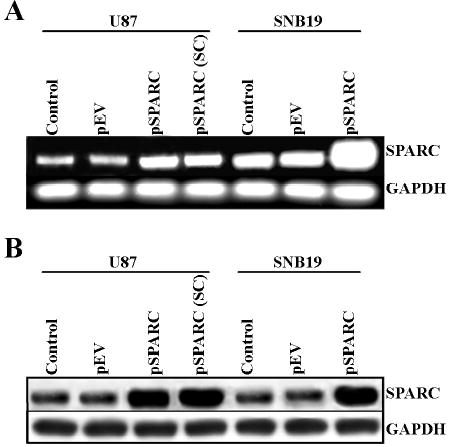
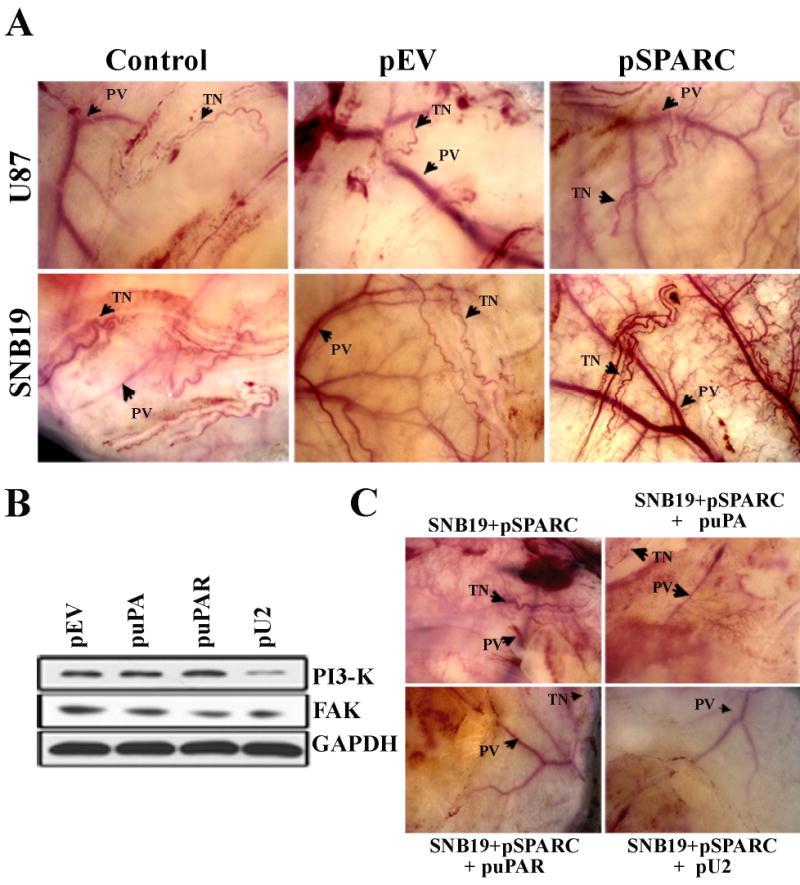
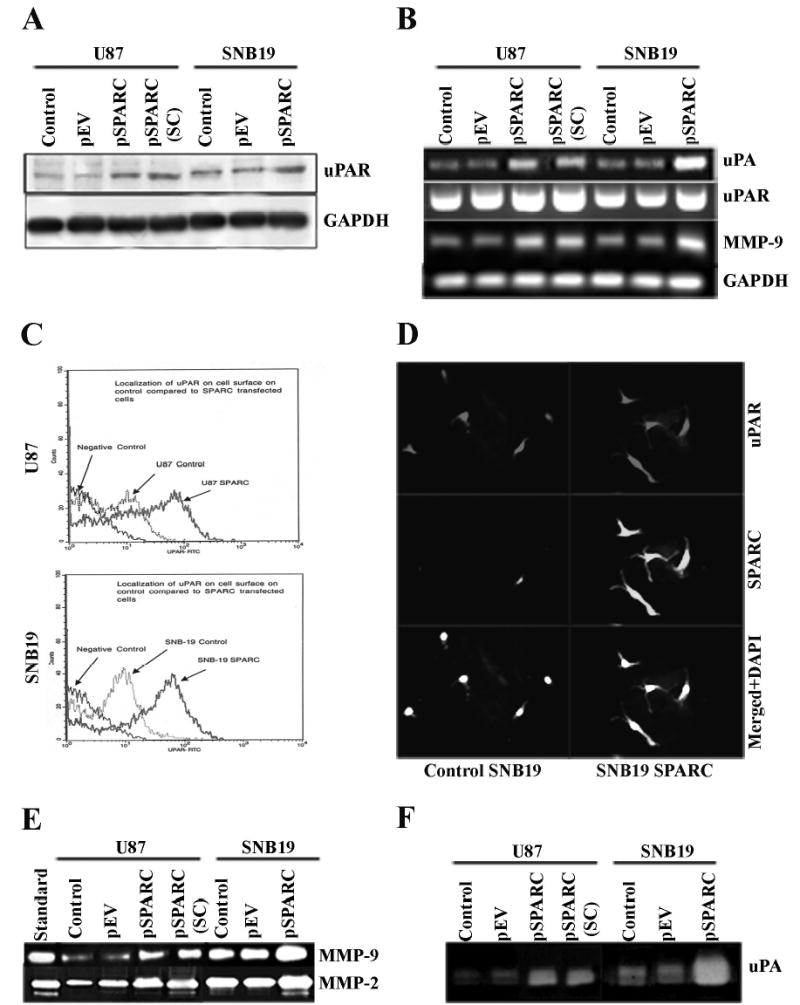
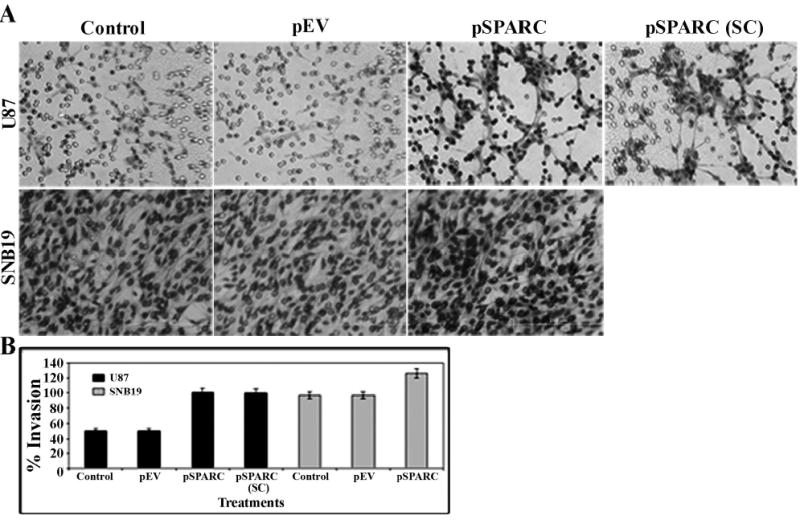
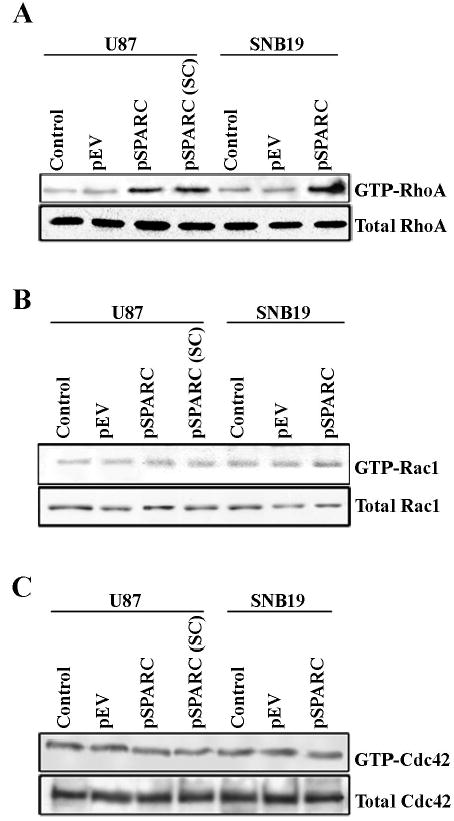
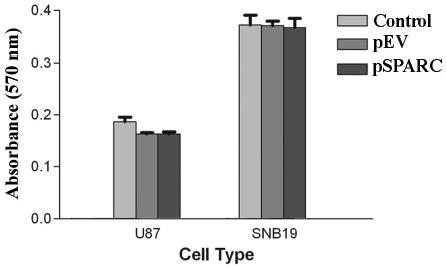
Secreted protein acidic and rich in cysteine (SPARC) is highly expressed in human gliomas where it promotes invasion and delays tumor growth, both in vitro and in vivo. SPARC, which interacts at the cell surface, has an impact on intracellular signaling and downstream gene expression changes, which might account for some of its effects on invasion and growth. Additionally in vitro studies demonstrated that SPARC delays growth, increases attachment, and modulates migration of tumor cells in an extracellular matrix-specific and concentration-dependent manner. Because the signaling aspect of this migration is neither well understood nor characterized, we overexpressed SPARC in both the minimally-invasive U87 cell line and in the most aggressive invasive cell line, SNB19. We first performed RT-PCR analysis and observed an upregulation of uPA and its receptor, uPAR. We also observed increased expression levels of matrix metalloproteinase-2 and -9 (MMP-2 and MMP-9). Western blot analysis confirmed these results, and the enzymatic activity of the metalloproteinases and uPA was further supported by zymography. Downstream of the uPA-uPAR interaction, upregulation of PI3-K occurred in cells overexpressing SPARC. Using GST-TRBD, we showed the upregulation of active GTP-bound RhoA, but neither Rac1 nor Cdc42 were activated. The inhibition of uPA and uPAR downregulated PI3-K activity and cell migration, as shown by matrigel invasion assay. A dorsal skin-fold chamber model revealed the high angiogenic activity of SPARC, though the proliferation of SPARC overexpressing cells was unaffected. Our results show that the small GTPase RhoA was a critical mediator of invasion or migration in the uPA-uPAR/PI3-K signaling pathway.
富含半胱氨酸的酸性分泌蛋白(SPARC)在人类胶质瘤中高表达,在体外和体内均能促进肿瘤侵袭并延缓肿瘤生长。在细胞表面相互作用的SPARC会影响细胞内信号传导以及下游基因表达变化,这可能解释了其对侵袭和生长的部分影响。此外,体外研究表明,SPARC以细胞外基质特异性和浓度依赖性方式延缓肿瘤细胞生长、增加细胞黏附并调节细胞迁移。由于这种迁移的信号传导方面尚未得到充分了解和表征,我们在微创U87细胞系和侵袭性最强的SNB19细胞系中均过表达了SPARC。我们首先进行了RT-PCR分析,观察到尿激酶型纤溶酶原激活物(uPA)及其受体uPAR的上调。我们还观察到基质金属蛋白酶-2和-9(MMP-2和MMP-9)的表达水平增加。蛋白质印迹分析证实了这些结果,并且酶谱法进一步支持了金属蛋白酶和uPA的酶活性。在uPA-uPAR相互作用的下游,过表达SPARC的细胞中PI3-K上调。使用GST-TRBD,我们显示了活性GTP结合的RhoA上调,但Rac1和Cdc42均未被激活。如基质胶侵袭试验所示,抑制uPA和uPAR可下调PI3-K活性并抑制细胞迁移。背侧皮肤褶皱腔室模型显示SPARC具有高血管生成活性,尽管过表达SPARC的细胞增殖未受影响。我们的结果表明,小GTP酶RhoA是uPA-uPAR/PI3-K信号通路中侵袭或迁移的关键介质。